
Nobody designs their own handwriting. It shows up anyway, and everyone who knows you can pick it out of a pile.
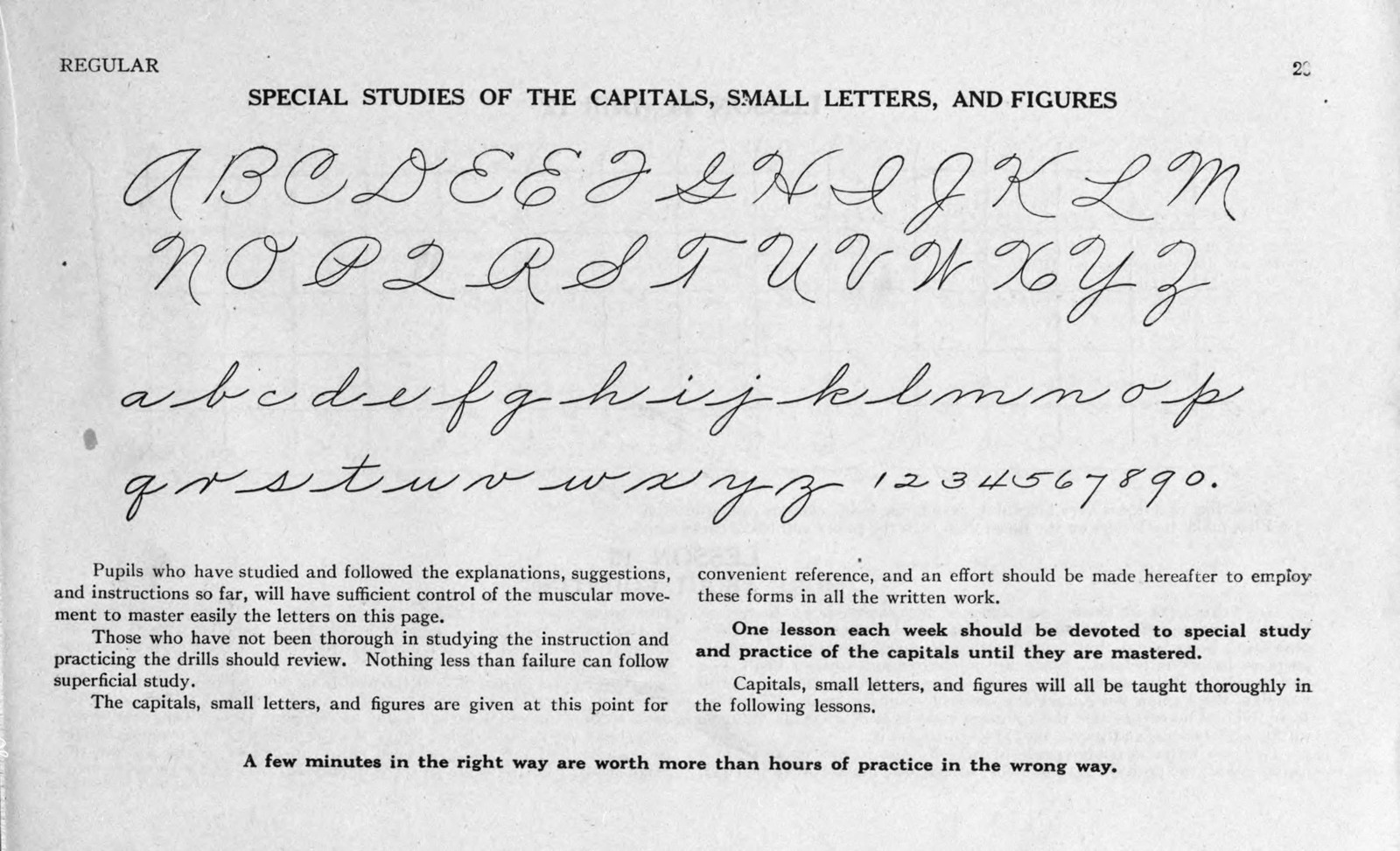
In the 1890s an American named Austin Palmer published a system for teaching penmanship, and it worked almost too well. By 1928 three quarters of schoolchildren in the United States were being taught the Palmer Method, the same rhythmic elliptical motions, the same letter shapes, drilled until the hand did it without thinking. A whole country was taught to write identically. Walk into any room of adults today and ask them to sign a piece of paper, and you will get as many different hands as there are people.
That is what style actually is, and it is worth understanding properly, because the way most of us go looking for it guarantees we will not find it.
Style is a byproduct of speed
Handwriting becomes personal at the point where it becomes automatic. While you are still concentrating on forming the letters, you write like the chart on the classroom wall. Once the motion is fast enough to run without supervision, your own tendencies get through, the slant, the pressure, the way certain letters get shortcuts and others do not. The idiosyncrasy arrives when the conscious mind lets go of the controls.
Photography works the same way and on the same timescale. For the first few years we are thinking about the settings, the rules, the thing we read last week. Then, somewhere in the thousands of frames, decisions start getting made before we are aware of making them. How far away we stand. Whether we wait or move. What we let into the edges. Which of two moments we press on. Those defaults are the style, and they are formed by repetition rather than by decision.
Why imitation reads as forged
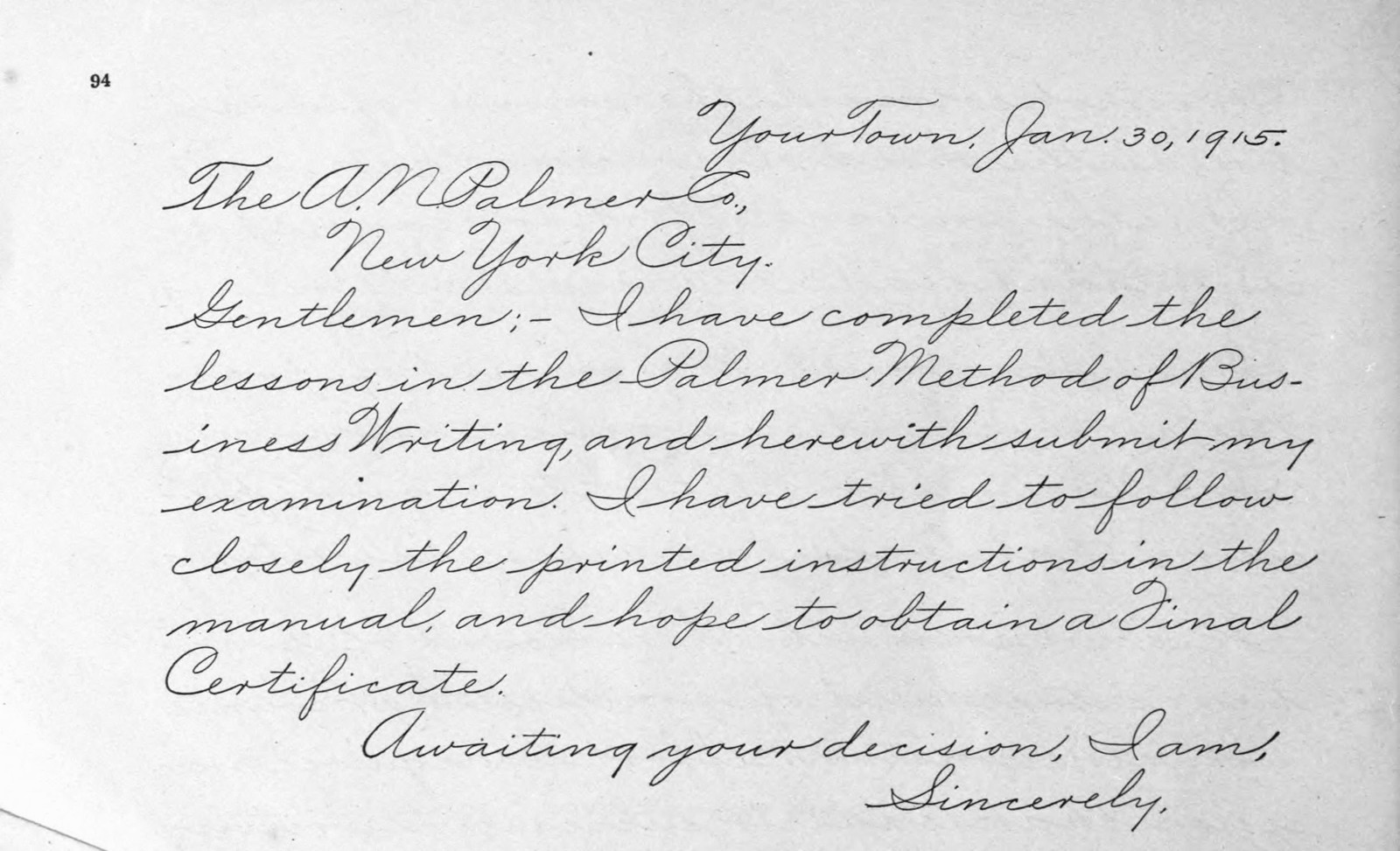
Forensic document examiners can spot a forged signature without comparing a single letter shape, because what gives it away is not the shape at all. Genuine writing is fast, so the stroke swells and thins as the pen accelerates through the curves, the pressure varies, the rhythm is even. A forged signature is drawn rather than written. The line comes out flat and uniform, there are hesitations and pen lifts in odd places, and often a faint waviness that examiners call the tremor of fraud. The forger is copying the appearance of a movement without making the movement.
Photographs made in someone else’s style have exactly that quality. The contrast is in the right place, the framing follows the model, the edit lands where it should, and the thing still feels drawn rather than written. Viewers rarely identify what is wrong, they just do not stay with it. We have written before about what you miss when you try to shoot like someone else, and this is the mechanism underneath it. You can copy the output of a decision. You cannot copy the decision.
Consistency is not sameness
Here is the part that trips people up. No two genuine signatures by the same person are identical. Natural variation is one of the things examiners look for, because a signature that matches another one perfectly is usually a tracing. The identity lives in the range, not in any single instance of it.
A photographic style works the same way. It is a range of tendencies, not a template, and the attempt to make every frame match the last one is the fastest way to strip the life out of a body of work. A set of pictures that are all exactly alike reads the way a traced signature does. Recognizable, and slightly dead.
What you can actually do
If style forms through repetition at speed, then the useful moves are the ones that produce more repetitions and fewer interruptions. Photograph a lot, in the same places, with the same camera, so the equipment stops being a variable. Stay with one subject long enough to get past the obvious version of it. Look back through your own work regularly, not to grade it but to notice what keeps happening, because the pattern will be visible to you long before it feels like a choice. And give it years rather than months, which is the part nobody wants to hear.
What will not work is deciding in advance what your style should be and then manufacturing it. That is the classroom chart again, and it produces the same stiff, careful writing. We made a related argument in stop trying to find your style, and the handwriting comparison is why it holds. You cannot choose your hand. You can only write enough that it shows up.
In black and white, the handwriting is in the tones
A preset is a font. Anyone can install it, everyone who installs it gets the same letters, and nothing about it belongs to the person using it. The handwriting in monochrome work is in the decisions a preset cannot make for you. How dark you are willing to let a shadow go. Whether you protect a highlight or let it burn out. Whether the midtones sit heavy or light. Those choices are made frame by frame against what the picture needs, they vary across a body of work the way a signature varies, and after a few hundred of them they stop being choices and start being yours.
So the advice reverses itself. Stop asking what your style is and start asking what you keep doing. The honest answer is already sitting in the folders, written in your own hand, waiting for you to recognize it.