Don’t just try to make photographs that show something. Make photographs that encourage people to look closer.
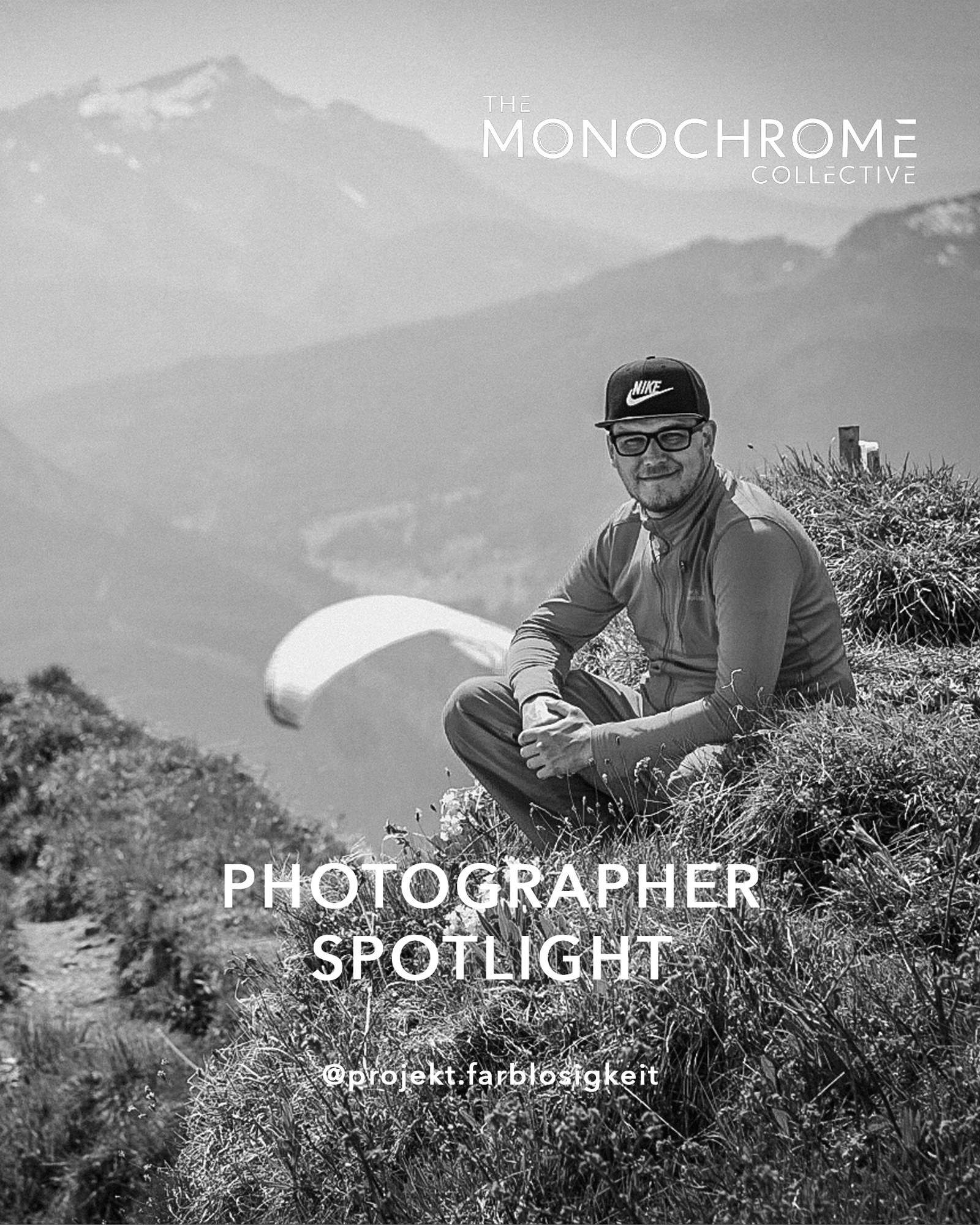
Paul Hillerich says there was never a single moment that decided it for him. What there was instead was a solo journey through Nepal, where he photographed what caught his attention without always knowing why a particular scene stayed with him. The understanding came later, at the desk, when he started converting those frames to black and white and found he was looking at something other than what he thought he had taken.
That became FARB|LOSIGKEIT, the ongoing project that shapes everything he does now. The name is the German word for colorlessness, split in two. For him monochrome isn’t a look so much as a way of making space, stripping a picture back until there is room in it for somebody else to arrive at a reading of their own.
He works in street and documentary photography with a Sony and as little else as he can manage, looking for the quiet moments between the obvious ones. The photographer he names is Sebastião Salgado, and not mainly for the black and white. It’s the humanity he keeps coming back to.
Here is our interview:
There’s always a moment that pulls someone into photography for good. What was yours?
I don’t think there was one single moment that pulled me into photography for good. It was a journey through Nepal that changed the way I looked at the world, and eventually the way I looked at my own photographs.
Traveling alone, I began to notice the quiet moments between the obvious ones. Fleeting encounters, faces, gestures, light falling into the streets, and stories unfolding without anyone noticing. I photographed what caught my attention, often without knowing why a particular moment stayed with me.
Later, when I started transforming these images into black and white, something changed. Without color, I began to see the photographs differently. The distractions faded, leaving more room for emotion, contrast, and personal interpretation.
That experience became the beginning of FARB|LOSIGKEIT, an ongoing project that continues to shape my photographic vision. For me, photography is no longer just about capturing what I see. It’s about discovering what remains when everything unnecessary falls away, and leaving enough space for others to find something of their own in an image.
What subjects are the focus of your work and why?
My work focuses on people, human encounters, and the stories that quietly unfold in everyday life. I am primarily interested in street and documentary photography, searching for moments that may seem ordinary at first but reveal a deeper meaning when we take the time to look closer.
I am fascinated by the unexpected. Fleeting glances, gestures, contrasts, and situations that reveal something about life and human connection. Rather than telling a complete story, I want to capture moments that raise questions and leave room for personal interpretation.
Your black and white work has a particular feeling to it. How did you arrive at that? Was it deliberate or did it emerge over time?
I think my visual style evolved over time, rather than being something I deliberately set out to create.
It began with photographs I took during a solo journey through Nepal. When I later started converting those images to black and white, I discovered that they spoke to me in a different way. Without color, I began to notice things I hadn’t paid as much attention to before. The relationship between light and shadow, the quiet tension within a scene, and the emotions that can exist in a fleeting encounter.
What started as an experiment gradually became a way of seeing. I realized that monochrome allowed me to strip an image back to its essentials without necessarily taking anything away from its meaning. Sometimes it even revealed something I hadn’t consciously recognized when I first pressed the shutter.
Today, black and white is not simply an aesthetic choice for me. It is a way of creating space. Space for the viewer to look beyond the obvious, to bring their own experiences into an image, and to find a meaning that may be entirely different from mine. I don’t want to tell people what to see. I want to give them a reason to look a little longer.
Tell us the story behind one of your favorite photographs.
One of my favorite photographs means more to me than simply capturing a particular moment. It reminds me why I fell in love with photography in the first place.
The image is connected to my solo journey through Nepal. During that trip I photographed many situations and encounters without always knowing exactly why certain moments stayed with me. It was only later, when I began converting the photographs to black and white, that I discovered some of them in an entirely new way.
What fascinates me about these photographs is that they don’t necessarily need to tell a clear or complete story. A glance, a gesture, the interplay of light and shadow, or the relationship between a person and their surroundings can be enough to evoke something within us.
For me, the real story behind an image lies not only in the moment I captured with my camera. It also lies in what I recognize in it myself, and in what other people discover when they look at it.
Perhaps that’s why this photograph means so much to me. It reminds me that photography doesn’t always have to provide answers. Sometimes it’s enough to ask a question and give the viewer the space to find their own answer.
What is one thing that you are working to improve in your photography and how are you going about it?
I want to learn to see more consciously and recognize the moments when an ordinary situation has the potential to become a meaningful photograph. In street and documentary photography these moments cannot be planned. You have to stay attentive, observe, and sometimes simply be patient.
That is why I try to sharpen my awareness and take more time before pressing the shutter. I want to look beyond the obvious subject and pay attention to the relationships between people, the interplay of light and shadow, and the small details that give a scene its tension.
Another important part of my development is refining my image selection and post processing. I want to become better at recognizing which photographs stay with me beyond the first impression, and how reducing an image to black and white can strengthen its impact without forcing a particular meaning onto it.
Ultimately, I don’t simply want to take technically better photographs. I want to create images that evoke something in people, perhaps a memory, a question, or a feeling they cannot immediately put into words.
How much do you plan vs. shoot spontaneously?
In my photography I leave a lot to the moment. Especially in street and documentary photography, the encounters and situations that interest me can only be planned to a certain extent. Often it is the unplanned moments, fleeting gestures, or unexpected compositions that make an image special.
Still, shooting spontaneously doesn’t mean simply pressing the shutter without thought. I try to remain aware of my surroundings, observe the interplay of light and shadow, and recognize situations in which different elements come together in an interesting way. Sometimes I wait for the right moment. Other times an image comes together in a fraction of a second.
What I plan is mainly the framework of my work. My approach to black and white, my visual language, and the questions I explore. The individual photographs usually emerge intuitively from whatever I encounter along the way.
Ultimately, I plan how I want to see rather than what I want to photograph. The stories themselves unfold in the moment, and sometimes I only understand later why a particular image has meaning for me.
What gear do you bring when you go out to shoot?
I try to keep my gear to a minimum. Especially in street and documentary photography, I want to stay flexible and focus on what’s happening in front of me rather than constantly thinking about my equipment.
My Sony camera is my most important tool. I prefer a setup that gives me the freedom to move and allows me to react quickly to unexpected situations. I want to observe, engage with the world around me, and be ready when the right moment appears, without letting my equipment get between me and what is happening.
For me, knowing my camera well and being able to rely on it matters far more than the amount of gear I carry. I don’t want my attention to be consumed by technical decisions. Instead I want to focus on light, composition, gestures, and the small details that can make a fleeting moment meaningful.
Since much of my work is presented in black and white, I often think in terms of contrast, texture, and the interplay of light and shadow while shooting. Ultimately, I want to put as little as possible between myself and the moment.
What does your editing process look like? What tools do you use and how do you approach it?
My editing process often truly begins when I look back at my photographs with a little distance. While shooting, I focus on the moment itself. Later I take the time to look through my images carefully and discover which ones continue to resonate with me beyond the first impression.
The first step is selecting the images. I ask myself which photographs have a distinct atmosphere, which ones raise questions, and which details might only become visible when you spend more time looking at them. I’m not necessarily searching for technically perfect images, but for photographs that convey a certain tension, honesty, or emotional depth.
Black and white is an essential part of my editing process. I work with contrast, light and shadow, and texture to bring out the character of an image. For me it’s not simply about removing color. I want to understand what becomes visible when an image is reduced to black and white, and how this changes the way we perceive a scene.
At the same time I try to keep my editing restrained and intentional. It shouldn’t distort the original situation or impose a meaning that wasn’t there in the first place. Instead I want to enhance what is already present in the image while leaving enough room for the viewer’s own interpretation.
Who are some photographers or artists that have influenced your style and why?
The photographer who has influenced me most is Sebastião Salgado. What fascinates me about his work is not only his extraordinary use of black and white, light, and contrast, but above all the humanity at the heart of his photographs.
His images go far beyond documenting a moment. They reveal human dignity, vulnerability, strength, and the complexity of life. He has a remarkable ability to make people and their circumstances visible without reducing them to mere subjects. His photographs invite us to look closer, to feel, and to reflect.
What impresses me most is the depth and honesty of his visual storytelling. His work has shown me that black and white is much more than an aesthetic choice. It can be a powerful way of directing attention toward what truly matters, stripping away distractions and allowing the human story to take center stage.
For me, Sebastião Salgado is a reminder that photography is not simply about what we see, but also about how we look at the world and the people in it.
What would you tell yourself when you started in photography? The thing nobody said to you that would have changed how you photographed?
I would tell myself to be patient. You don’t have to understand every photograph while you’re taking it, and you don’t need to know immediately what it means.
When I started, I thought photography was mainly about recognizing and capturing the right moment. Over time I came to understand that it is just as important to pause, look more closely, and remain open to what cannot be planned.
Nobody told me that a photograph doesn’t have to explain everything. It doesn’t need to tell a complete story or convey a clear message. Sometimes its strength lies precisely in raising questions, evoking emotions, or allowing different interpretations.
If I could give my younger self just one piece of advice, it would be this. Don’t just try to make photographs that show something. Make photographs that encourage people to look closer.