We were told the camera does not lie. It never fully told the truth either.
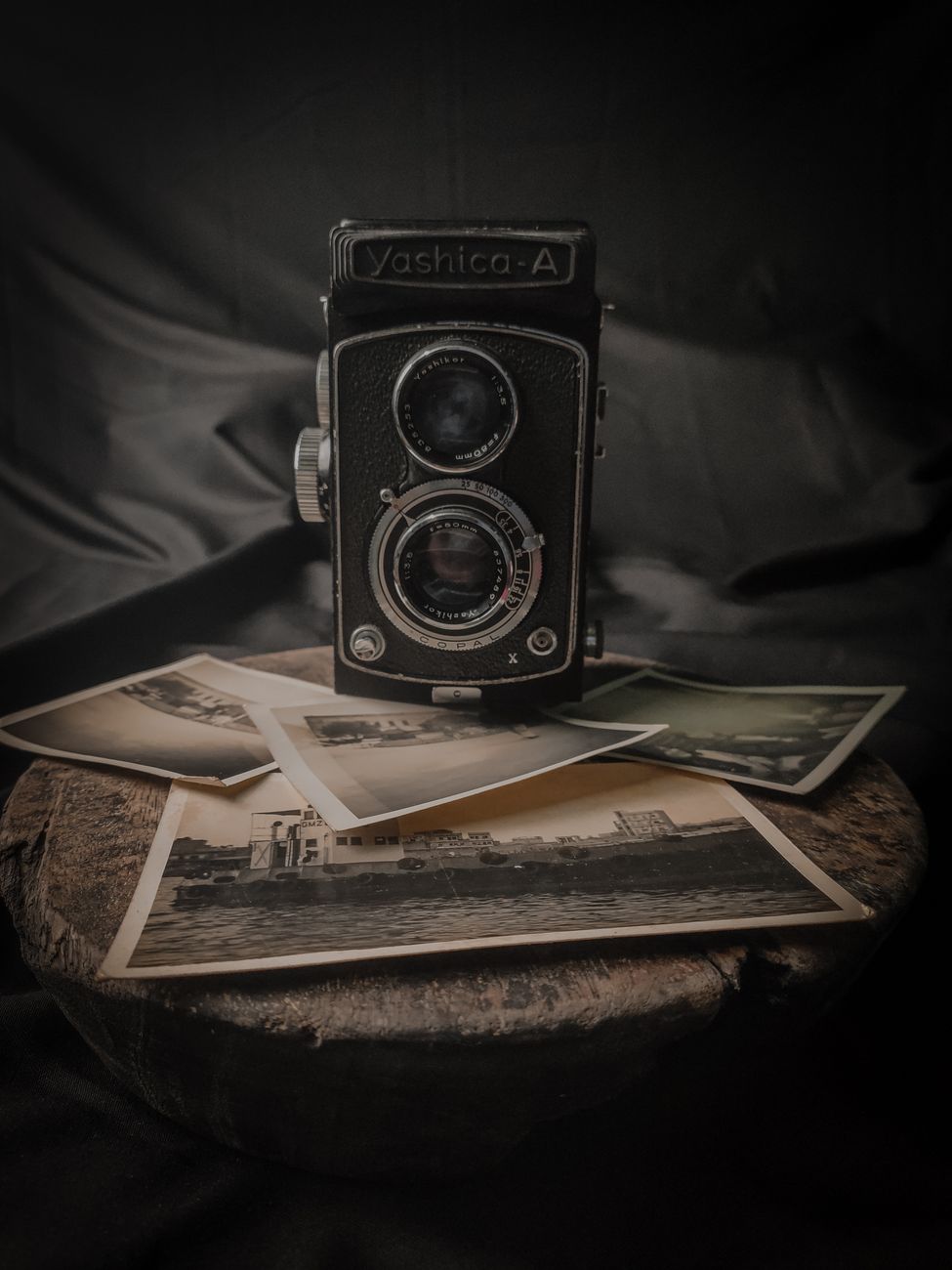
When photography was invented in the 1830s, it was received as something genuinely new in the history of image making. Painting required a human hand, a human eye, human judgment about what to include and what to leave out, what to emphasize and what to soften. Every painted image carried the unavoidable fingerprint of interpretation. Photography, people believed, did not.
William Henry Fox Talbot, one of the medium’s inventors, called his 1844 book of photographs The Pencil of Nature, and he was explicit about what he meant by that title. His images were, in his own words, formed by optical and chemical means alone, without the aid of any one acquainted with the art of drawing. Nature was drawing itself. No artist’s hand stood between the world and the image of it. For the first time, people believed, an image could exist that was not an interpretation of reality but a direct, mechanical trace of it.
That belief was foundational to how photography understood itself for well over a century. It is also, worth being honest about this, not really true, and it was never quite as true as it was believed to be, even at the very start.
The truth was never as pure as the claim
Even Talbot himself was more careful about this than the popular reception of his work suggested. He wrote elsewhere that a photographer would often discover, sometimes long afterward, that he had depicted things he had no notion of at the time, an observation that already complicates the idea of photography as a purely intentional, controlled record. And the choices that go into any photograph, what to point the camera at, when to release the shutter, how to compose the frame, how to develop and print the resulting image, are all human decisions, all interpretive, from the very first photograph ever made.
Manipulation, in fact, arrived almost immediately. Within just a few years of photography’s invention, staged and doctored images were already circulating. Photographers moved bodies and props at battlefields before photographing them, arranging a scene to tell a more compelling story than the one that had actually unfolded. Spirit photography, a genre built entirely on faked double exposures presented as evidence of ghosts, exploited exactly the public trust that Talbot’s pencil of nature had established, less than a few decades after that trust was first extended. The camera never lies was a belief people wanted badly enough to believe that it survived direct, repeated evidence to the contrary almost from the start.
What made the belief durable anyway
Despite all of this, the core cultural belief in photographic truth held remarkably strong for well over a hundred years, and it is worth understanding why, because the reasons were not naive. A photograph genuinely does require light to have actually reflected off something real in front of a lens at some actual moment in time. That physical, causal relationship between a photograph and the world it depicts is real, and it does not exist in the same way for a painting, which can be entirely invented from imagination with no physical world required at all. Photography’s claim to truth was exaggerated, but it was not built on nothing. There was a real, physical difference underneath the myth, even if the myth claimed far more certainty than that physical difference actually guaranteed.
This is why photographic evidence carried such enormous cultural, legal, and journalistic weight for so long. Courtrooms trusted photographs in ways they never trusted paintings. Newspapers treated a photograph as evidence in a way a sketch never quite achieved. The physical relationship between light, lens, and world gave photography a genuine, if overstated, claim that other image making mediums simply did not share.
How far we have actually strayed
That gap between the myth and the reality has only widened since, and it is worth naming plainly how far the distance has grown. The darkroom itself was always a site of real manipulation, dodging, burning, cropping, choices that shaped meaning as much as any brushstroke, even if photographers and the public mostly treated these as technical corrections rather than interpretive acts. Digital editing expanded that manipulation dramatically, giving photographers tools to alter color, remove or add elements, and reshape an image far beyond what a darkroom ever allowed, tools this community has talked about at length in terms of restraint and honesty.
And now, generative AI has broken the physical relationship that gave photography its original claim to truth in the first place. An AI generated image requires no light to have ever reflected off anything real. There is no causal chain back to an actual moment in the actual world at all. The one thing that made photography different from painting from the very beginning, the physical trace of a real moment, is no longer a guaranteed property of an image that looks exactly like a photograph.
Why this history actually matters now
Understanding this history changes how you might think about the current moment, rather than treating it as an unprecedented crisis arriving out of nowhere. Photography’s claim to unmediated truth was always somewhat mythological, believed more strongly than the evidence ever fully supported, contested and manipulated almost from its very first years. What has genuinely changed now is not that photography suddenly became untrustworthy after a long history of perfect honesty. It is that the one remaining real, physical distinction between a photograph and a painting, light having actually touched something real, is no longer something a viewer can safely assume just because an image looks photographic.
The myth of pure photographic truth was always partly myth. What we are losing now is the physical fact that used to sit underneath it, however imperfectly. That is a real and significant loss. It is just not, if you look honestly at the history, the sudden fall from grace it can sometimes feel like. Photography was always an interpretation. It is worth remembering that the interpretation used to require, at minimum, something real to interpret.