It was built to look like any other lens while resolving more than any of them. Its odd focal length might suit black and white better than expected.
Most new lenses arrive promising more speed or more sharpness than the one before. The Leica Summicron-M 66 f/2, announced on September 3, arrives with a story instead. It is Leica’s reinterpretation of the Elcan 66mm f/2, one of the rarest lenses ever made for the M system, and for the first time Leica is offering that focal length to anyone who wants it, or at least to anyone who can find one.
A lens that was never meant to be noticed
The original was designed in the late 1960s by Dr Walter Mandler at Ernst Leitz Canada, in Midland, Ontario, for the US Navy, and only around 200 were made. According to Leica’s press release, Mandler said the Naval Intelligence Service “wanted a lens that looked like any other but delivered an unparalleled level of resolution.” Many were paired with the KE-7A, the military version of the Leica M4, and the sets came with an instruction manual explaining how to destroy the camera and lens if they were captured.
The 66mm focal length was not an accident either. Leica says it was chosen as a precise balance between maximum resolution, fine contrast rendition and a compact size, which is worth keeping in mind, because those are exactly the qualities that matter most once color is taken out of the picture.
What Leica actually announced
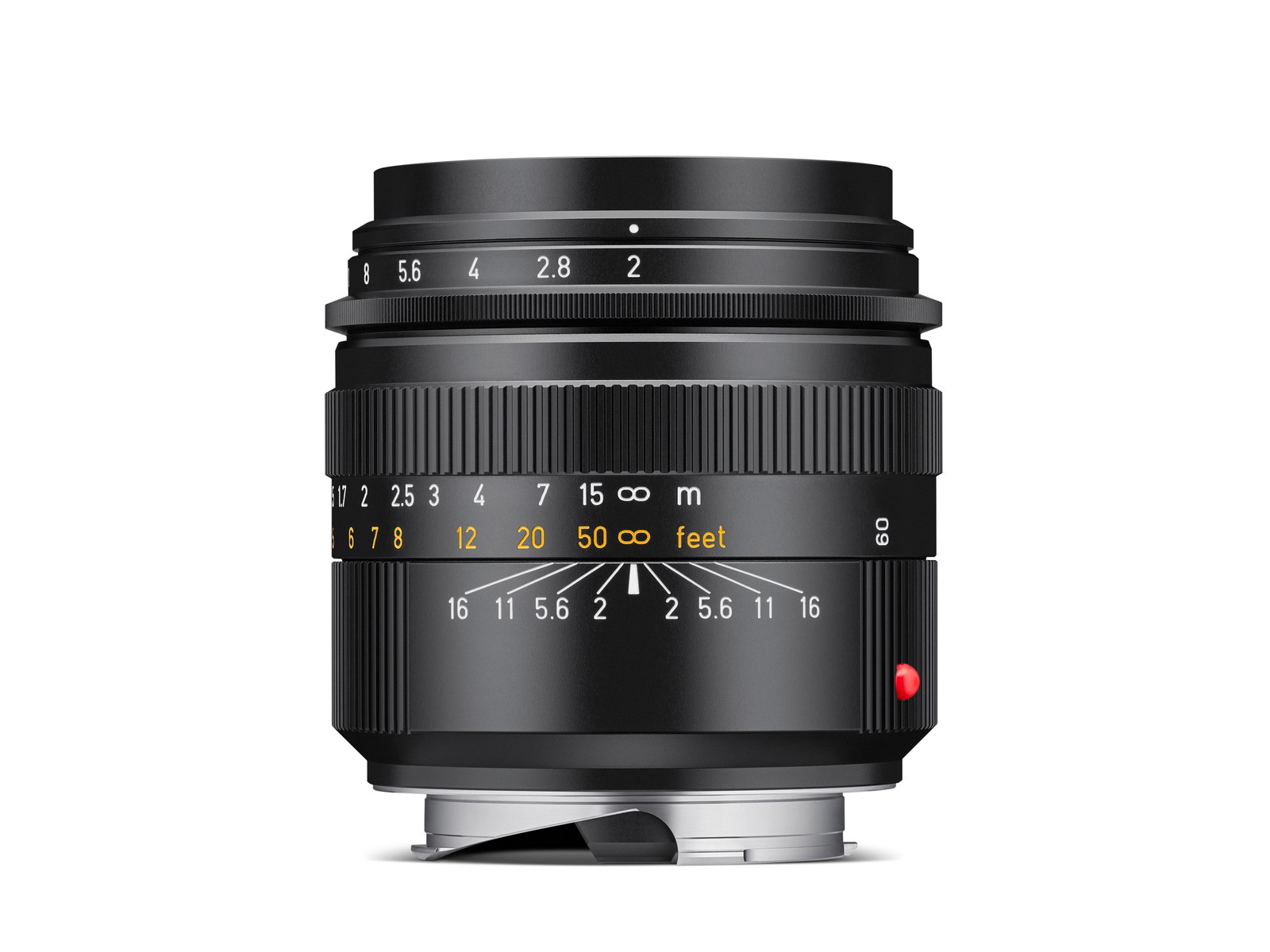
The new lens is a limited edition of 660. It is an f/2 design based on the original but updated for current standards, and DPReview reports six elements in five groups, nine aperture blades, a weight of 456 grams, a 49mm filter thread, a hood that screws on, and a closest focusing distance of one meter. It costs $10,900 in the US and €9,850 in Europe, and it has been on sale since September 3. The lens with serial number 001 goes to auction in Wetzlar in November.
Leica kept the original’s quirks. The aperture ring turns the opposite way to every other M lens, the distance scale follows the military layout, and a small engraved “60” on the side marks the measured focal length of 66.0mm, the way precision lenses were once labeled.
Why 66mm is interesting for black and white
Sitting between a 50mm and the longer portrait lenses, 66mm gives what Leica calls a natural perspective with subtle compression. In practice that means a little less in the frame than a 50, and a background that sits slightly closer and simpler behind the subject. That matters more in black and white than in color, because without color to separate things, every extra shape in the frame is competing for the same few tones. A narrower view quietly removes some of that competition, and the pictures that hold up best in monochrome are usually the ones built on a few strong shapes.
Leica describes the rendering wide open as a mix of soft bokeh and high contrast, with the lens reaching its maximum resolution as it is stopped down. For monochrome work that is a genuinely appealing combination. Contrast is how a subject separates from its surroundings once everything is gray, and a lens designed around resolution has somewhere to put that detail on a Monochrom body, whose sensor has no color filter and records every photosite as pure luminance. Worth noting, though, that Leica’s release does not mention the Monochrom cameras at all. The pairing is our reasoning, not Leica’s claim.
The catches
At $10,900 and 660 copies, this is going to be a collector’s lens for most people rather than a working one. The one meter close focus also means it will not fill the frame with a face the way a dedicated portrait lens can. And no Leica M has a 66mm frameline. The frames jump from 50 to 75, and Leica’s release does not say which one the lens brings up, so composing through the viewfinder will involve some judgment.
The focal length itself is easier to try than the lens. Cropping a 50mm frame down to a 66mm view on a 60 megapixel sensor still leaves around 34 megapixels, which is plenty to find out whether that slightly tighter way of seeing actually suits the way we photograph.
There is something fitting about a lens that was designed to go unnoticed turning into one of the most talked about releases of the year, but the more interesting part is the idea underneath it, a focal length chosen for detail and contrast rather than for convention. Those were always the things black and white depended on.