
A sculptor begins with too much stone. So does a photographer standing in a crowded street.
Michelangelo is supposed to have said that he saw the angel in the marble and carved until he set it free. He almost certainly never said it, and the line seems to come from a twentieth century novel. What he did write, in a letter, is less quotable and more useful. The sculptor arrives at his end by taking away what is superfluous. That is a working method rather than a piece of poetry, and it describes what we are doing in a busy scene better than most photography advice does.
Painters add, photographers take away
Sculpture divides into two opposite traditions. Modeling is additive, building a figure up out of clay or wax, adding material until the form appears. Carving is subtractive, starting with a block of stone or wood that already contains every possible figure and removing everything that is not the one you want. Painting works the first way, from an empty canvas outward. Photography works the second way, and it is the only one of these where the raw material arrives whether you asked for it or not.
Stand in a market on a Saturday and the frame is already full. Heads, signs, awnings, elbows, a parked van, somebody’s shopping bag. Nothing needs to be added. The entire job, from the moment we notice something until the moment we finish the print, is deciding what to take out.
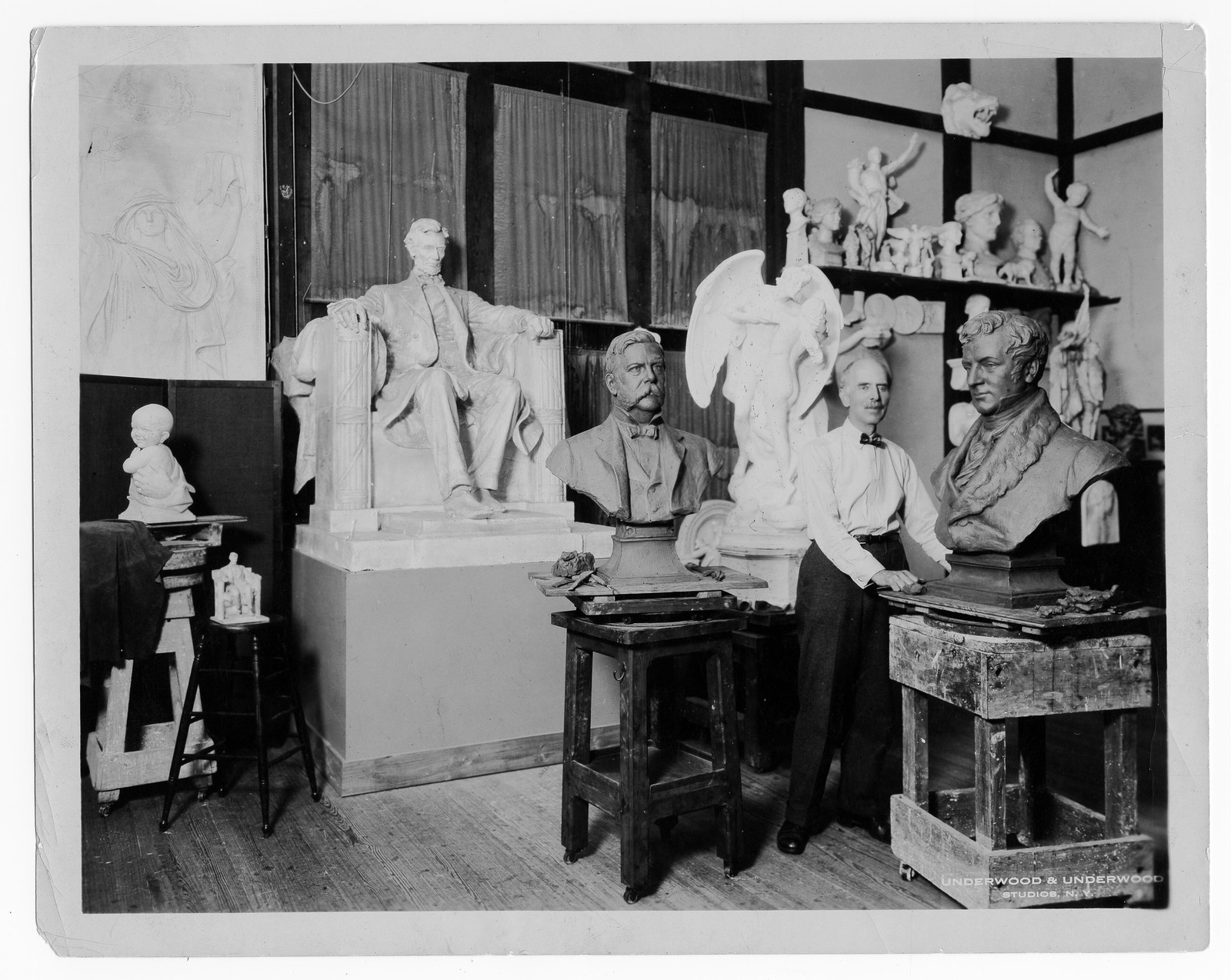
Decide what the figure is before you cut
A carver does not reduce a block at random and see what turns up. They work toward a figure they can already picture, which is what lets them know which parts are superfluous. Without that, there is no way to tell waste from work.
This is where most photographs of busy scenes go wrong, and it happens before any technical decision. If we cannot say what the picture is of in a few words, the man in the hat, the gap between two bodies, the light coming down the alley, then we are not simplifying anything. We are just hacking at the block and hoping. Naming the figure takes about three seconds and changes every choice that follows.
Coarse chisels first, fine ones last
Carving has an order to it. The point chisel knocks away the big mass, the claw chisel shapes what is left, a flat chisel refines it, and abrasives finish the surface. Nobody polishes a block that is still square.
Our tools have the same order and we tend to use them backwards. The coarsest tool is our feet. Two steps left can delete an entire background, and no amount of editing will do what moving does. Next is distance and focal length, which decide how much of the world is admitted in the first place. Then timing, because a crowd is not a fixed object and the frame clears and refills every few seconds if we are patient enough to wait for it. Then light, which will delete anything we cannot move by letting it fall into shadow. Only at the very end come the crop and the burn, the fine chisels, and they cannot rescue a frame that was never roughed out. We went through those moves in detail in how to find a photograph inside the chaos. The sculptor’s contribution is the order itself.
Every cut costs something
Stone does not go back on. That is the part of the analogy photographers tend to skip, because a crop can be undone and the file is still there. But the cost is real even when it is reversible. Every removal buys clarity and spends context. Crop tight to a face and we lose the street that explained who they were. Wait until the square empties and we lose the reason the square mattered. A frame that has been carved down to one clean subject on one clean background is simple, and it is often dead, because there is nothing left to find on the second look.
Michelangelo is useful here too. His unfinished figures, the ones in the Accademia in Florence that are still half inside their blocks, are among the most compelling things he made. The roughness is not a failure to finish. It is the part that shows the figure arriving. A photograph can work the same way, holding enough of the mess to prove where we were standing while still making it clear what we were looking at.
Black and white is the first cut
For us there is one removal that happens before any of the others. Taking the color out is the single largest subtraction available, and in a busy scene it does an enormous amount of work, because a red awning and a blue jacket stop shouting for separate attention. The catch is that color was also doing a job, separating things that now share the same gray, so the cut has to be paid for in tone. Darken one, lighten the other, let a shadow swallow the third. That is carving, done with light instead of a chisel.
None of this makes a crowded street easy. It does make it a different problem than it first appears. The scene is not working against us by being full, because full is simply what a block of stone is. The picture is somewhere inside it, and the only question that matters is what we are willing to take away to get there.