The sensor and the lens are identical to the standard Q3 43. What the extra two thousand dollars buys is carbon fiber, red accents and a color preset.
Leica and Formula 1 announced a licensing partnership on 20 October, and the first thing to come out of it is the Leica Q3 43 Formula 1 Edition. It went on sale on 21 October at $9,950 in the United States, £7,300 in the United Kingdom and €8,500 in Europe, through Leica Stores, the Leica Online Store and specialist retailers.
What’s different is the outside. The camera gets a carbon fiber shell, a carbon wireless charging handgrip and a carbon thumb rest, all of which Leica says are made and tested in Germany. There is a Microvelour covering meant to echo a steering wheel, red accents around the controls, and the Formula 1 logo on the lens cap. It takes the same accessories as the existing Q3 and Q3 43.
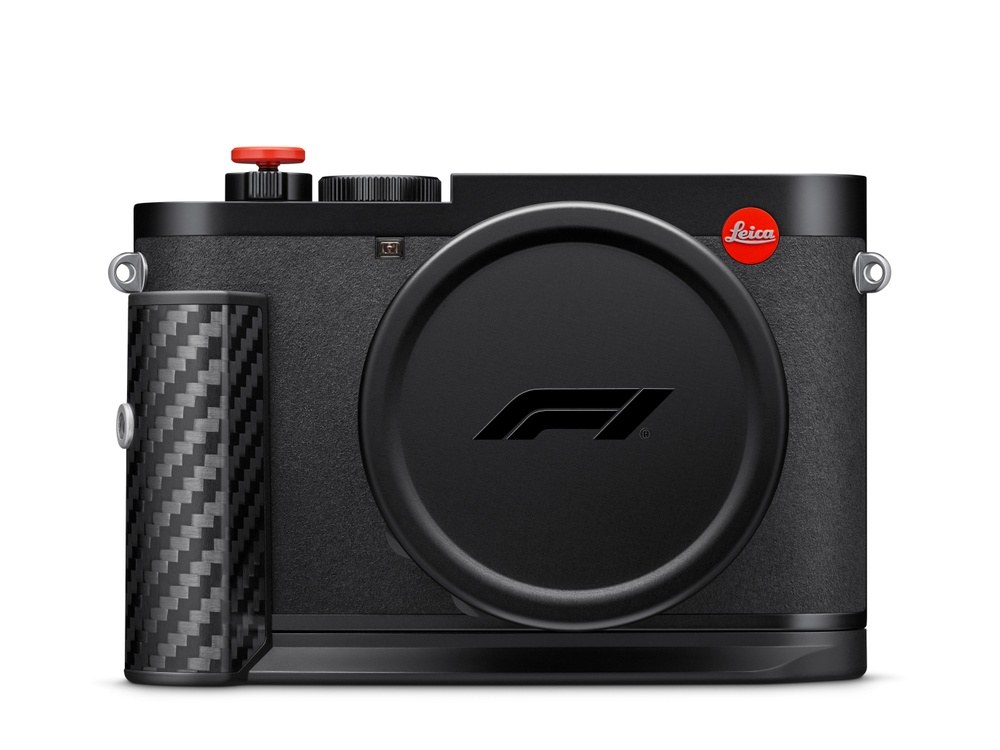
What’s not different is everything that makes the photograph. The sensor is the same 60.3 megapixel full frame BSI CMOS with Leica’s Triple Resolution Technology, giving you 60, 36 or 18 megapixel files. The lens is the same fixed APO-Summicron 43mm f/2 ASPH. The autofocus is the same. Leica hasn’t published a weight for the edition, though the carbon should bring it under the 772 grams of the standard camera.
What the money actually buys
The standard Q3 43 lists at $7,950, so the Formula 1 version is a two thousand dollar premium. For that you get the carbon work, the trim, and one piece of software, an exclusive Formula 1 Leica Look available only through the Leica FOTOS app.
That’s a straightforward trade and Leica isn’t pretending otherwise. Nobody is being told the pictures will be better. It’s a collector’s camera and it’s priced like one, which is a thing Leica has done for a long time and will keep doing as long as the editions sell out, which they generally do.
For monochrome work
The Leica Look is a color profile, so the one genuinely exclusive feature here is the one a black and white shooter will never open. That leaves the carbon, which is lighter and looks good, and the branding, which does nothing for the file.
The interesting thing in this camera was never the edition. It’s the 43mm APO-Summicron, a focal length that sits between the 35mm and 50mm arguments most of us have had with ourselves, rendered by a lens with very little going on in the way of aberration. That lens is worth paying attention to. It just happens to be the same lens in the camera that costs two thousand dollars less.