
How Henri Cartier-Bresson Photographed the Street Without Being Seen
If you have spent any time around street photography, you have heard the name Henri Cartier-Bresson. He was born in France in 1908, trained as a painter before he ever took photography seriously, and went on to help found Magnum Photos in 1947. His pictures of ordinary people in Paris, Spain, Mexico, India and just about everywhere else shaped how the rest of the century thought about photographing everyday life. What people talk about less is how he actually worked on the street, and the answer is that he worked very hard at not being there at all.
A camera small enough to disappear
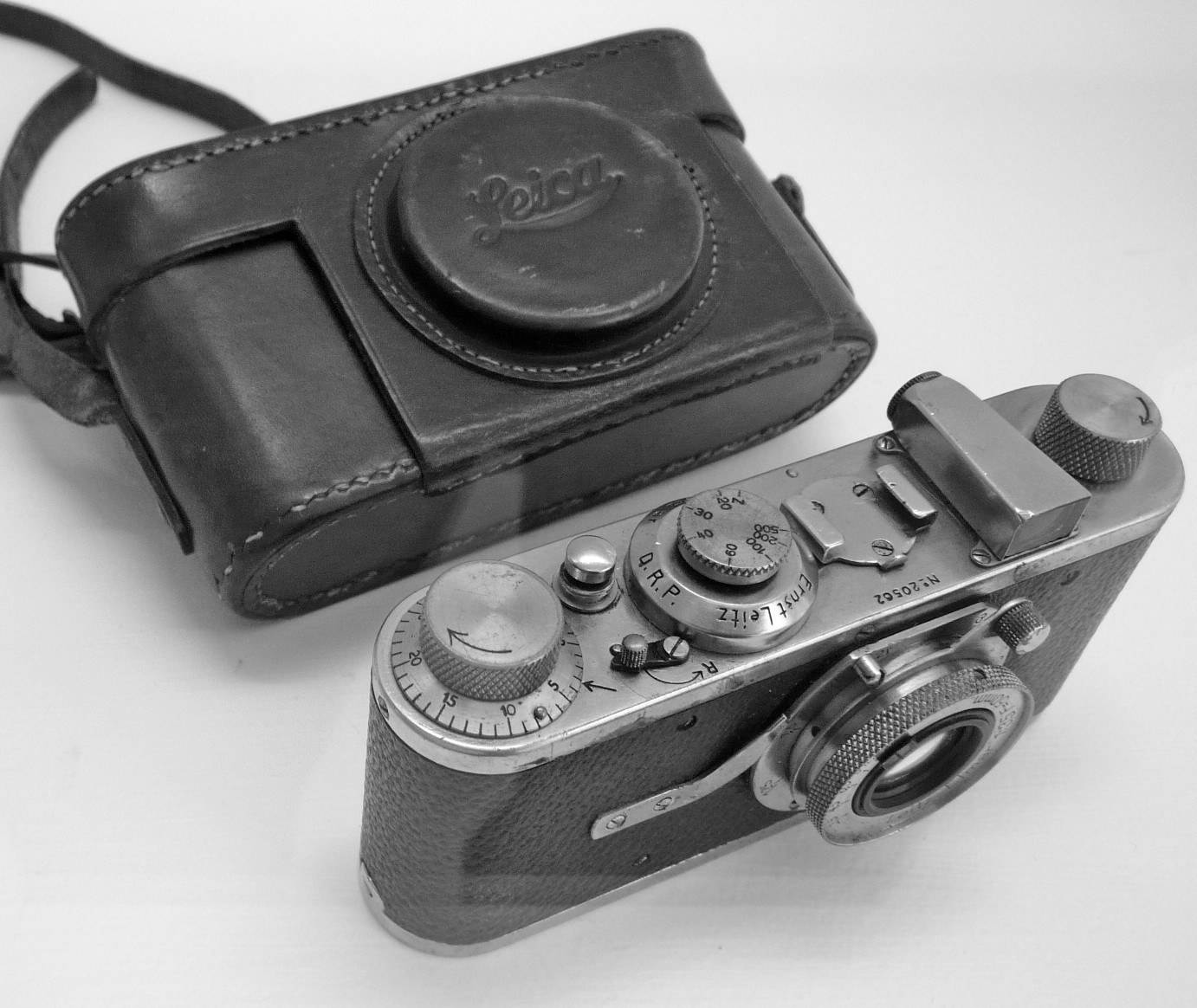
Cartier-Bresson came to the small Leica early in the 1930s, and it suited him perfectly. Compared with the bulky cameras most photographers used at the time, it was light, quiet and easy to hold close to the body. He usually kept to a single 50mm lens, which sees roughly the way our own eyes do, so nothing about the camera exaggerated his presence. He even covered the shiny chrome parts with black tape so they would not catch the light and draw attention, and there are accounts of him hiding the camera under a handkerchief. Every choice pointed the same way. The less the people in front of him noticed, the better.
Waiting instead of asking
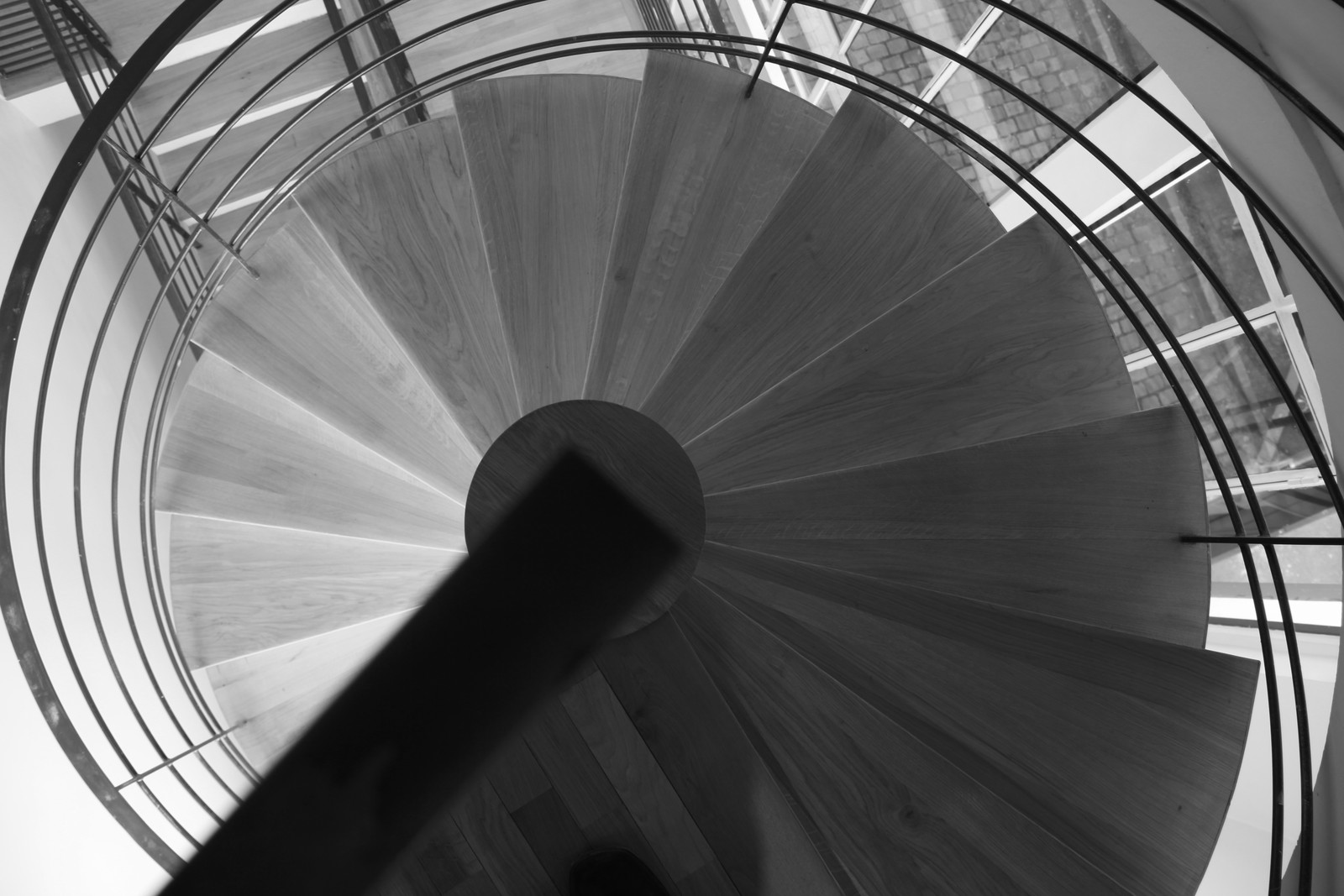
He almost never spoke to, posed or directed the people he photographed on the street. Instead he found a place where the light and the lines were already working and waited for life to walk into it. His 1932 picture in Hyères is a good example. He stood above a curving staircase with a street below, and a cyclist rode through the frame at exactly the right spot. Photographers sometimes call this fishing, choosing the stage first and letting the actor arrive. The same year, his famous picture of a man leaping over a puddle behind the Gare Saint-Lazare in Paris was taken through a gap in a fence. The man had no idea anyone was watching.
That patience is what the decisive moment really means. We have written before about how the decisive moment is preparation rather than luck, and a big part of that preparation was making himself invisible long enough for the moment to arrive on its own.
Images on the run
His best known book came out in 1952. English readers know it as The Decisive Moment, but the original French title was Images à la sauvette, a phrase that describes street peddlers who sell their goods without a license and are ready to pack up and disappear the moment someone official shows up. Cartier-Bresson said the phrase was close to how he worked. Arrive quietly, take what the street offers, and be gone before anything changes. It is an unglamorous way to describe a masterpiece, and it tells us a lot about how he saw himself.
Why he stayed out of the picture
The reason behind all of this is simple. The moment people know they are being photographed, they change. They stiffen, they smile, they look at the lens, or they turn away. Cartier-Bresson wanted the world as it was when nobody was performing for him, and the only way to get that was to be someone nobody noticed. He carried that same respect for the moment into the darkroom, where he insisted on printing the full frame without cropping. The picture was whatever he saw at the instant he pressed the shutter, and he did not go back and improve it afterwards.
It is also why his pictures work so well in black and white. Because nobody is posing, what carries the image is gesture, the angle of a body in motion, the shape a group of people makes against a wall, the geometry of a street. Those are exactly the things monochrome shows most clearly, and there is very little in his best work that color would have added.
What invisibility asks of you
Working this way is harder than it sounds. It takes patience, a lot of walking and a lot of waiting in places where nothing happens. It also means giving something up. You rarely get a face looking straight back at you, and you rarely learn anything about the person beyond what their body tells you in a fraction of a second. For Cartier-Bresson that was a fair trade, because what he wanted was life going on around him rather than a connection with any one person in it.
Being invisible, in the end, was never really about hiding. It was about leaving the scene alone long enough for it to stay itself, and trusting that if we are quiet and patient enough, the street will eventually show us something worth keeping.
Featured photograph of Henri Cartier-Bresson in Paris in 1954 by Ihei Kimura, public domain.