More than a century before editing software, a group of photographers argued that what the camera records is only the beginning. They were right about more than they are given credit for.
In its early decades, photography had a problem. It was admired as a scientific marvel, but most critics and painters refused to call it art. A painting came from the hand and the imagination, the argument went, while a photograph came from a machine that simply copied whatever was put in front of it. Pictorialism was the answer a generation of photographers gave to that argument. From roughly the 1880s until the years after the First World War, it was the dominant way serious photographers thought about their work, and it spread from Britain to France, Austria, Germany and the United States.
A movement born out of an argument
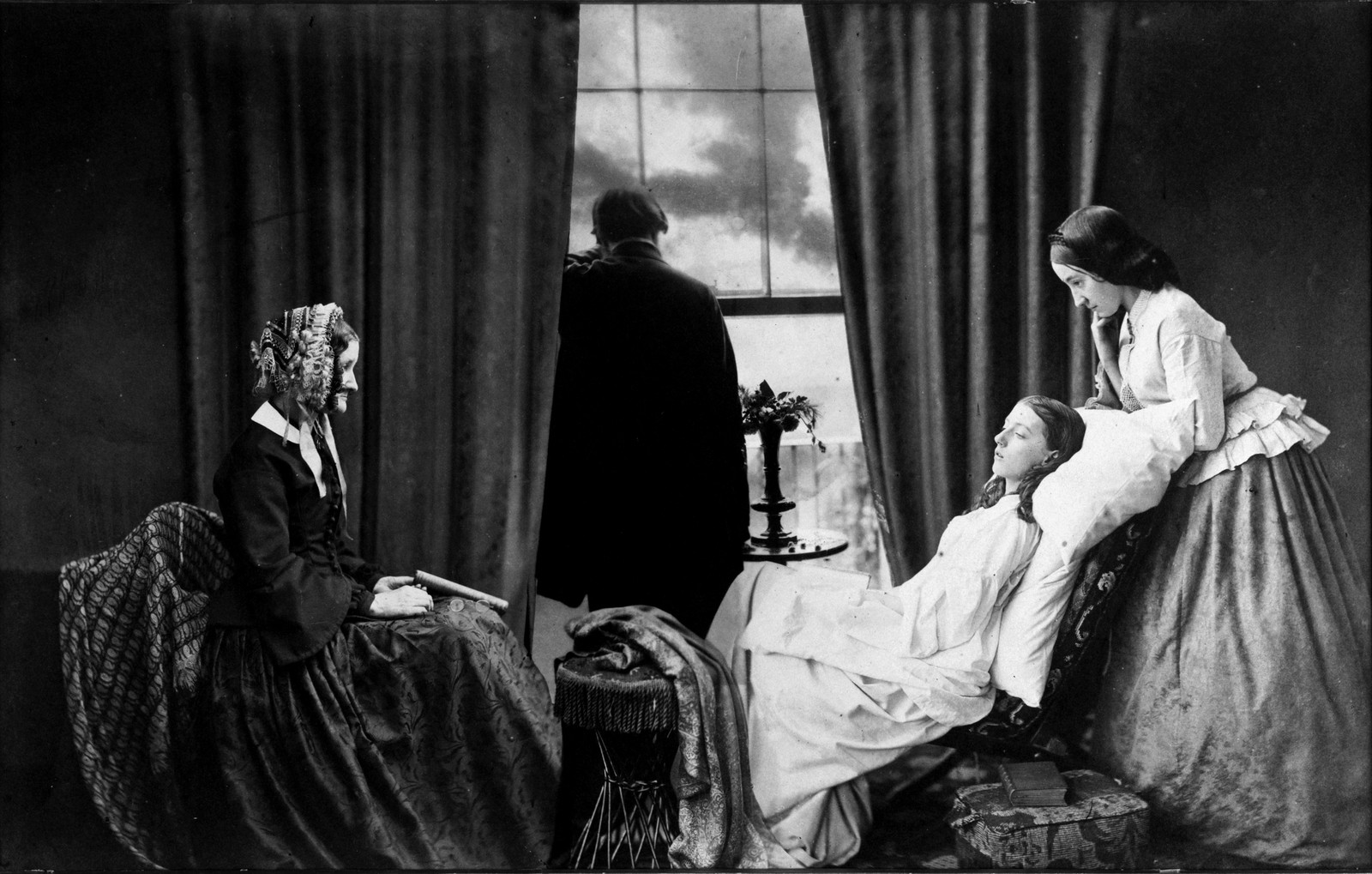
The roots go back to Henry Peach Robinson, an English photographer who had trained as a painter. In 1858 he made Fading Away, a scene of a dying young woman surrounded by her family, by combining five separate negatives into one print. People were shocked, partly by the subject and partly by the idea that a photograph could be constructed rather than simply taken. In 1869 Robinson published a book called Pictorial Effect in Photography, which is where the movement eventually got its name.
By the 1890s the ideas had turned into organized groups. The Linked Ring was founded in London in 1892, the Photo-Club de Paris became the center of French pictorialism, and camera clubs in Vienna and elsewhere held exhibitions that looked more like art salons than technical fairs. In New York, Alfred Stieglitz founded the Photo-Secession in 1902 and the following year launched Camera Work, a beautifully printed journal that treated photographs with the same seriousness as paintings. The message from all of them was the same. A photograph becomes art when the photographer puts something of themselves into it.
What Pictorialists actually did
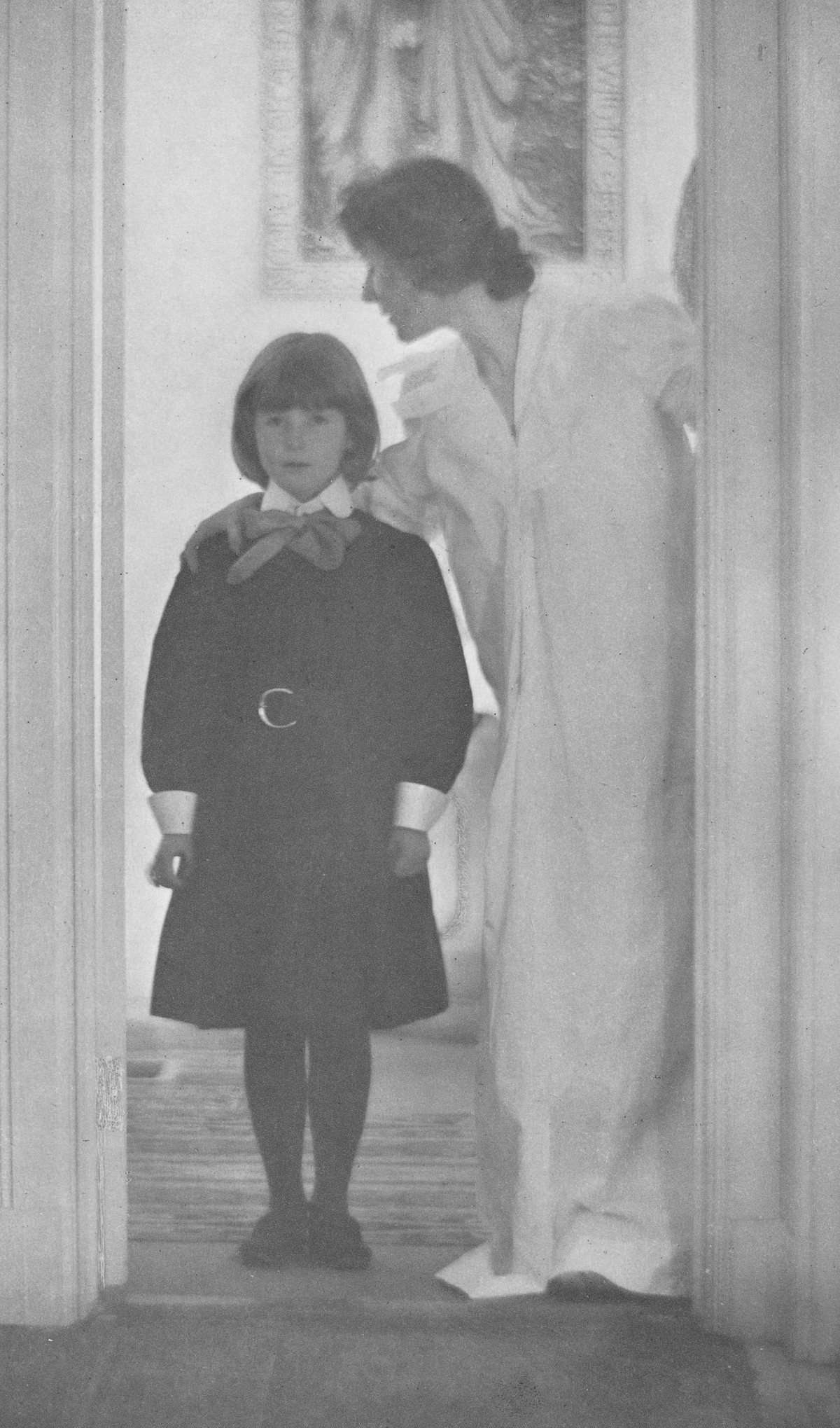
To put themselves into the image, they worked on it at every stage. They used soft focus lenses, or deliberately threw the focus off, so that edges melted and details gave way to mood. They printed with processes such as platinum, gum bichromate and bromoil, which let them brush, scrape and build up the tones by hand. Some worked directly on their negatives. Their subjects were chosen for feeling rather than information, misty landscapes, twilight, quiet interiors, mothers and children, figures that looked more like allegories than people. Edward Steichen’s The Pond, Moonlight from 1904, a dark wooded pond with the moon glowing through the trees, is one of the best known results. It looks almost nothing like a straight record of a place, and that was entirely the point.
Why it fell out of favor
Pictorialism did win its argument. Museums began collecting photographs, and photography was increasingly taken seriously as an art form. But by the 1910s many photographers felt the movement had gone too far in trying to look like something else. Soft focus and brushwork had become a formula, and a lot of pictorialist work had drifted into sentimentality. Stieglitz himself moved on, and he gave the last issues of Camera Work in 1916 and 1917 to Paul Strand, whose sharp, direct pictures of New York pointed to a very different future. In 1932 a group of California photographers including Ansel Adams and Edward Weston formed Group f/64, named after one of the smallest apertures on a large format lens, and championed pictures that were sharp from front to back. Weston had started his own career making soft, pictorialist images before turning firmly against them.
What they got right
For all the soft focus and sentiment, the core idea behind Pictorialism has held up remarkably well. They understood that a photograph is not just a record of what was in front of the camera. It is a record of how someone saw it and what they felt about it. That is the difference between a snapshot and a photograph that stays with people, and it is something we still struggle with every time we come home with a card full of technically fine pictures that say nothing.
They also understood that the work does not end when the shutter closes. Every choice after that, the print, the tones, how dark the shadows are allowed to go, is part of the picture. Black and white photographers live this every day. Removing color is itself an interpretation, and as we wrote in Color Describes the World. Black and White Interprets It., that is exactly what makes the medium expressive. And their love of atmosphere, fog, dusk, the soft edge of a shadow, is still one of the most reliable ways to give a photograph mood. Many of the most compelling monochrome images being made today have far more in common with the Pictorialists than their makers might realize.
Where they went too far
Their mistake is just as useful to remember. At its weakest, Pictorialism stopped expressing anything personal and simply borrowed the look of painting because painting was respected. The effect became the goal. It is easy to see the same thing happening now with presets, heavy grain, fake film borders and one click looks that make every photograph feel old and moody whether or not the subject calls for it. Manipulation was never the problem. The problem was manipulation that had nothing to do with what the photographer actually saw or felt.
The argument between the Pictorialists and the straight photographers who followed them never really ended. It just moved into our own editing software, where every one of us decides, picture by picture, how far to go. The Pictorialists would tell us that going further is fine, as long as the feeling we are chasing was really there in the first place.
Featured photograph: The Pond, Moonlight, 1904, by Edward Steichen, public domain.