A photographer on his way home from a photo walk, a parade he had been afraid of as a child, and three years spent learning what happens in the back rooms.
In 2024, Ajay Lalu was driving home from a #shoot4purpose photo walk through the Bo-Kaap, the former slave quarters of Cape Town, when he remembered that the Kaapse Klopse parade was taking place that day. He found parking, took the Canon R6 Mark II and the 70-200mm he still had with him from the morning, and walked to Rose Street. He had no project in mind. He was a photographer with a free afternoon and a camera already in his hand.
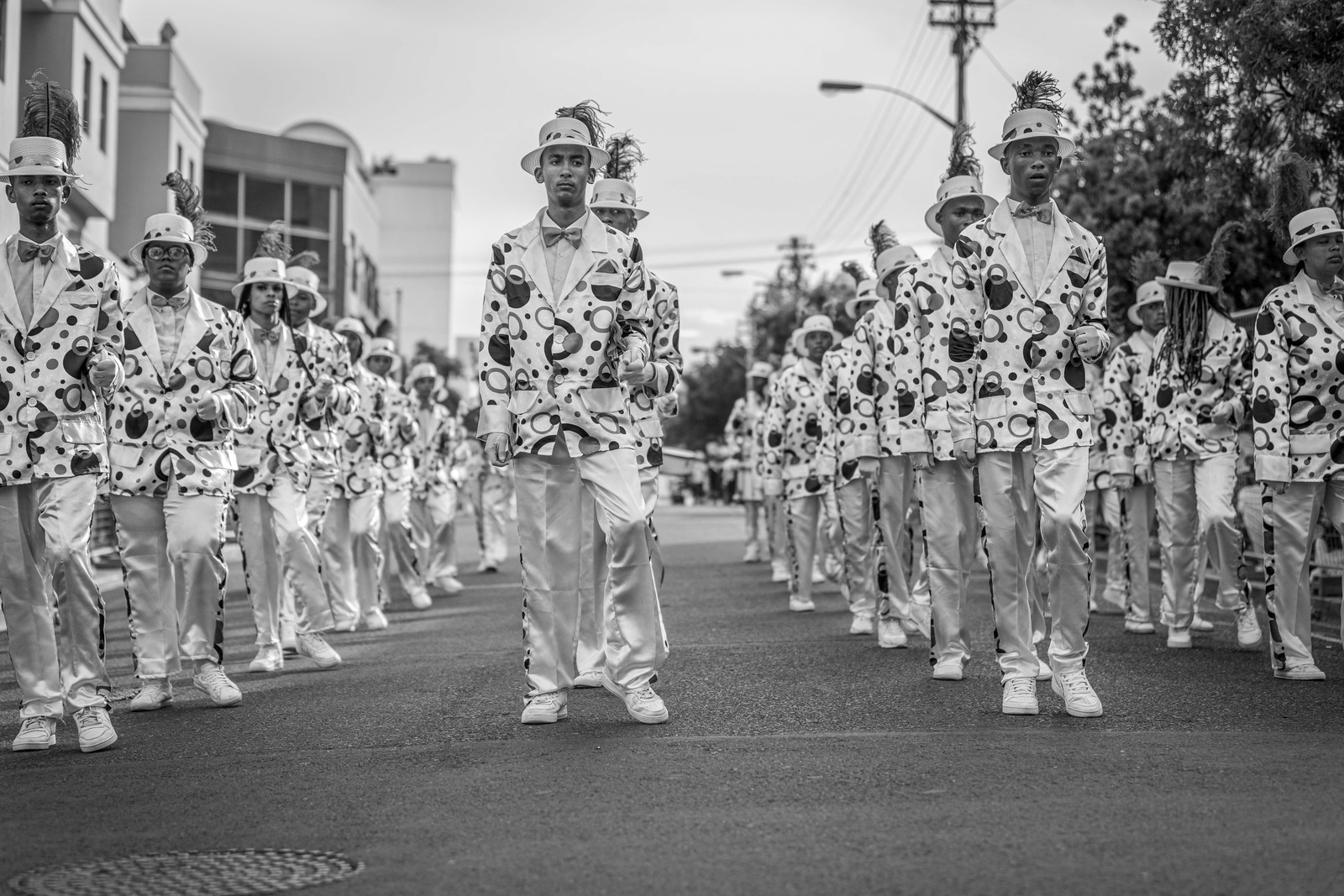
The Klopse is Cape Town’s carnival, held on Tweede Nuwe Jaar, the second of January, which was the one day a year enslaved people were given off by their masters, when troupes of minstrels in satin and sequins move through the city playing goema drums and brass. Most photographs of it look the same, because most photographers stand where Ajay first stood, behind the barricades with the rest of the crowd.
Getting past the barricade
He worked from behind them for a while and did not like what he was getting. The angles were wrong and the distance was wrong, and neither was going to give him the photographs he could already see in his mind. So he started talking to one of the marshals, in the local vernacular rather than the formal register a stranger might reach for, and the conversation turned into an offer. He took the marshal’s portrait and sent it to him on WhatsApp, in exchange for being allowed past the barricades. That was the beginning of everything that followed, and it also set the pattern for how he would work from then on, photographs given back rather than only taken.
The marshal let him through. Ajay moved to the end of the route, where the troupes perform at full intensity for the competition judges, and standing in the street instead of behind it changed what was possible. He could isolate one face inside all that movement, a gesture, an expression held for half a second in the middle of thousands of people.
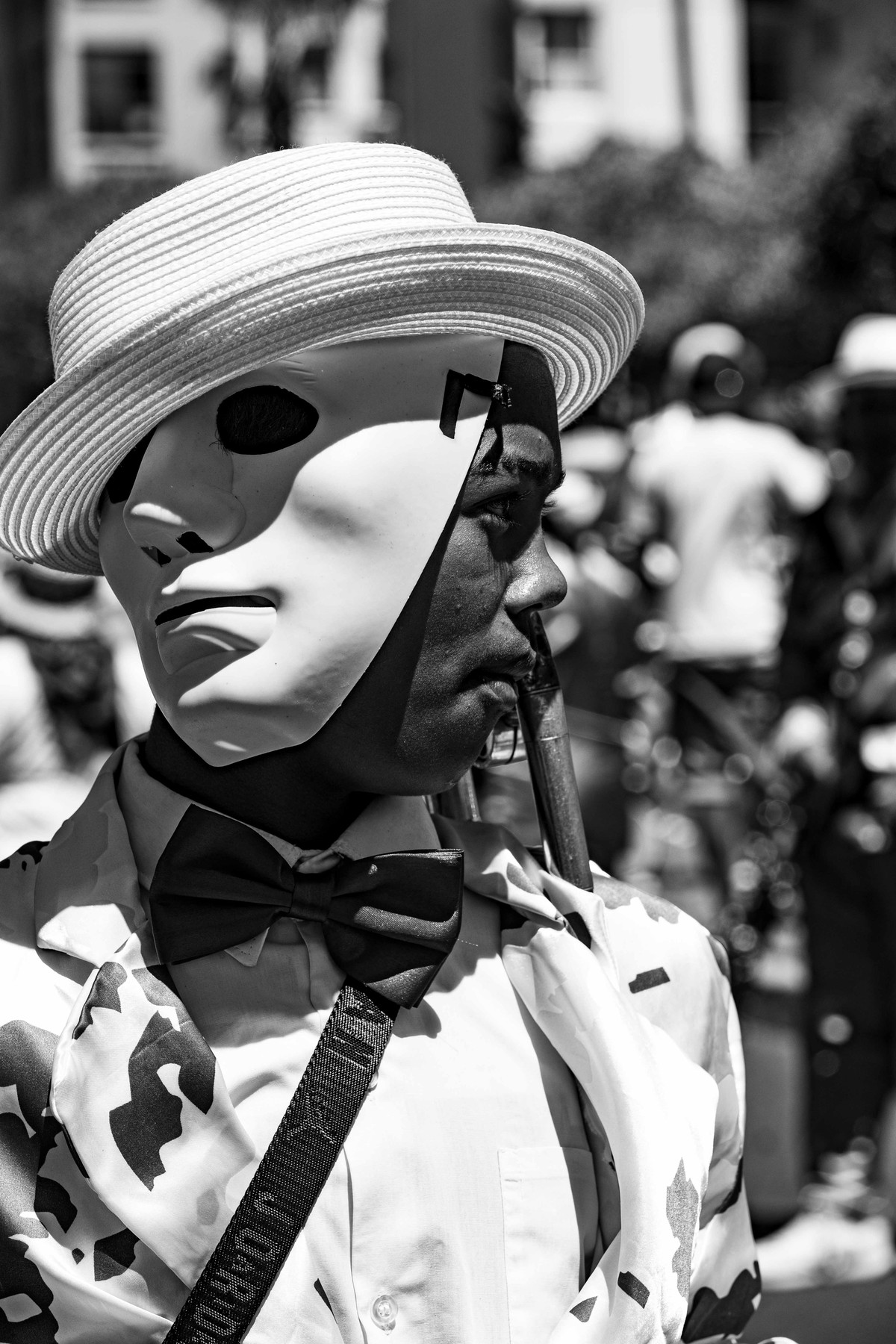
The real shift happened later that evening, at home, processing the files. He was not looking at a parade. He was looking at his own childhood in Athlone, on the Cape Flats, where he used to run to the gate when the Klopse came down his street. He ran with some trepidation, because of the Atchas, a troupe whose masks have frightened generations of children and frightened him too. What he had photographed that afternoon was not a colorful public event. It was something he had been carrying since he was a boy.
What the crowds never see
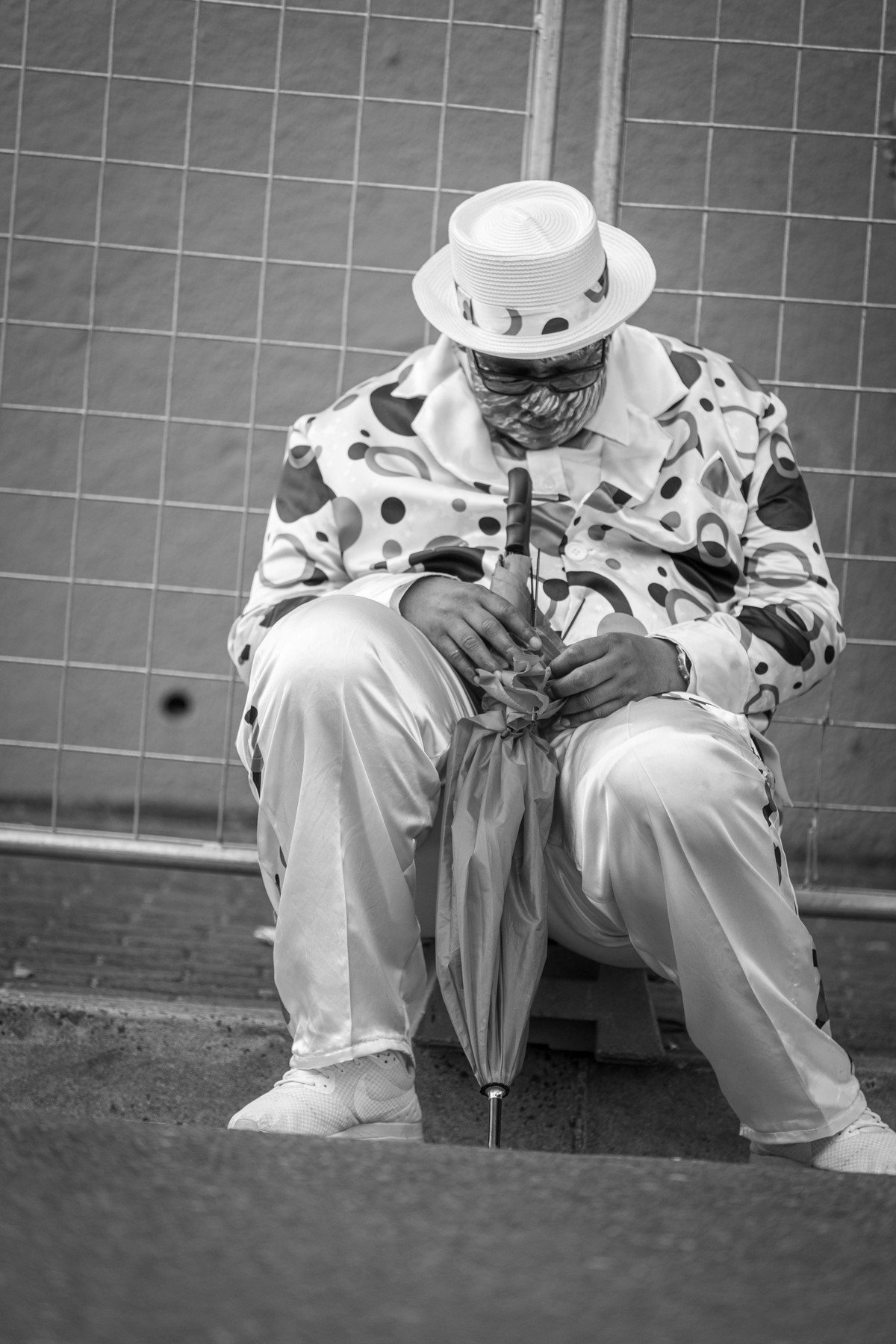
He went back in 2025, and again in 2026, and what he was looking for moved steadily away from the parade itself. In the first year he photographed the scale of it, the costumes, the music, the energy of the competition. As he returned and made friends, he found himself far more interested in the months of work that produce a single day, the rehearsals late into Sunday evenings, the raffles and cake sales that pay for uniforms, the family histories, the knowledge handed from one generation to the next. He started looking for quieter frames. A musician preparing. A seamstress in a back room. A child learning from an elder. A performer alone with their thoughts in the middle of all that sound.
One of those back rooms belongs to Suwayba Alexander, in Lentegeur, Mitchells Plain. It is a repurposed room where around ten women make roughly 1,200 costumes for the TV Stars troupe. Fabric sits piled in crates, instructions are written on the walls, and the sewing machines run without stopping as the deadline closes in. Three generations can be in that room at the same time, a grandmother, Mrs Ishaa, with decades of experience, her daughter learning the work and earning from it, and her grandchild watching all of it. The public sees satin and sequins and coordinated movement. It does not see the work behind the scenes, or the dedication it takes.
Trust, and what it costs to earn
None of those rooms open to a stranger with a camera. The person who opened them was Mr Melvyn Matthews, and earning his trust was the hardest part of the whole project. Ajay is clear about what Melvyn was protecting the community from. He did not want another superficial account of the Klopse, and he did not want people shown through deprivation and pity, which is how the Cape Flats has been photographed by outsiders for decades.
Words were not going to settle it. Ajay had to demonstrate it, in how he behaved when he entered people’s spaces, in how he respected the people he photographed, and in what he did with the pictures afterwards. He showed Melvyn the work as it developed so he could see both its quality and the way people were being represented, with agency and dignity. Over time Melvyn saw that the conduct matched the intention. They became friends, and the doors opened, to rehearsals, workshops and homes. Ajay does not describe that access as something he won. He describes it as a responsibility that has to keep being earned, which is how he sees the job of a documentary visual artist.
The Adams brothers
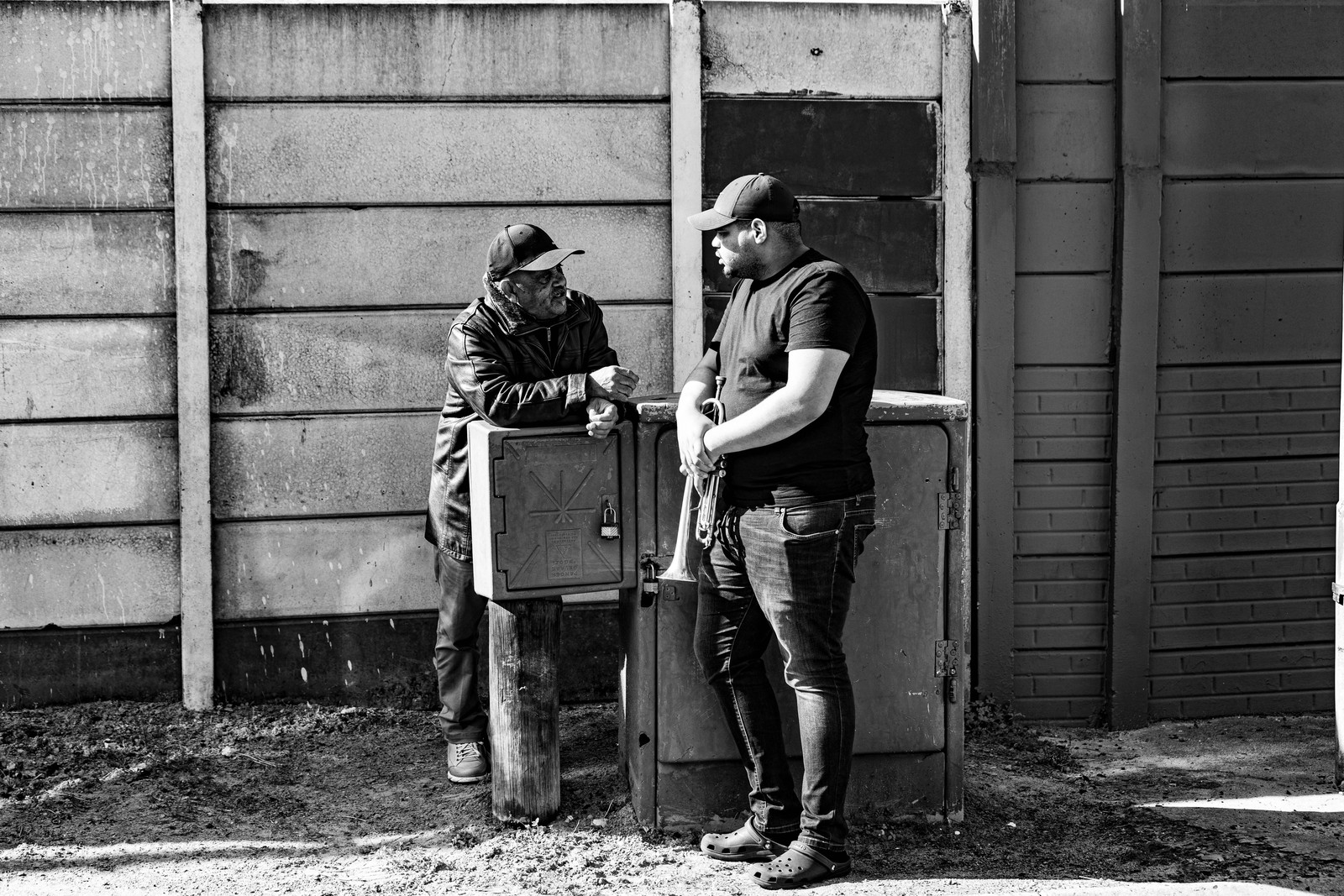
The family that has stayed with him is the Adams family. The late Abe “Aba” Adams passed his musical legacy to his sons, Logan and Carlton on trumpet and Reagan on trombone, who grew up in a house where music was not a hobby but an inheritance. Logan became a band leader of The Phantoms troupe and won a scholarship to the University of Cape Town’s School of Music, where he was a top performing student in his first year. He wants to play on international stages and to complete a master’s degree at Berklee. The Klopse also pays, and that income helps support him and his family.
What Ajay learned from them is that this tradition is not only about holding on to the past. These are also pathways out of poverty. It produces education, work, ambition and a route forward. Carrying their father’s legacy has not narrowed what Logan, Carlton and Reagan can imagine for themselves. It is the ground they are standing on while they imagine something bigger and better.
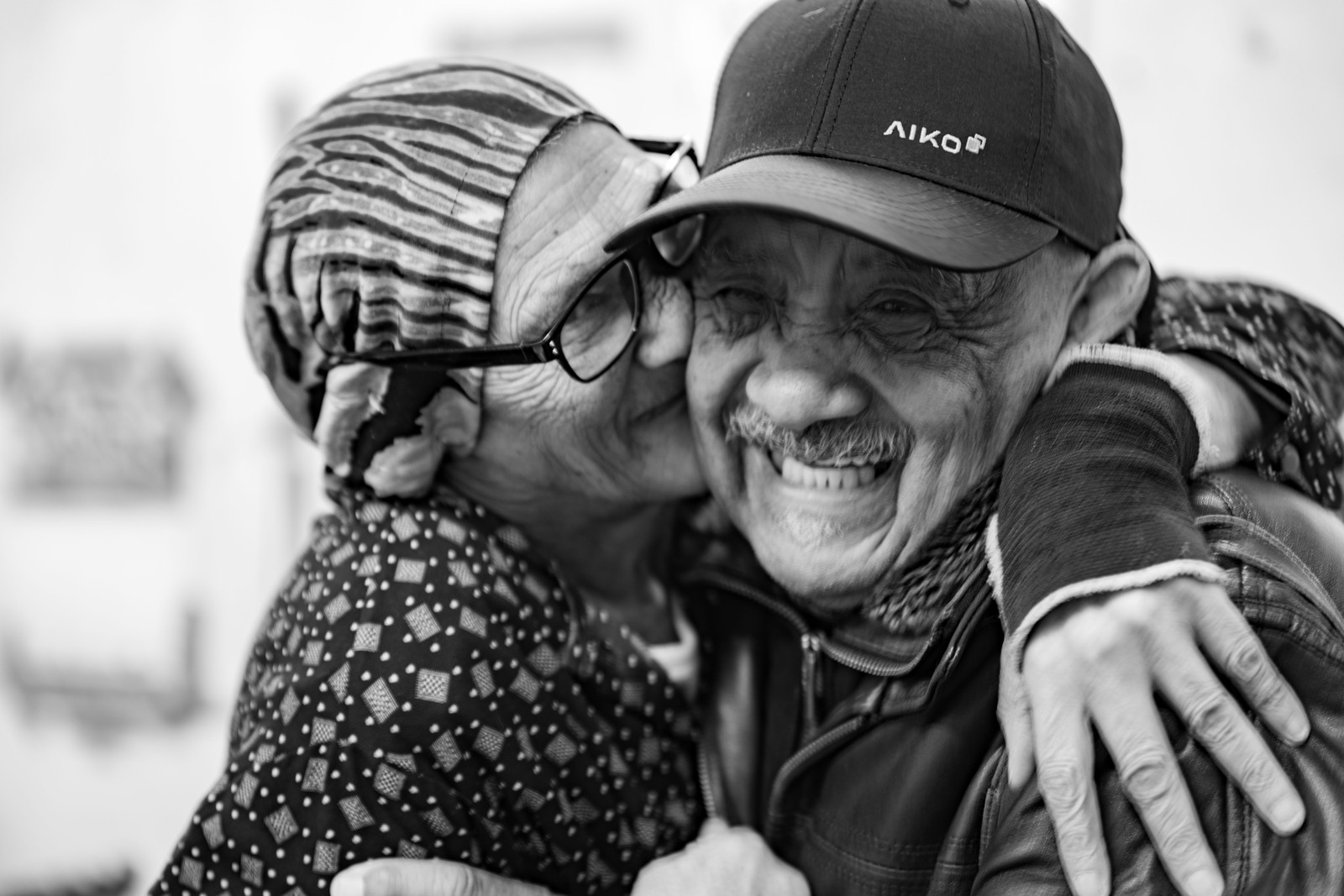
That is the difference he sees between the generations, and it is not a clean split between old and new. For many older participants the Klopse carries memory, of family, of the forced removals from District Six under apartheid, of slavery, and of the people who protected the tradition while everything else was being taken. Taking part is continuity, and a statement that they have not been erased. Younger participants inherit all of that and then carry it somewhere else. The tradition survives because of people like Melvyn and Logan, and thousands of others who keep reclaiming their sense of belonging.
What it cost to stay
Outside the stadium one year, Ajay met a boy in a wheelchair being pushed by his father, both of them in full troupe outfits. The boy had been shot a few days earlier in an incident of gang violence. What stayed with Ajay was his anger, and not only about the shooting. The boy was furious that it had taken the carnival away from him. Ajay put the camera down and listened, because taking a photograph mattered less right then than letting a child say what had been taken from him.
The violence is not somewhere off at the edges of this work. While he was photographing with Suwayba in Mitchells Plain, they could hear gunshots. It was during a stretch when more than fifteen people had reportedly been killed within walking distance of her workshop. He was frightened. Inside the room, the women kept sewing the costumes that would bring the carnival to life. The joy of the Klopse does not exist apart from any of this. It exists alongside it, which is exactly what makes it mean so much. Young men like Logan escape the gangs because of their dedication to the Klopse.
The work became his debut book, A Mountain Divides, and when the first edition started drawing newspaper coverage and radio interviews, the attention pulled him into tensions between rival groups trying to control the organization of the carnival. The threats were indirect. A request came for him to attend a meeting with someone whose reputation gave him every reason to believe he would be walking into danger. He was genuinely afraid for his life.
The people he had photographed came to his aid and helped protect him. That is the moment the project stopped being about access. The trust had been running in both directions for a while by then, and he only found out how far when he needed it. He carried on into the second edition, because walking away would have meant walking away from people who had put their faith in him.
Why some of it is in black and white
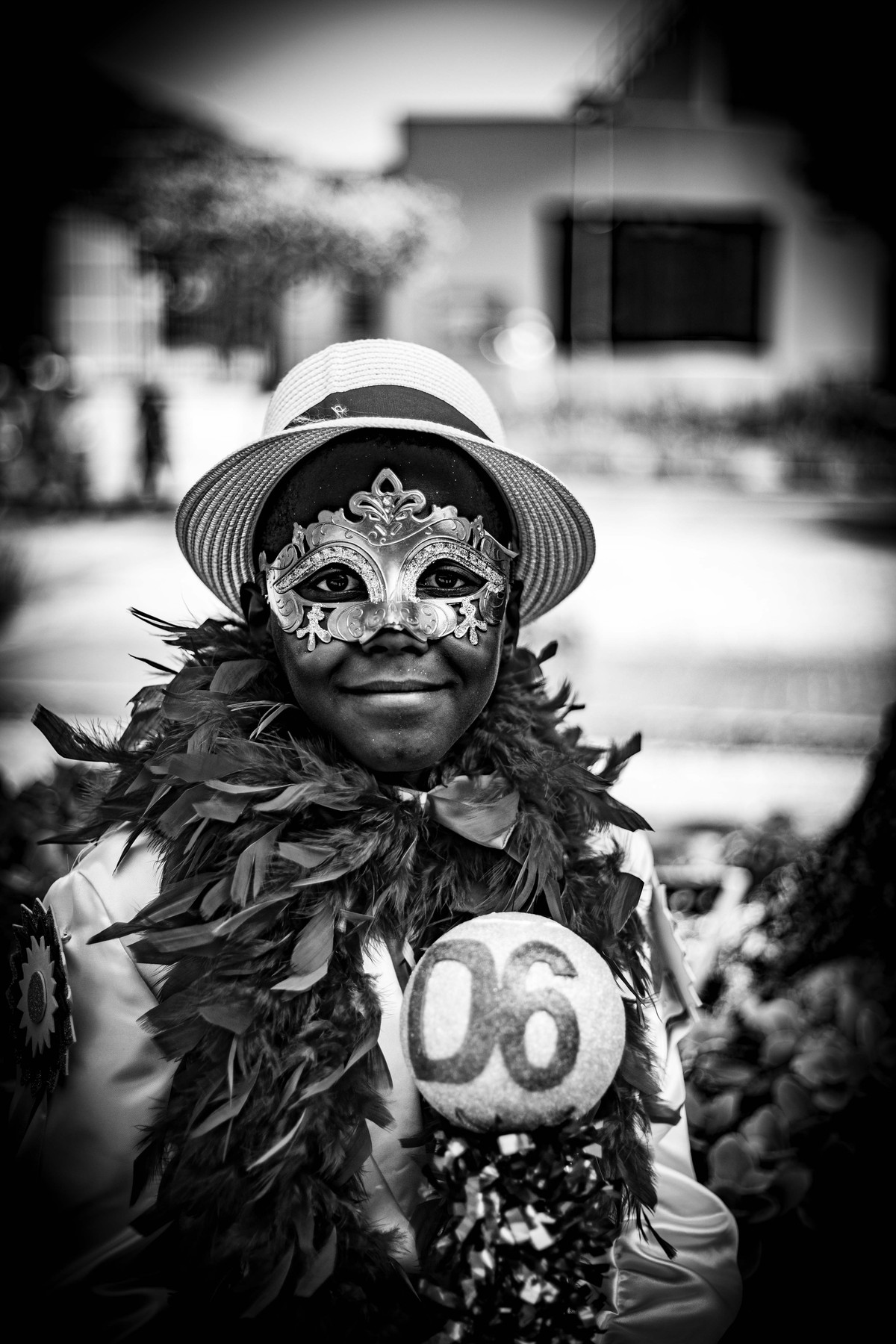
The Klopse is an extraordinary display of color, and Ajay is careful to say that color is fundamental to its identity, its pride and its celebration. But color competes. In the frames where he was less interested in the spectacle than in the person inside it, their expression, their private moment in the middle of all that movement and sound, he found himself taking the color out. Monochrome quiets the frame. It moves the viewer past the costume and onto a face, a gesture, a relationship, an unguarded second. It is not a verdict on color. It is another way of looking, and it points at the person wearing the satin rather than the satin and the feathers.
A mountain divides
The title works two ways. Table Mountain, a tourist landmark, is a physical presence over the whole city, and it is also a hard line. One side carries privilege, tourism and visibility. On the other are the Cape Flats communities still fighting for dignity, opportunity and a sense of belonging. Ajay has lived on both sides, which is how he came to notice the distance inside a city that sells itself as united by its beauty.
The route matters in the same way. The parade moves from Hanover Street in District Six to Rose Street in the Bo-Kaap, and neither street is neutral ground. They carry slavery, forced removal, migration, cultural erasure and resistance. When the Klopse moves through them, it is a reclamation as much as a celebration.
All proceeds from the book go to #shoot4purpose, a Cape Town initiative that uses black and white street photography to help women who have experienced trauma reclaim their voices, and toward a bursary for a girl from the Klopse community. The book also carries a QR code linking to a goema playlist, so the drums and brass and voices can run while you turn the pages, because photography is silent and the music is the heartbeat of the carnival.
What Ajay wants from a viewer is not pity. These communities have lived through slavery, forced removals, poverty, gang violence and inequality that has not gone anywhere, and none of that is what defines them. Black subjects are too often shown only through hardship, and his photographs insist on the rest of it, tenderness, pride, joy, love and confidence. The joy in these photographs is not cosmetic. It is an assertion of dignity, presence and belonging. He came with a camera, he says, but not to expose or extract. He came to connect, and to argue with the narrow ways this city has been taught to see its own people. He calls the work a letter to a community that refuses to be erased, and an offering to its future.
You can see more of Ajay’s work on foto @ajay_lalu_photography or at www.lalu.co.za
Ajay Lalu is a Cape Town photographer who grew up in Athlone on the Cape Flats. His photographs of the Kaapse Klopse, made between 2024 and 2026, became the book A Mountain Divides, with all proceeds going to #shoot4purpose and a bursary for a girl from the Klopse community.