Two hundred vintage prints, more than eighty photographers, and a working darkroom in the gallery.
Tate Modern opened Light and Magic: The Birth of Art Photography on October 14, and it runs until February 21. It’s billed as the first major exhibition to treat Pictorialism as a global movement rather than a European one with some outposts, and on the evidence of what’s hanging in the Eyal Ofer Galleries that claim holds up. Two hundred rare vintage prints by more than eighty photographers, spread across four sections, covering the 1880s through to the 1960s, with work from Seoul and Sydney, New York and Cape Town, Brazil and Singapore.
The names the standard history skipped
The show opens where we expect it to, with Adolph de Meyer and Clarence H. White and the late nineteenth century argument about whether a photograph could be art at all, and then it widens out fast. The Chinese photographer Long Chin-san, whose name also gets written Lang Jingshan depending on which romanization we met first, is here with Riverside Spring from 1942 and the landscape Pavilion Fairyland, which borrows its whole visual grammar from traditional ink painting rather than from European salon pictures. Luo Bonian is here with Drawing Water from a Well from 1932, a print Tate bought this year. Shapoor N. Bhedwar came up through Bombay. Emma Barton’s The Awakening from 1903 is one of the British highlights, and Fan Ho’s Smoky World from 1959, on loan from M+ in Hong Kong, is the image Tate chose to sell the show with.
We’ve written before about how carefully the Pictorialists staged what looks spontaneous, and that reading survives the expansion. What doesn’t survive is the idea that the staging was a London and New York habit that traveled outward. It was happening in Shanghai and Colombo at the same time, in parallel, with its own sources.
The second room is the one to slow down in
An entire section is given over to photographic printmaking, and for anyone who works in black and white this is the reason to go. Tate has hung pairs of photographs that show the same image carried through different printing processes, including Peter Henry Emerson’s A Norfolk Boat-Yard from 1886, so the difference between one process and another is sitting there on the wall instead of being described in a caption. There’s also a functioning darkroom in the gallery, and the museum is running a series of process based short courses called The Art of the Darkroom alongside the exhibition through to February.
That emphasis is the correct one, because the Pictorialists treated the print as the work and the negative as raw material, which is close to the opposite of how most of us were taught. They chose papers the way a painter chooses a surface, and they put real money into it. A museum recently paid a record price for seven platinum prints from 1898, and the reason those objects carry that kind of value is exactly the thing this room is built to show.
Camera clubs were the network
A third section is about the societies and salons, and it’s quietly the most interesting argument in the building. The Royal Photographic Society in London is there, as we would expect, but so are Guangshe in Shanghai, The New Line Group in South Korea and the Photographic Society of Singapore, with their own books and journals on display next to Camera Work, Shashinkai from the 1920s and USSR in Construction from the 1930s. Ideas moved between these places because people printed them, posted them and hung them in each other’s exhibitions. It was a working network with no technology behind it beyond paper and shipping, and it’s hard to look at it without recognizing what our own communities are doing.
Where it lands
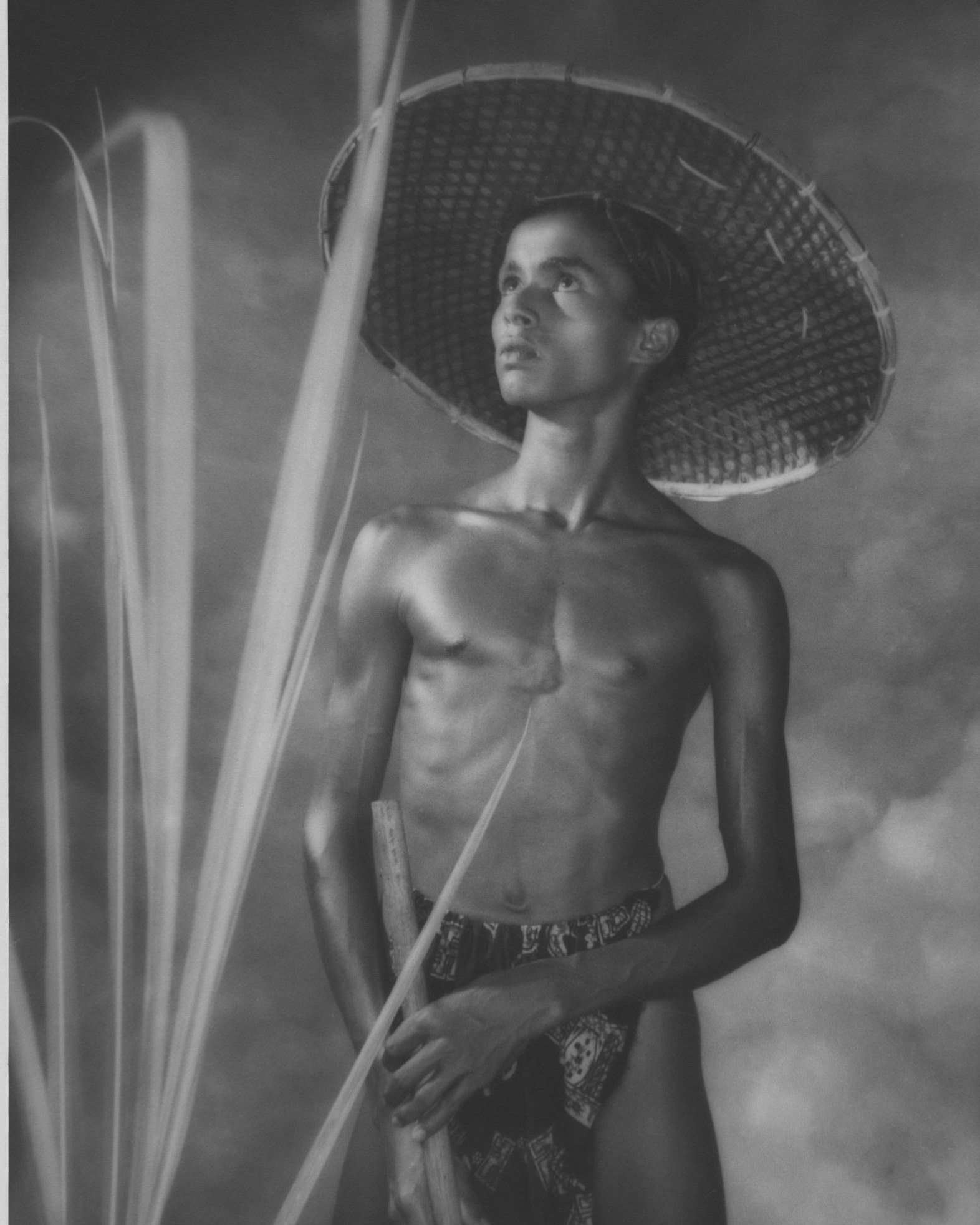
The last section goes after the tidy story we all absorbed, the one where Modernism arrives and sweeps soft focus into the bin. Tate’s answer is that the same people did both. Lionel Wendt’s solarized portraits from the 1930s are here, alongside Shigeru Onishi’s experiments from 1950s Japan, and then Edward Steichen, Paul Strand and Edward Weston, all three of whom started inside Pictorialism and walked out the other side without ever quite leaving. Steichen’s Primo Carnera from around 1922 and Strand’s Miss Thomson, New Mexico from the same period are the hinge.
Tickets are £20, or £19 concessions, £5 for anyone aged 16 to 25 who signs up to Tate Collective, and free for members. The reviews have been strong, with The Guardian and The Times both running five stars. It’s worth the trip for anyone who can get to London between now and the end of February, and for the rest of us the part to take away is the simplest one. These photographers believed the print was where the picture actually happened, they spent their lives proving it in a dozen countries at once, and the record we inherited quietly cut most of them out.
Details from Tate Modern. Coming Home from the Marshes by Peter Henry Emerson, 1886, and Goviya by Lionel Wendt, 1937, both public domain.