They do. And it has almost nothing to do with the photograph.
We’ve all done this. You come back with something you’re genuinely pleased with, you spend an evening getting the tones where you want them, you post it, and for a few hours it does what you hoped. Then it’s Thursday and it’s gone. Not deleted, just gone, somewhere below the scroll where nobody will ever go looking. A month later you’d have trouble finding it yourself. The picture didn’t get worse. It just ran out of shelf life.
18 hours, and that’s one of the generous ones
There’s a measure for this called half life, borrowed from physics, meaning the time it takes a post to collect half of all the attention it will ever receive. A 2026 study pulled it from a dataset of more than 5.5 million posts, and the spread is bigger than most of us would guess.
- X, 49 minutes
- Facebook, 86 minutes
- Instagram feed, around 18 hours, with meaningful reach gone inside 2 days
- LinkedIn, around 36 hours
- Pinterest, around 16 weeks
- A page on your own website, 2 years
Read that last pair again. The same photograph, made on the same morning, has a visible life of 18 hours in one place and 2 years in another. The researchers are blunt about why, and their explanation is the whole thing in one sentence. The difference isn’t quality, it’s architecture. A feed ranks by recency, so every picture anybody posts after yours is actively burying it. A search page ranks by relevance, so a photograph from 2019 competes on level terms with one that went up this morning.
The chilled aisle and the dry goods aisle
A supermarket runs two completely different kinds of shelf, and it’s worth thinking about which one we’ve been stocking.
At the front there’s the chilled aisle. Everything in it carries a date, the stock turns over daily, the freshest goes to the front and yesterday’s gets pushed to the back. Nothing on that shelf is bad. The shelf is simply built to move things through, and it will pull your product on schedule no matter how good it is. Then a few aisles over there’s the dry goods, where a jar sits quietly for a year and people walk down on purpose when they want what’s in it.
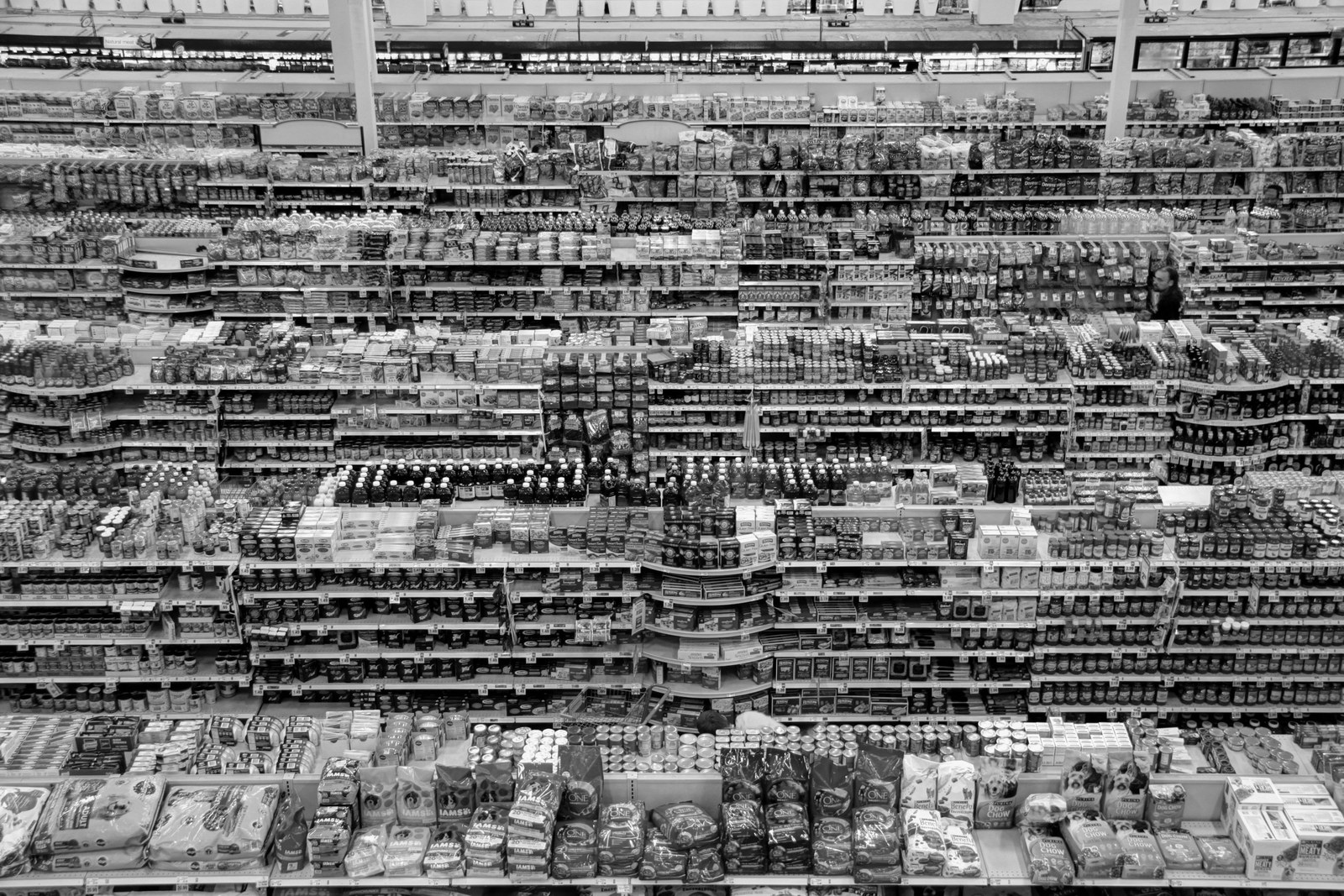
The feed is the chilled aisle. Your own site, a print, a book, a feature somewhere that gets indexed, those are dry goods. Same product, wildly different shelf life, and no amount of making better milk turns it into a jar of preserves. The only variable any of us actually controls is which aisle we stock.
None of which makes the feed a bad place. It’s a good place to start a conversation and we’ve made that case before, that a feed is a studio and a community is a gallery. It’s just a terrible place to store anything, and most of us have been treating it as both.
Stock a shelf you own
The single biggest lever here costs nothing except the habit of using it. A page on a site you control keeps working for years, gets found by people who went looking rather than people who happened to be scrolling, and doesn’t disappear because somebody changed how ranking works. A plain portfolio page with 20 photographs on it will outlive several hundred posts, and it’s the only place where the work sits in the order you chose rather than the order it was uploaded.
Make a print
A print on a wall has an active window measured in decades, which makes every number in that list look faintly ridiculous. It also gets looked at by the same person a thousand times rather than by a thousand people once, and those are completely different kinds of attention. We’ve written at length about why the print is the point, and shelf life is one more reason it holds up.
Give the pictures somewhere to live
This is the one we’d push hardest, because it does something the others don’t. A single frame on its own can only ever be looked at. A frame inside a story can be read, and a reader will give it 30 seconds instead of half a second because there’s a reason to stay.
That’s what our photo stories are for. Photographs that had their 18 hours two years ago get a second life entirely, with the context around them that nobody ever gets from a caption, on a page that keeps turning up in search long after it was published. Work that was effectively finished comes back and starts being seen again, which is about as close to extending a shelf life as any of us can get. The same goes for building series instead of singles. A body of work can be sequenced, shown, published and returned to. A single frame gets consumed once and that’s the end of it.
If any of that sounds useful for our own photographs, joining the collective is free and it’s where it starts. Membership opens up the community gallery along with the submission forms for Behind The Shot and Photographer Spotlight, and if there’s a project sitting on a drive with enough in it to carry a longer piece, our photo stories page is where to begin that conversation.
And while we’re here, there’s no rule against putting something out again. The feed’s amnesia runs both ways. Almost nobody saw it the first time, so reposting a photograph from 18 months ago isn’t repeating yourself, it’s just restocking.
Decide the work is worth more than a day
Make it, post it, move on. That habit isn’t really a decision about distribution. It’s a quiet statement about what we think the photograph is worth, and most of the time it sells the work badly short. We’ll give a morning to walking for one frame and an evening to getting the tones where we want them, and then hand the result to a shelf built to clear it by Thursday without ever stopping to ask whether it deserved better than that.
It usually did. A photograph we’re genuinely proud of has earned a print, or a place on a page we own, or a story built around it so somebody has a reason to stay with it. None of that is self promotion and none of it needs an audience we don’t already have. It’s just taking the work as seriously in the hour after we finish it as we did in the hour we made it.
The photographs that end up mattering most to us are almost never the ones that performed. They’re the ones we keep going back to years later, for reasons that have nothing to do with how anybody responded at the time. Those are the ones worth the small amount of trouble, so give them somewhere they can still be found in 5 years. Value the work enough to put it where it can last, and the question of shelf life mostly answers itself.
Half life figures from the 2026 Social Media Content Lifespan Report, drawing on longitudinal engagement research across more than 5.5 million posts. Photographs by Nathália Rosa and Peter Bond on Unsplash.