The gap between formats is real. It is also smaller than almost every other decision you make before the shutter opens.
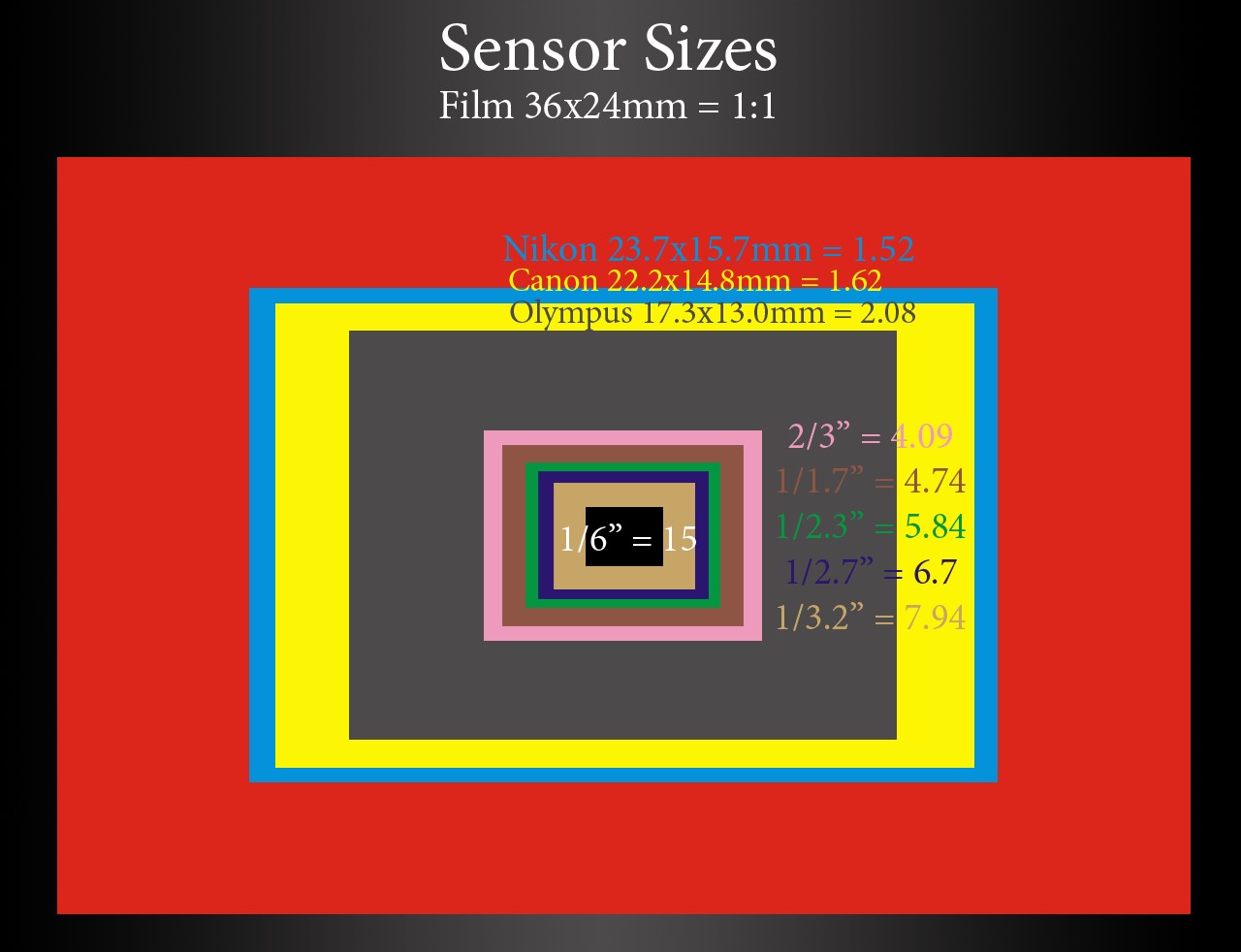
Sensor size is the argument that never ends. Medium format against full frame, full frame against APS-C, micro four thirds against the phone in your pocket. Most of that discussion is written by and for color photographers, and a fair amount of it does not transfer to what we do. So it is worth going through what a larger sensor actually gives you, and then asking which of those things a black and white photographer can use.
What a bigger sensor actually buys
One thing, mostly, and everything else follows from it. A bigger sensor collects more light for the same exposure, because there is more of it to catch photons. More light means a cleaner signal, which means less noise and more room in the shadows. Micro four thirds is roughly a quarter of the area of full frame, which is where the two stop difference people quote comes from.
The step up from full frame to medium format is much smaller than the marketing suggests. In measured terms the Fujifilm GFX sensors run about half a stop better in dynamic range than the best full frame sensors. Half a stop. The rest of what people call the medium format look comes from somewhere else, mostly from file depth, from lenses designed for a bigger circle, and from the fact that nobody shoots a GFX in a hurry.
The other real advantage is depth of field. At the same framing and the same f number, a bigger sensor gives you less of it, which is a genuine creative tool. It is worth knowing that this cuts both ways. If you match the depth of field between formats by opening the smaller sensor up, you also hand back most of the noise advantage, because both cameras end up gathering a similar amount of light.
Why noise behaves differently for us
Here is where the usual advice stops applying. Digital noise comes in two kinds. Luminance noise is the fine speckle in the brightness values. Chroma noise is the blotchy red and green mottling that appears in shadows, and it is the one that makes a high ISO color file look cheap. Convert to black and white and the chroma noise goes with the color. What is left is luminance noise, which looks like grain.
Photographers have not only tolerated grain for a century, they have chosen it. Nobody apologizes for the grain in a Tri-X frame pushed to 1600. So the main penalty of a smaller sensor, the thing that drives color photographers to upgrade, is the penalty we are least bothered by. A noisy monochrome file at ISO 6400 often looks like a decision. The same file in color looks like a mistake.
The filter in front matters more than the size
Every normal sensor has a color filter array sitting over it, a grid of red, green and blue filters that throws away most of the light reaching each photosite, and the file then has to be reassembled by guessing the missing colors. Take that filter off and you get roughly a stop of light back, plus real detail at every pixel instead of interpolated detail. Pentax measured about a stop between the K-3 III Monochrome and its color twin at identical settings.
That is the whole APS-C to full frame gap, bought by removing a filter rather than by buying a bigger camera. It is why a 26MP APS-C monochrome camera can go toe to toe with a full frame color body for noise and beat it for detail, and why the 60MP Leica M11 Monochrom, which Leica rates at 15 stops of dynamic range with a base ISO of 125, is not embarrassed by medium format. Format is one variable. What sits in front of the sensor is another, and for us the second one is worth more.
What no sensor can do for you
The hardest problem in black and white is tonal separation. A red brick wall and a green hedge can be the same brightness, and once the color is gone they merge into one gray mass. No amount of sensor area fixes that. A bigger sensor records the same two tones more cleanly and they are still the same two tones.
What does fix it is light, and filtration, and where you choose to stand. A red filter will darken that sky and lift that brick in a way no upgrade can, and waiting twenty minutes for the sun to move will separate the hedge from the wall for free. This is the part of our craft that is entirely independent of the camera, and it is the part that decides whether the picture works.
When it genuinely matters
Three cases, and they are worth being clear about. If you need shallow depth of field to separate a subject, a larger sensor gives it to you more easily, and in monochrome that matters more than it does in color, because separation by color is not available to us. If you print large, the extra resolution and the smoother tonal transitions of a big sensor show up on the wall, though further away than most people assume. And if you routinely lift deep shadows by several stops, more light collected means less to apologize for.
Outside those three, the honest answer is that format is not what is holding your work back. The photographers whose black and white prints we hang on walls were working with far less sensitivity, far less dynamic range and far more grain than anything on sale today, and the reason their pictures are good has nothing to do with the size of the thing that recorded them.