Seventy portraits of a province turning seventy. He finished twenty six, and then the world closed.
In 2018, Bojan Fürst had been living in Newfoundland and Labrador for ten years, long enough to understand what kind of place he had landed in. Just over half a million people spread across 405,000 square kilometers, which works out to about 1.4 people for every square kilometer. Hundreds of communities tucked into coves and bays around the island and up the coast of Labrador, most of them shaped by settlement patterns going back to the seventeenth century, on land where Indigenous nations have lived for thousands of years. It is also the youngest province in Canada. Newfoundland and Labrador joined Confederation in 1949, after a long and complicated colonial history, and the seventieth anniversary of that decision was coming up.
So he started a project called 70/70. Seventy profiles of Newfoundlanders and Labradorians, made in the anniversary year, a love letter to the place and a snapshot of where it stood at that moment. He made it with the producer Michelle Porter and the Centre for Newfoundland Studies, and he did not profile a single person before working out what the thing was going to be.
Why the voices had to be in it
Each profile is an audio slideshow. Still photographs and a voice, no video. Bojan’s reason for that is the place itself. Newfoundland and Labrador is full of storytellers, and he means that literally. Stop anyone on the street, the cab driver, the woman at the grocery checkout, your dentist, and you will get a good story. There is a storytelling festival. The number of artists, musicians and writers here is wildly out of proportion to the number of people who actually live here. Something about the place turns even newcomers into storytellers. Leaving the voices out was never an option.
The form has a long and oddly forgotten history. Chris Marker’s La Jetée is where the photo roman began. Magnum ran a series called Magnum in Motion that Bojan admired for the way it used ambient sound. The two that shaped how he actually works are Daniel Meadows, who made a series on Wales for the BBC along with his Photobus and Talking Pictures projects, and Todd Heisler, whose One in 8 Million series for the New York Times remains the high water mark for the form. What he took from Heisler was the discipline of getting out of the way. No narration, no presenter, just the voices of the people in the photographs.
It works. When an episode goes out, the person profiled usually posts it, and their friends congratulate them on how well they did it. Bojan loves that. He is invisible in his own project, which he describes as something journalism has largely given up on now that reporters are expected to be personalities on social media. It is not supposed to be about you. It is about the story and the people in it.
Turning a statistic into a person
He and Michelle are both geographers, so they started where geographers start, with the numbers. Any picture of this province tends to skew toward St. John’s, the one real urban center, and they wanted the seventy to hold at least some of the real geographic spread. They built a tracking system to watch the balance of age, demographics and occupation as the profiles accumulated.
Who ends up in front of the camera is a looser business. Some are people they already knew from living here, like Alexis Templeton, a potter and chocolate sommelier, or the optometrist Sarah Hutchens. Others they met through the project itself. Sometimes they went looking for someone who could carry a particular part of the culture, which is how Master Corporal Andrew Cox came into it, a member of the Royal Newfoundland Regiment and part of the ceremonies around a military heritage that runs deep here.
There have been very few refusals. What happens instead is that things fall through. He still wants to photograph someone working with the Canadian Coast Guard, and every attempt so far has collapsed for one reason or another. Sometimes life just happens.
An hour of audio, then the camera
The approach is an email with a link to the project. Then the interview, which comes first and usually runs about an hour, recorded on a digital recorder with a dedicated microphone. Doing the audio first tells him what the photographs need to be. Some profiles are simple. With the luthier, he spent a couple of hours in the workshop photographing the man at work along with the tools and objects around him, and recorded ten to twenty minutes of ambient sound. Others need permissions and several locations.
He does not record and photograph at the same time if he can help it. Those are two different parts of your brain, he says, and trying to run both makes a mess of each. There is also a quieter reason. When he photographs he goes quiet, and people eventually forget he is there. Pulling out a recorder breaks that.
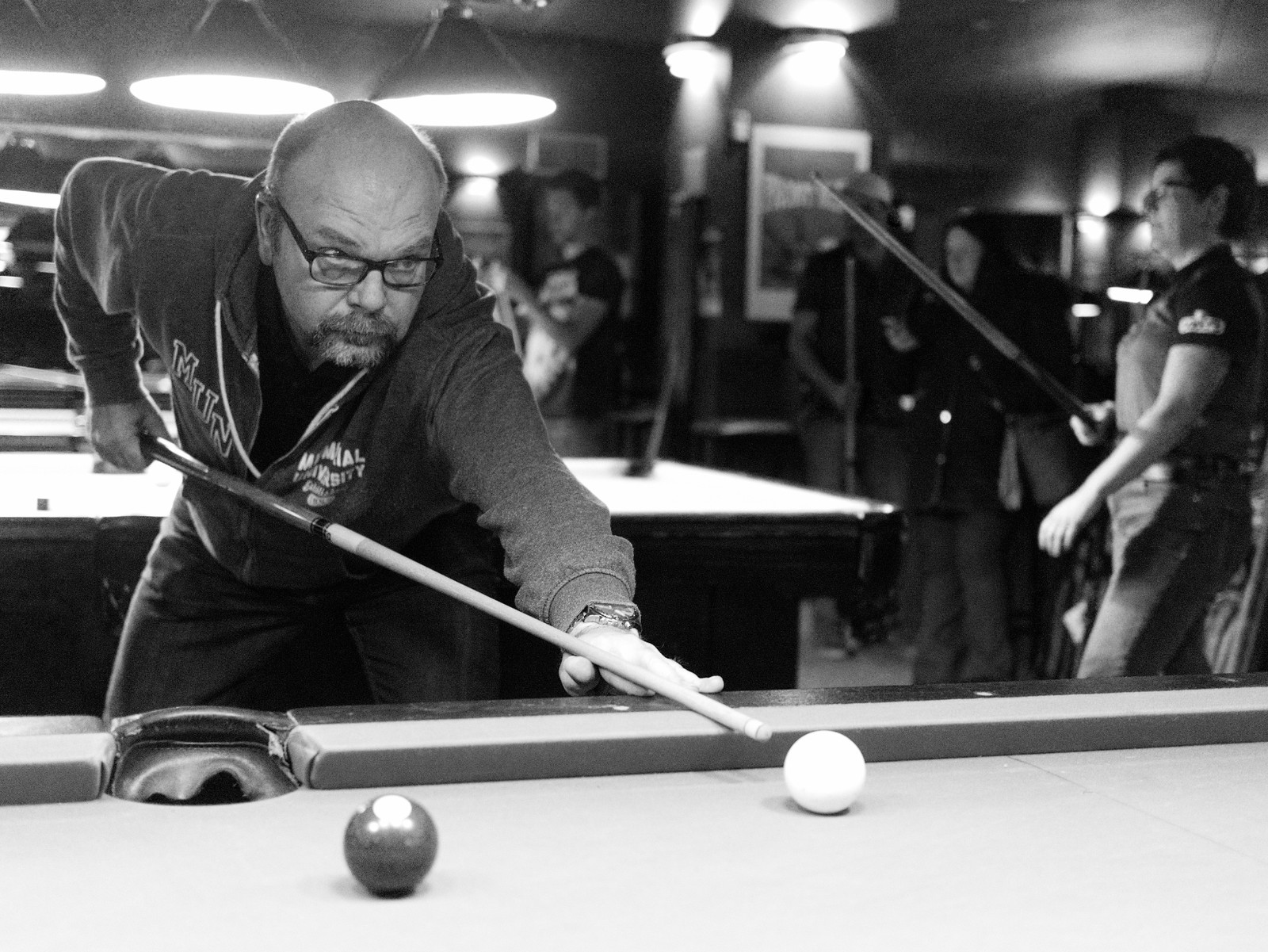
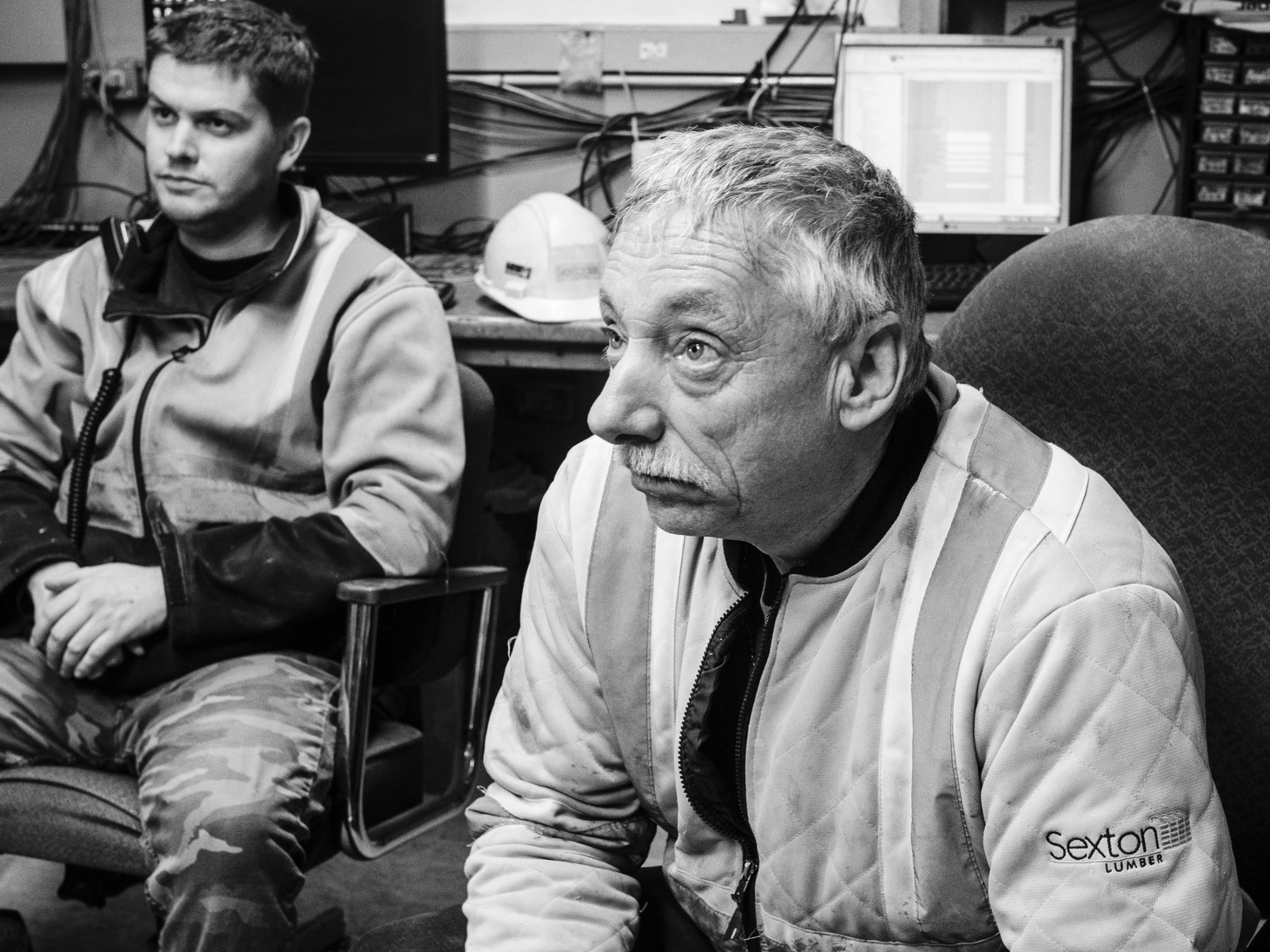
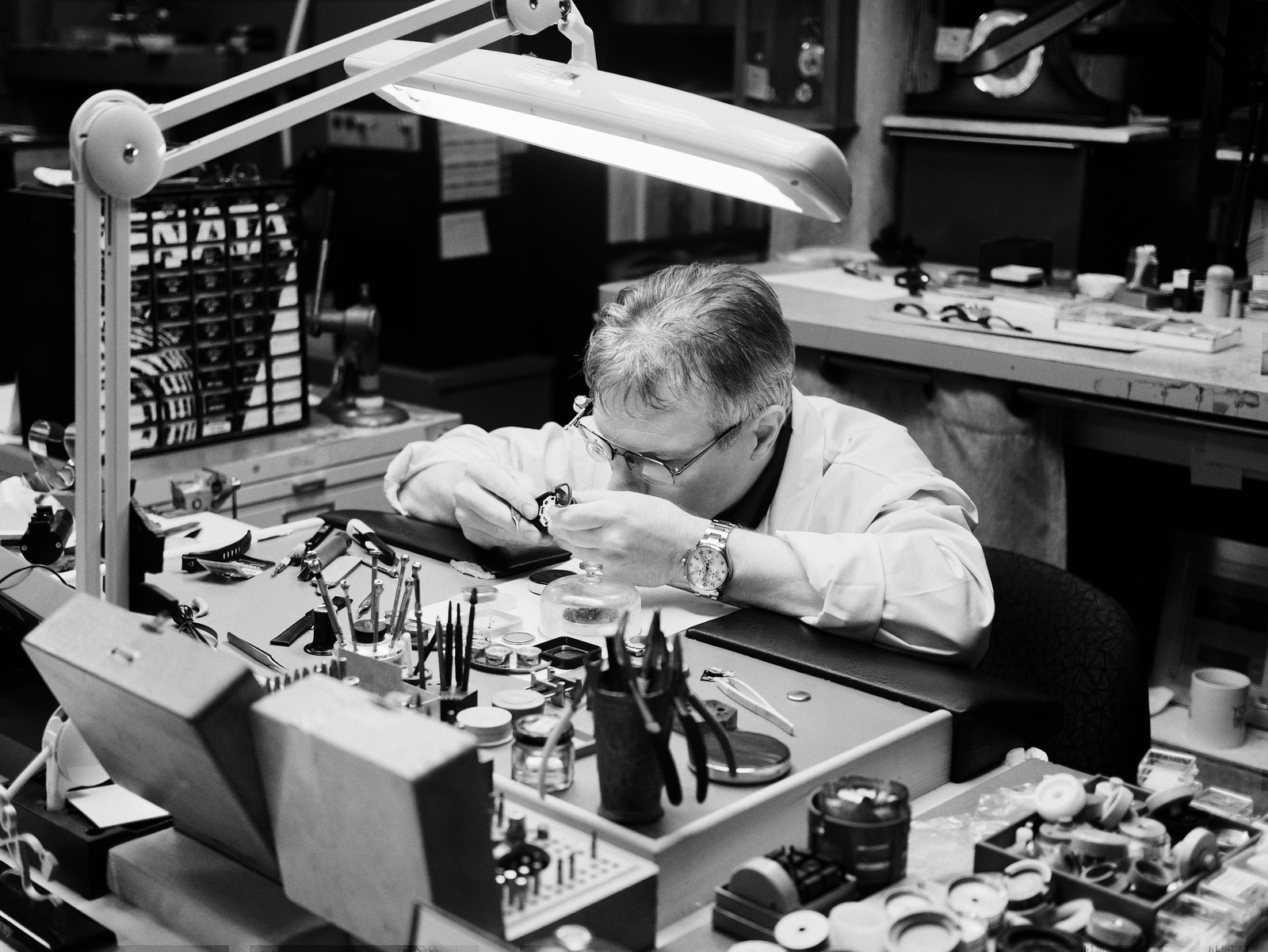
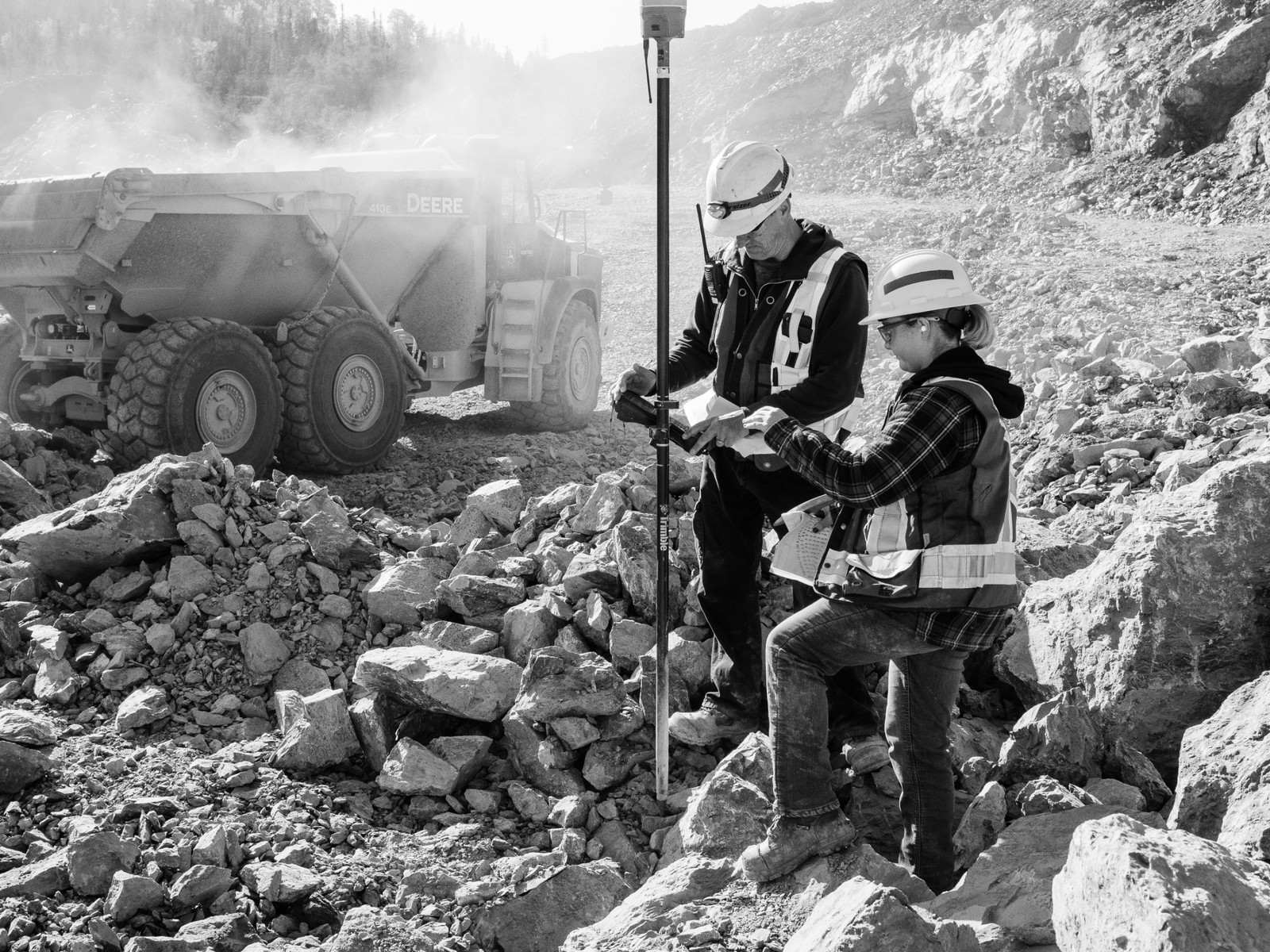
The portraits are environmental, almost never a tight shot of a face. His own habit of listening to podcasts while doing something else is part of the thinking. He has no interest in watching lips move. He would rather you see a person in the place they live or work while you hear them talk, because it engages more of your senses at once.
The whole project has been made on a pair of Olympus Pen F bodies with 12, 17, 25 and 75mm primes, roughly 24, 35, 50 and 150mm in full frame terms. He had to give up film because of a severe allergy to the chemicals, and those small cameras feel right to him. On the audio side he leans on a Roland R-07 recorder, an ancient and indestructible Electro-Voice omnidirectional microphone and a Røde NTG2 shotgun, with a Tascam DR-40 and a Zoom H1 in the bag. His actual advice is not about any of that. Buy good headphones for editing and something decent to wear while recording, because you should never record sound without hearing what you are getting. And use Hindenburg Pro to edit it, which he calls a Danish gift to the world of audio storytelling.
Twenty six, and then nothing
He finished twenty six profiles and recorded three more. The first was his local barber, a piece called You will never be the best barber in the world, and it set the ground rules. The second, the potter and chocolate sommelier, taught them how to build some complexity into a short story, because nobody is only one thing.
Then the pandemic. They were negotiating access to a fish plant when everything closed, and the project stopped where it stood. Six years later he still thinks about it almost every day, and he uses the word guilt, which he knows sounds unreasonable given that nobody is waiting on it. 70/70 is self financed and self directed. There is no editor, no deadline and no one to answer to. That turns out to be its own kind of weight.
What finishing it would take
He is in a position to start again, and he wants to. The anniversary has long gone, which raises an obvious question about the name, and his answer is that it stays 70/70. The project needs an end. After that, someone else can make a different snapshot.
The province has moved on in the meantime. Some of the people he photographed have left. Most are doing what they were doing, and a few have grown, like Shelly Bowen, whose small fabric shop has become something closer to an institution, in a bigger space, with workshops and a whole quilting community around it. The deeper problems have not gone anywhere, demographics, economic and social development, relations with Indigenous peoples, the boom and bust cycles that come with an economy built on natural resources. The biggest change of all arrived this year, when the northern cod stocks were declared healthy for the first time since the 1992 moratorium that gutted the province economically and culturally.
He has no interest in going back to re photograph anyone. It was a snapshot in time, and that is where he thinks the value sits.
The obstacle is money. This is an enormous geography and crossing it is expensive. His work has usually taken him around the province anyway, so he has been able to carry the project along with other jobs, and the Bonavista Peninsula profiles were funded by an online campaign. Beyond that there is nothing to apply for. There are no grants for documentary photography in Canada, and arts funding at both the federal and provincial level explicitly excludes documentary work. He knows photographers who reframe their projects as art to fit the forms. He is not an art photographer and will not pretend to be one for a grant.
Why it is in black and white
Bojan is refreshingly direct about this. There may be no right answer, he says, and it has more to do with him than with any theory. He likes black and white, he works in black and white, and he admires photographers who use color well without being one of them. He does have a practical argument though, and anyone who has photographed a workplace will recognize it. Industrial environments are full of strong color, the reds and yellows of warning signs that are that color for good reasons in a saw mill or a mine. Those colors take over a frame. Having to work around them feels to him like manipulating the environment rather than showing you what is in front of him.
What he hopes, when the seventy are finally finished, is modest and specific. Newfoundland and Labrador has a long documentary photography tradition, Elsie Holloway, John De Visser, Candace Cochrane, Greg Locke and plenty of others. He would like this work to be read as a chapter inside that tradition. Which is a quiet ambition for a project that has been sitting half done for six years, and probably the reason it is still worth finishing.
You can see all of the finished profiles at www.seventyseventy.ca, more of Bojan’s work at bojanfurstphotography.com, and on foto @bojanfurst
Bojan Fürst is a photographer and radio documentary maker based in Newfoundland and Labrador. 70/70, made with producer Michelle Porter and the Centre for Newfoundland Studies, profiles Newfoundlanders and Labradorians in audio slideshows built from still photographs and their own voices.