The camera is only a tool. The important thing is learning to see.
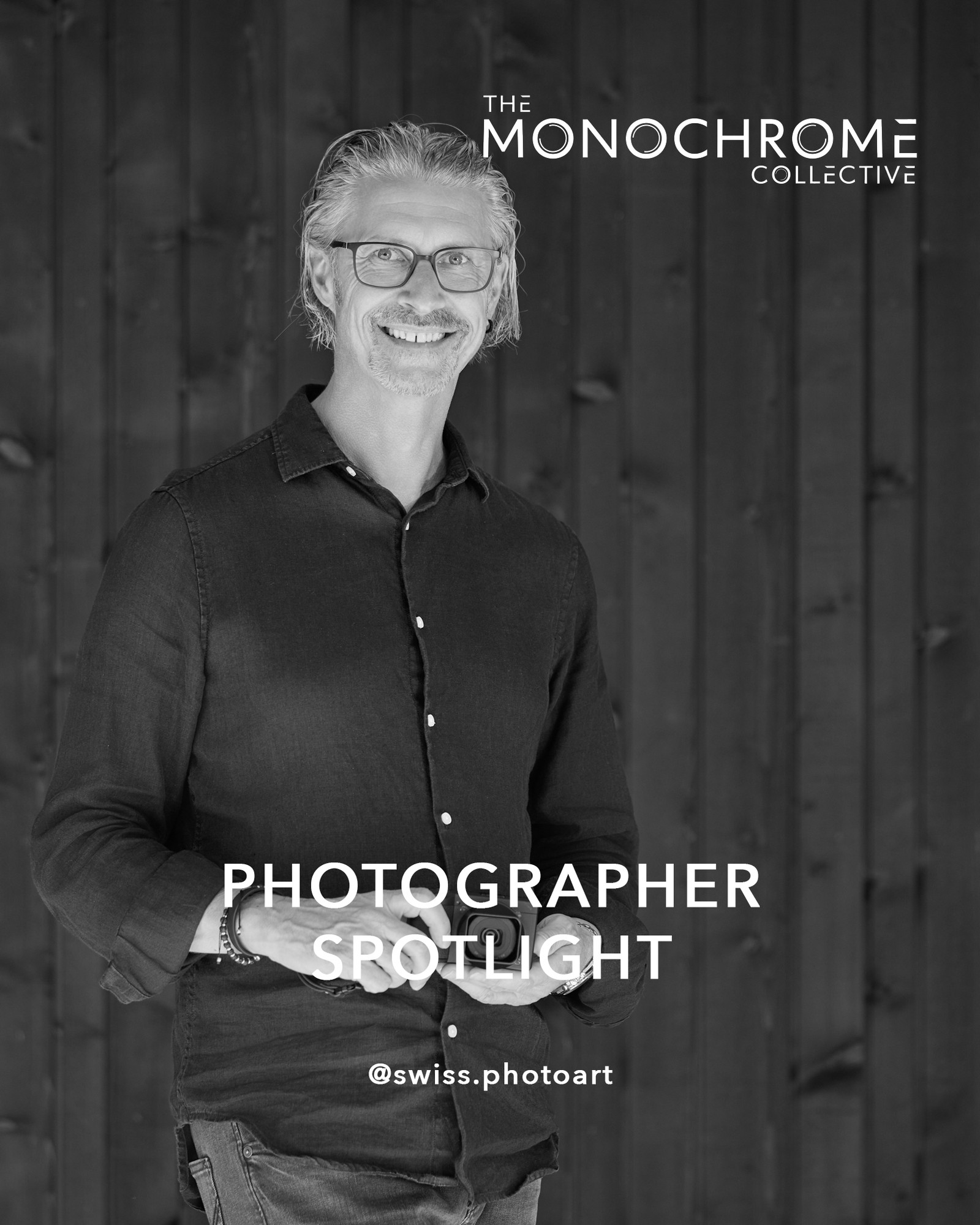
Dani Rüede came to photography through his watch collection. In 2018 he bought a Panasonic Lumix G81 and a macro lens to photograph it properly, and the macro work pulled him outward into nature and landscapes, then into competitions, including a second place finish in a Swiss CEWE competition. None of which predicts where he ended up.
What changed everything was a small camera. In 2024 he bought a Ricoh GR III, which he calls his Daily Rocker, and street photography took over. He found himself chasing light, shadows, lines and geometry, working more and more in black and white, and he now describes what he does as Urban GRaphic Storytelling, which is a better name for it than most photographers manage. When Ricoh announced the GR IV Monochrome he ordered one on the first day.
His pictures are built rather than caught. The one he talks about here, made in an underground passage at Bern railway station, took a fifteen minute wait for the right person to walk into a frame he had already found. He does all of his processing in the camera with Ricoh’s Image Control and his own recipes, and no longer opens Lightroom at all.
Here is our interview:
There’s always a moment that pulls someone into photography for good. What was yours?
I started taking photography seriously in 2018, when I bought a Panasonic Lumix G81 with a macro lens to photograph my watch collection. It soon grew into macro photography, nature and landscapes, and I started entering competitions, including a second place finish in a Swiss CEWE photography competition.
In 2024, I bought a Ricoh GR III as my Daily Rocker. That changed my photography completely. I became fascinated by street photography, especially light, shadows, lines and geometry, and increasingly worked in black and white. Today, I describe my approach as “Urban GRaphic Storytelling,” finding and telling small visual stories in the everyday urban environment. When the Ricoh GR IV Monochrome was announced, ordering one on the first day felt like the natural next step in that evolution.
What subjects are the focus of your work and why?
My main focus is street photography, especially the graphic side of everyday urban life. I’m drawn to lines, shapes, light and shadows, with people often becoming part of the composition rather than the main subject. I like finding simple, overlooked moments and turning them into clean, graphic images.
Your black and white work has a particular feeling to it. How did you arrive at that? Was it deliberate or did it emerge over time?
Black and white became a natural part of my street photography. I found that removing color helped me focus on what really attracts me: light, shadows, lines, shapes, patterns and contrast. Over time, black and white became less of a stylistic choice and more of my visual language.
Tell us the story behind one of your favorite photographs.
The Urban Zebras. I took this photograph in an underground passage at Bern railway station. I was drawn to the zebra-like pattern and its shadow, but I knew the image needed the right person to complete it. I waited for about 15 minutes until someone wearing the right clothing walked into the frame.
What is one thing that you are working to improve in your photography and how are you going about it?
I’m working on becoming more patient. I often see a composition before the final moment happens, and I’m learning to wait longer and let the scene develop instead of taking the picture too quickly.
How much do you plan versus shoot spontaneously?
Most of my photography is spontaneous. I always have my Ricoh GR with me, so I’m ready to photograph whenever I see something that catches my eye. I rarely go out with a specific shot in mind. I simply react to the light, lines, patterns and moments I find along the way.
What gear do you bring when you go out to shoot?
My Ricoh GR III is my Daily Rocker. I always have it with me and use it most for spontaneous street photography. The GR IV Monochrome is more for when I have a little more time to concentrate on the scene and work deliberately in black and white.
What does your editing process look like? What tools do you use and how do you approach it?
I shoot in RAW, but I do all my processing directly in the Ricoh GR. I no longer use Lightroom. Instead, I use Ricoh’s Image Control and my own custom recipes to create the look I want.
Who are some photographers or artists that have influenced your style and why?
Siegfried Hansen is a particular influence on me. I own several of his books. I’m also inspired by Nina Papiorek, Florian Wurzinger and Frank J. Llamas. I’m drawn to the way they find graphic elements, light, geometry and unexpected moments in everyday scenes.
What would you tell yourself when you started in photography? The thing nobody said to you that would have changed how you photographed?
Don’t worry too much about finding your style. Keep photographing what catches your eye, experiment, and let your style develop naturally over time. The camera is only a tool. The important thing is learning to see.
If you would like to see more of Dani’s work you can find him on foto @swiss.photoart