High key and low key are not looks we add afterward. They come from the light we go looking for, and the exposure dial cannot put them there.
We can recognize both instantly. A photograph that is almost all shadow with one lit edge in it. A photograph that is almost all white with one dark shape in it. They are two of the most dependable ways a black and white frame holds together, and they are the two most often attempted by turning a dial and hoping.
That does not work, and understanding why it does not work is the most useful thing we can know about either of them.
What the exposure dial actually does
Exposure compensation is a volume knob. It makes the whole photograph louder or quieter, and it does that job honestly and well. What it cannot do is change the arrangement.
Low key is not quiet music. It is music with one loud passage and a great deal of silence around it. If the recording was made at a steady level from the first bar to the last, turning the knob down does not put that silence into it. We get the same flat thing, played softer.
Photographs behave the same way. Compensation moves every tone in the frame up or down together and never changes the distance between the brightest part of the scene and the darkest part. That distance was set by the light before we arrived.
So if we stand on a street under flat overcast and dial in minus two, we do not get a low key photograph. We get a dark gray one. The shadows and the highlights are still sitting close together, only lower down. Nothing is black and nothing is white. It reads as a mistake because it is one.
Dial plus two on a hard afternoon and we get the same failure in reverse. The sky goes, the white walls go, and the subject is still a flat middle gray because it was always sitting two stops under everything around it.
So the dial is not the problem, and we are going to use it constantly. It decides where the whole picture sits. What it cannot decide is whether the scene has any range worth placing, and that gets chosen earlier, by where we go and at what hour. We have written before about pushing a frame darker or brighter for mood, which is a real tool and a separate one from this.
It is a ratio, not a brightness
Low key is a photograph where most of the frame sits below middle gray and a small part of it sits well above. High key is the reverse, most of the frame above middle gray with a small part well below.
The mass sets the mood and the exception does the work. In a low key frame the eye goes straight to the lit area because it is the only place where there is anything to see. In a high key frame the eye goes to the dark shape for exactly the same reason. Both are extreme versions of giving the eye one place to land.
Most photographs live in the middle and there is nothing wrong with that. But neither of these two can be reached by brightness alone, because both are defined by how far apart two tones are and how much of the frame each one is given.
Low key begins with light that reaches only part of the scene
To make a low key photograph we have to go somewhere the light is scarce and pointed. One window in a large room. A doorway. A streetlight on a wet road. Late sun arriving through a gap between two buildings. A stage, a bar, a cinema. The scene supplies the contrast and our job is to not ruin it.
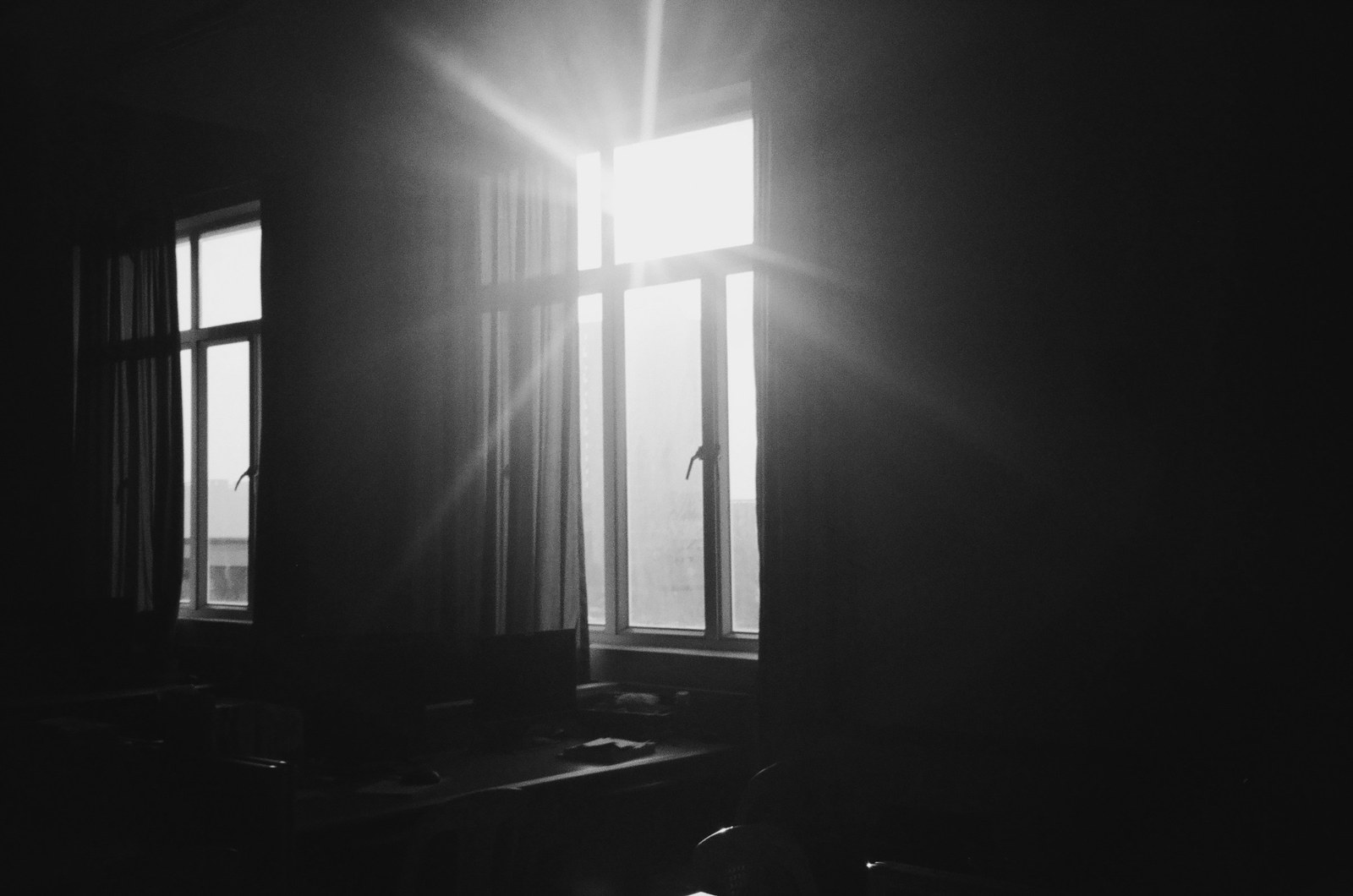
This is why low key comes easier after dark and indoors. In those places the light has already done the editing for us. Most of the room holds nothing and one small part of it holds everything.
The exposure decision follows from that. Meter the lit area, not the room. If the camera has spot metering, put the spot on the lit part and place it where we want it, usually a stop or two above middle gray so it reads as light rather than as gray. Everything else is allowed to fall, and it will fall further than we expect. Without a spot meter, use compensation and the live preview, and believe the dark preview rather than the histogram, because the meter is busy averaging a room that is mostly empty.
The one thing to protect is the lit area itself. If it blows out completely the photograph has a hole in it instead of a subject.
High key begins with light that comes from everywhere at once
High key needs the opposite condition. Fog. Snow. Heavy overcast. A white wall in open shade. A bright window used as a background. Light with no direction in it and no shadows worth speaking of.
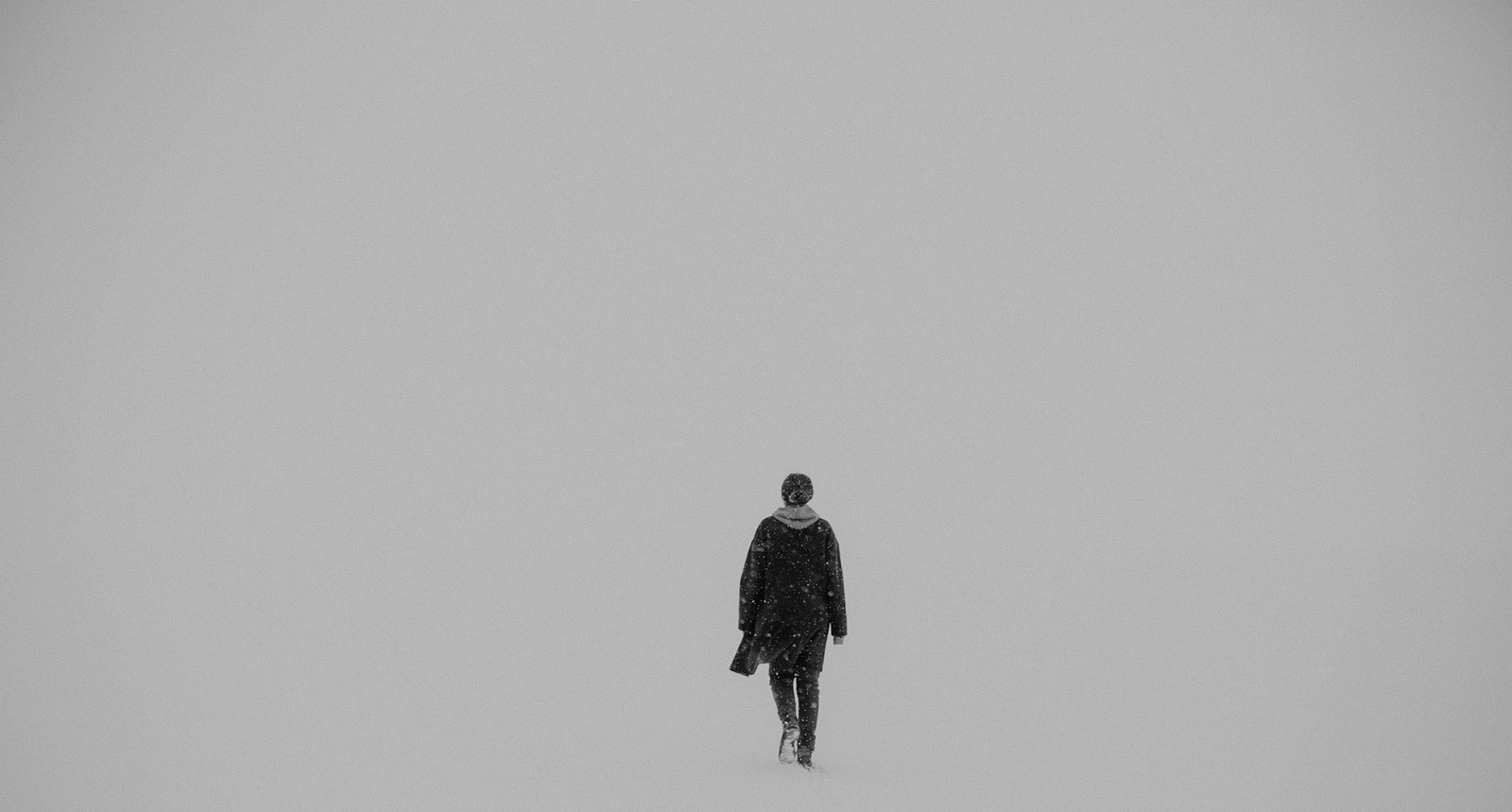
Everything that made low key straightforward has gone. There is no direction to work with and no pool of light to put a subject in. The job changes completely. Instead of finding the light, we are looking for the one dark thing.
A figure in a coat. A bare tree. A fence post. A bird. A sign. It can be small, and usually it should be, because the white around it is what makes it read at all. Without it we have a gray rectangle and a story about how foggy it was that morning.
Exposure runs the other way as well. We meter the dark shape and let the white run up behind it, placing the mass high but keeping it short of pure white. On a digital sensor a clipped highlight is gone for good, so the safer habit is to expose so the brightest area that matters still holds a trace of something, then lift the whole picture afterward. Snow and fog that print as clean paper white usually got there in editing rather than in the camera.
The exception has to be the only one of its kind
Both versions depend on a single exception, and the fastest way to lose either one is to include two of them.
Two lit areas in a dark frame and the eye bounces between them. Two dark shapes in a white frame and the photograph turns into a comparison instead of a statement. Size matters far less than being the only one. A small anchor in a large empty field of tone is stronger than a big one with a rival.
One more thing decides how far we can push it. If the exception is close enough to read as a thing, it needs detail. A face in window light needs the lit side of it to hold. If it is far enough away to read as a shape, it can go solid black or solid white and lose nothing at all.
How each one goes wrong
Low key fails as mud. The blacks are not black, they are dark gray, and the lit area is not bright enough to have been worth the darkness. Almost always this means the scene was never contrasty enough in the first place and the dial was asked to do the work. It fails a second way when we lose our nerve afterward and lift the shadows, which raises noise and turns the frame into a badly lit version of an ordinary room.
High key fails as gray. The whites sit at eighty percent and look dirty rather than clean, often because the light had a tint in it that we never noticed until the conversion. It fails when nothing in the frame is dark. And it fails when the only thing clipping is a specular highlight, a chrome edge or a reflection on glass, because then the brightest point in the photograph is a point of no interest whatsoever.
These are two different outings
The practical consequence is that we cannot hunt both on the same walk.
Low key wants evenings, interiors, stages, rain after dark, winter afternoons when the sun is low enough to come in sideways. High key wants fog at seven in the morning, snow while it is still falling, flat overcast, a white wall at midday. Those are different places at different hours, and the frame is mostly decided by which one we chose before we picked up the bag.
If we want to feel the difference in one session, find a subject that could go either way. Somebody near a window is the classic. Stand so the window light falls across them, expose for their lit side, and let the room behind them go. Then move so the window is behind them, expose for their face, and let the window run to white until they are the one dark shape in a bright frame. Same room, same person, same hour, two photographs with nothing in common.
Underneath, both are the same skill. Decide which side of middle gray the photograph is going to live on, go to the light that already has that split in it, then protect the one thing living on the other side. The dial will set the level. It was never going to write the arrangement.