Every one of us is carrying something that has not come out of the bag in a year, and we all know exactly what it is.
Nobody needed time to think about that. The answer arrived while we were still reading the title, which is the interesting part. We do not have to go and check. We have known about this thing for months, we have carried it anyway, and we have never once said out loud why.
So let us say it out loud. Not as a lecture about owning less, because that argument is boring and mostly made by people selling a different bag. The unused thing is more useful than that. It is a small, accurate record of the photographer we thought we were going to be.
We all know exactly what it is
The usual suspects turn up in almost every bag we have ever looked into.
The flash that came with the kit, still in its pouch, batteries removed years ago by somebody sensible. The 50mm bought because the internet is unanimous that everyone needs a 50mm. A polarizer. A set of neutral density filters acquired for one waterfall. The remote release. The gray card still sealed in its sleeve. Extension tubes from the fortnight we were going to take macro seriously. A second body carried as backup for a year and never once needed, which is either good luck or evidence.
And then the expensive one. The lens that cost more than the camera, that comes out perhaps twice a year, and that we defend with real feeling whenever anyone asks about it.
It was bought for a photographer who never showed up
There are only three ways something ends up living in a bag unused, and all three are forgivable.
The first is advice from somebody whose photographs look nothing like ours. A portrait photographer’s essential item is close to useless to somebody who walks empty streets at seven in the morning. The advice was good. It was just addressed to a different person.
The second is a problem we had exactly once. The filters exist because of one bright afternoon several years ago when the light beat us, and we have been carrying the solution to that afternoon ever since, in case it happens again.
The third is the one worth being honest about. We bought it for the photographer we intended to become. The one who would be up before sunrise, who would do the long exposures, who would walk up to strangers and ask for a portrait. That person may still turn up. But the equipment did not make them turn up, and buying gear is the cheapest and most satisfying way ever invented to postpone becoming somebody.
The bag is an honest document
Almost everything else we say about our photography is edited before anyone hears it. The bag is not. Nobody sees inside it, so it has no reason to lie.
Look at what is worn. The scuffed body, the lens with the paint gone from the focus tab, the strap that has gone soft. That is the actual practice. If the worn things are one body and one 35mm, then we are a 35mm photographer, whatever we have been telling people at the camera club. That is not a confession. It is a finding, and it happens to be the most useful thing in the bag, because every lens has a voice and we have evidently chosen ours already.
What the extra weight actually costs
It is not the weight. We would all carry an extra pound without complaining. It is the deciding.
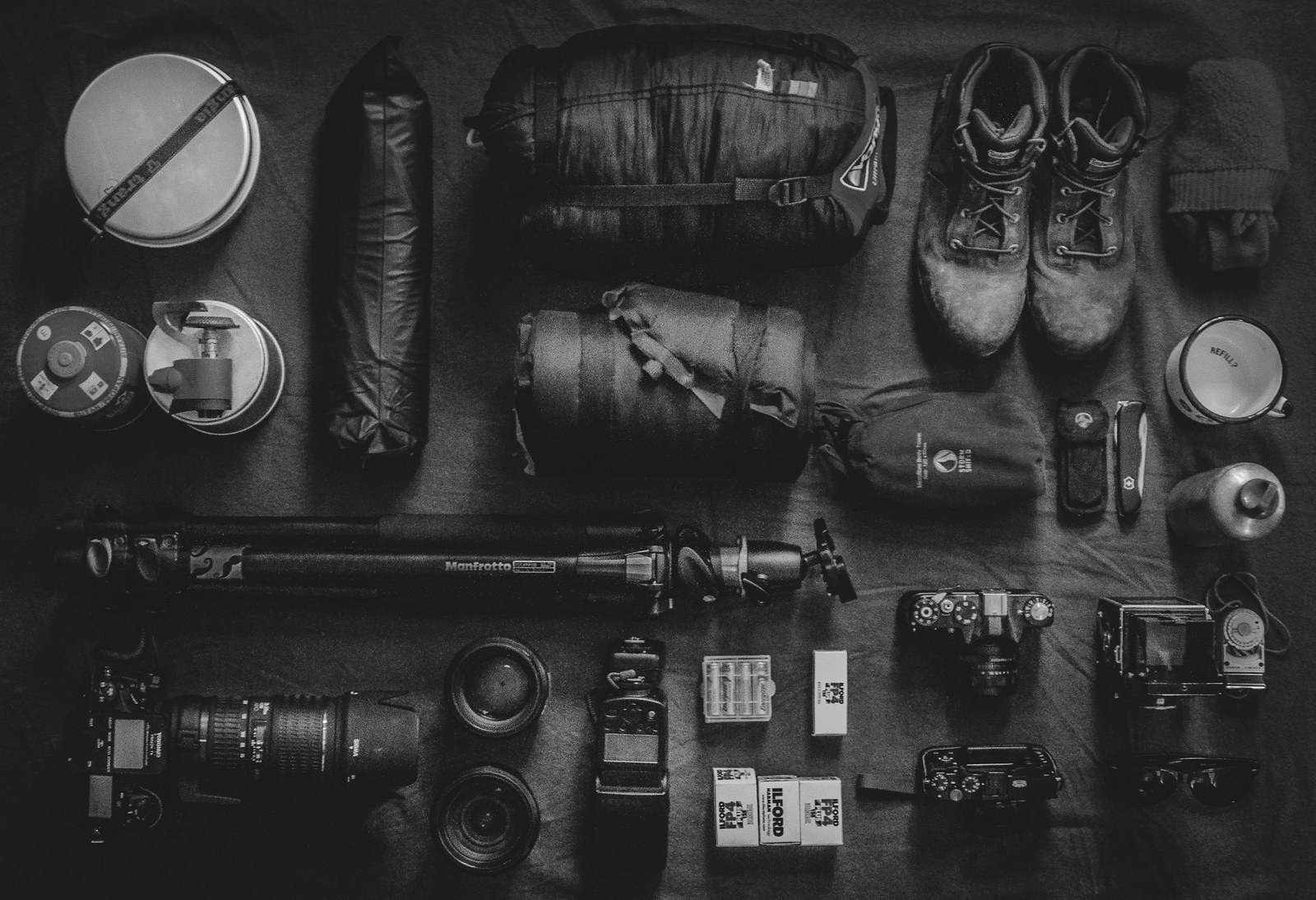
A bag with four lenses in it means that at the moment something happens in front of us, part of our attention is in the bag rather than on the street. We are choosing while the picture is leaving. One camera and one lens removes that entire conversation, which is why people who try it for a week tend to keep going, and why more options can quietly work against us.
The unused item also keeps making a suggestion. Today might be the day. Maybe this is the morning for the long lens. So it stays, and the suggestion stays with it, and both of them come along on every walk.
The two questions that settle it
When did it last change a photograph? Not when was it last used. When did it last make a picture that could not have existed without it. Those are different questions and only the second one counts.
And if it disappeared tomorrow, what would we do differently? If the honest answer is nothing at all, then it is not equipment. It is a passenger.
Anything that passes either question has earned its place and the argument is over.
Some things earn their place by sitting still
This is not a purge. A spare battery has never taken a photograph in its life and it stays in the bag forever. So does the cloth, and so does the one specific item that would ruin a whole day by its absence. Insurance is not clutter.
The difference is simply whether we can say what it is for. The spare battery has a job and we can describe the job in four words. The extension tubes have a job we described to ourselves once, in a shop, several years ago, and have not thought about since.
So, the question
What is in the bag that never comes out, and are we keeping it because it is useful or because selling it would mean admitting something.
Tell us, and be specific. Name the item, say what we bought it for, and say honestly how long it has been since it did anything. Bonus points for the most expensive object anybody is willing to confess to, and extra credit for whoever has carried something the longest without ever taking it out of its bag.
Add yours over at Ask The Collective. No account is needed and nobody is going to judge, because every one of us reading this has already thought of ours.