Every one is built from a different set of restored vintage elements, and Light Lens Lab says that is the point.
Light Lens Lab opened orders on 23 November for the 40mm f/2 “Hua”, a manual focus lens in Leica M mount at $250. The specification is unremarkable for the money. What isn’t unremarkable is that the company can’t tell you exactly what is inside the one you receive.
What it is
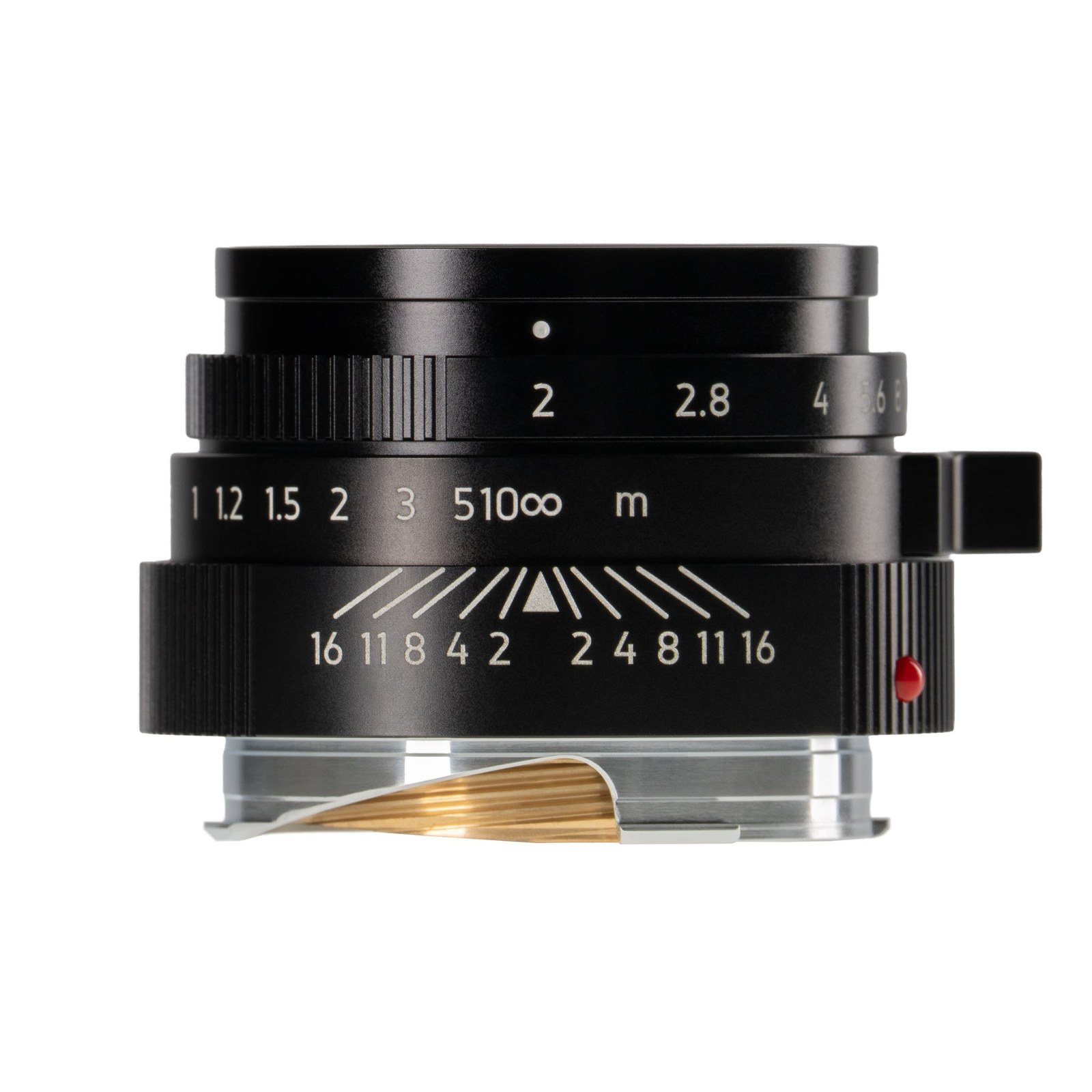
Six elements in four groups in a Double-Gauss layout, which is the same formula sitting behind the $5,000 Belladonna we looked at a few days ago, at a twentieth of the price. Ten blades in a preset diaphragm that locks at every full stop from f/2 to f/16. Manual focus down to 0.5m, a 39mm filter thread, 162 grams, and an aluminium and brass barrel borrowed from the company’s own 50mm f/2. Black Chrome or Silver Chrome, both at the same price, with the black finish using a new process the company says it will carry into later lenses.
The glass is the whole story
Each lens pairs new elements made by Light Lens Lab with vintage ones taken from the founder’s own collection, cleaned of age defects and recoated to their original specifications. The vintage elements come from several different Chinese makers, and which ones end up in which lens changes from copy to copy. Two of them will render the same scene differently, and that isn’t a tolerance problem. It’s the design.
The company frames the whole thing as a tribute, and the history it reaches for is one most of us have never been told. In December 1953 a team under Wang Daheng in Changchun produced China’s first successful batch of optical elements. Shanghai followed with the 58-I, the first camera built domestically in China, then the Seagull twin lens reflexes, then the Hongqi 20 rangefinder out of Shanghai’s No. 2 Camera Factory. Most of those operations are long gone. This lens is assembled partly out of what they left behind.
The catch, which is worth reading twice
Light Lens Lab is unusually direct about what the randomness costs. Because the elements vary, rangefinder accuracy can vary with them, and it can vary inside the coupled range. The company states this plainly on its own announcement page and then excludes it from warranty returns.
That deserves a second read before anybody orders. A rangefinder lens that might not focus accurately on a rangefinder is a real limitation rather than a charming quirk. Coupling runs from infinity to 0.7m, and from 0.7m down to the 0.5m minimum it’s uncoupled anyway, so live view is doing the work at close range regardless.
What it costs, and who it is for
$250 for either finish. Orders opened on 23 November, worldwide shipping starts in December, and it’s a limited release built in small batches rather than a standing product.
It’s worth setting next to the other two M mount stories of the past fortnight. The Belladonna asks $5,000 for a rendering signature. Leica asks $10,950 for a hammertone finish where no two cameras look quite the same. This asks $250 for a lens where no two actually are the same, and is honest that the randomness has a price attached.
If what you need is a dependable 40mm for an M body, this isn’t it and there are better answers. If the idea of making new photographs through glass somebody ground in China decades ago is worth $250 and a degree of focusing uncertainty, that’s precisely what’s being offered, and nobody is pretending otherwise.