Firmware 1.10 adds an in camera Solarized Effect, and it’s the one thing in this round of updates that the color cameras didn’t get.
Ricoh pushed firmware across most of the GR line on 21 October. The GR IV and the GR IV HDF went to version 1.20, the GR III and GR IIIx were updated alongside them, and the GR IV Monochrome went to 1.10.
Most of what’s in there is housekeeping, and all of the cameras got it. There’s an AF Point option that decides whether the focus point stays where you left it or returns to the center when you power the camera off. There’s a setting to choose whether your USER mode registrations come back at power on or whether the camera keeps whatever you were doing. There’s a Connection While Power Off toggle, which lets the GR WORLD app wake the camera or, switched off, stops the camera listening and saves the battery. You can now change the power off screen from the app, and there’s a new certification mark for India.
The Monochrome got one thing nothing else did. A Solarized Effect image control, which Ricoh describes as inverting tones and contours for what it calls a fantastical and surreal effect. There are three types, Type 1 is the default, and you tune the result with exposure compensation.
Solarization is a lot older than the camera
What Ricoh is emulating here is the Sabattier effect, named for Armand Sabattier, who described it in 1862. You expose a print or a negative part way through development to a second burst of light, and some of the tones reverse while others don’t, leaving a thin dark line along the border between light and dark areas. Man Ray and Lee Miller made it famous in Paris in the early 1930s, and it has drifted in and out of fashion ever since.
Ricoh is reproducing the look rather than the process, which is the honest way to describe any digital version of this. The darkroom original is unpredictable and hard to repeat, and that unpredictability was most of the appeal.
The anniversary edition is finally in stock
The GR IV 30th Anniversary Edition Kit landed the same week, limited to 6,000 units worldwide at a list price of $1,799.95, though retailer pricing is already drifting above that. The shutter release and rear buttons are painted in a color taken from the original GR1, there’s a diamond cut GN-3 ring cap on the lens, and the power off screen carries a 30th anniversary design. In the box are a GK-2 metal hot shoe cover and a GS-4 finger strap, both in anniversary trim, plus a pin badge set drawn from previous GR models. The pin set is running late and is now due on 13 November. Everything else about the camera is a standard GR IV.
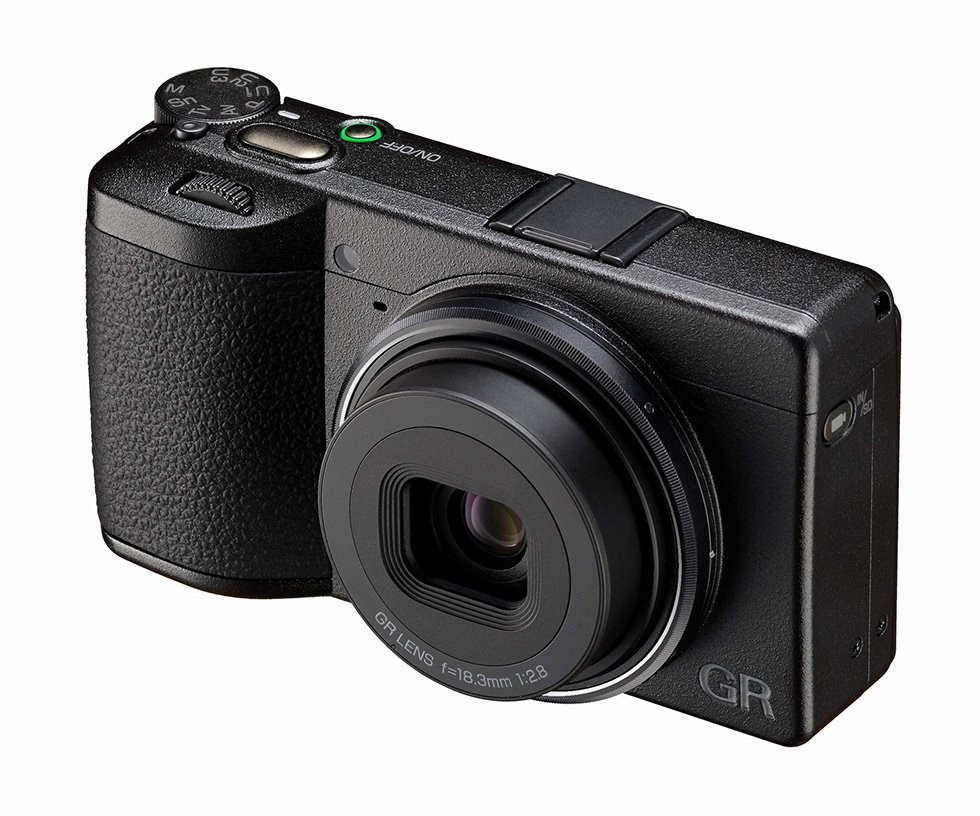
Worth noting alongside it, five different GR models are in stock at once, which hasn’t been true for a long while.
For monochrome work
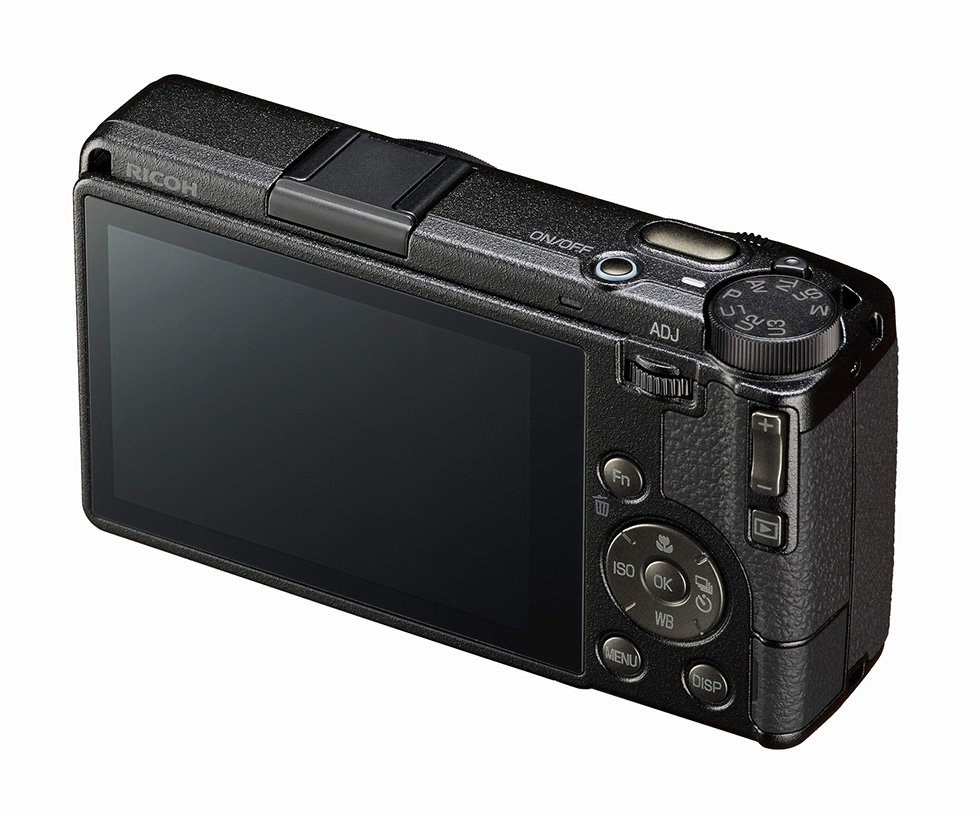
It makes sense that solarization landed on the Monochrome and nowhere else. It’s a tone effect, and this is the camera with no color to fall back on. The GR IV Monochrome runs a 25.74 megapixel APS-C sensor with no anti aliasing filter, and in place of the ND filter the other GR IV models carry, it has a built in red filter you toggle with the Fn button.
If you shoot raw, an in camera effect is something you could build in editing anyway and arguably with more control. The argument for having it in the camera is different. A look you can see on the back of the screen while you’re standing there changes what you point the camera at, and that happens before any of the editing decisions get made.