
It won Best Cinematography in 2019 and the man who shot it had never been a cinematographer. Watch it with a notebook and you’ll come away with a year of compositional homework.
Roma is Alfonso Cuarón’s film about the year he turned ten. It’s set in Colonia Roma, a middle class neighborhood in Mexico City, across 1970 and 1971, and it follows Cleo, a young Mixtec woman who works and sleeps in a family’s house, cleaning it and raising the four children in it.
Cleo gets pregnant and the man responsible disappears. At the same time the father of the family leaves on a trip he has no intention of coming back from. Two women are abandoned in the same house in the same season and neither of them can say it out loud. That’s most of the story. It runs 135 minutes, almost nothing happens in the way that things usually happen in films, and it won three Academy Awards in 2019 for Best Director, Best Foreign Language Film and Best Cinematography.
Cuarón built the film for Emmanuel Lubezki, who had shot Y Tu Mamá También, Children of Men and Gravity for him and had won the cinematography Oscar three years running. Scheduling made it impossible, so Cuarón operated the camera himself and became the first person to win Best Director and Best Cinematography for the same film on the same night.
His style is simple to describe and nearly impossible to execute. The camera sits at the height of a standing adult and mostly doesn’t move. It pans slowly across a room and often keeps panning after the person we were watching has walked out of the shot. There are almost no close ups. The far wall is as sharp as the near one, and things happen back there that nobody tells you to look at.
What follows is seven things in it that transfer directly to a still camera.
Square up and shoot it flat
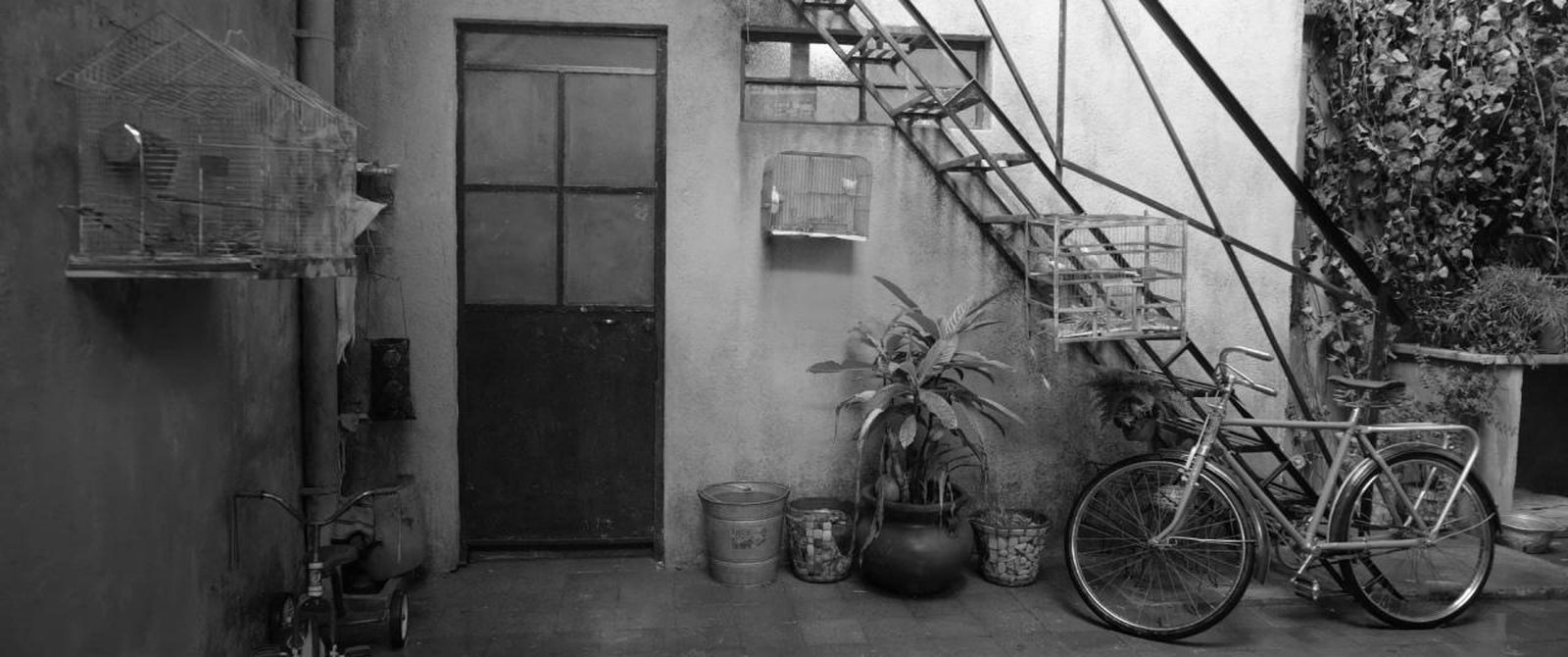
Cuarón stands square to the wall and photographs it parallel. No three quarter angle, no tilt, no attempt to make the geometry more dynamic than it is. The door, the plants, the birdcage and the bicycle sit across the frame like objects on a shelf.
This matters more in monochrome than it does in color. A frontal composition keeps shapes as shapes and tonal blocks as clean rectangles, and nothing competes with the pattern of dark and light we’re trying to build. Tip the camera and you add converging lines that have to be resolved against the tonal structure, and with no color to carry the image you rarely win that argument.
Try it this week. Find a wall worth looking at, put your back parallel to it, and make the frame boring on purpose.
Put the subject in the middle
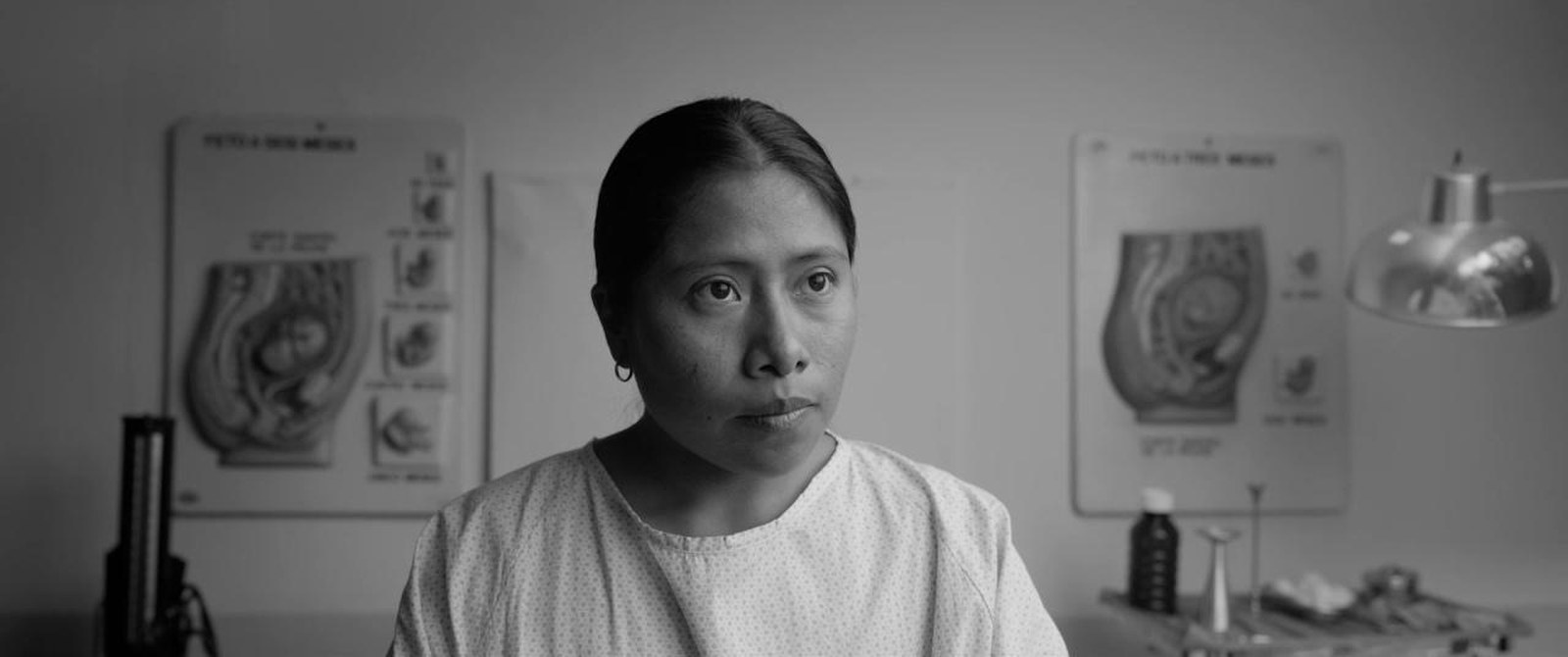
Here’s Cleo in a clinic, dead center, with a chart hanging on either side of her like wings. The rule of thirds is a useful default and it’s been promoted into a law it was never meant to be. Roma breaks it constantly and nobody watching has ever felt the frames were badly made.
Centering does something an off center composition can’t. It stops the picture moving. A face in the middle of a symmetrical background reads as formal, still and slightly confrontational, which is exactly right for a woman who’s about to be told something she doesn’t want to hear.
The rule to take away isn’t that centering is better. It’s that when the background behind your subject is symmetrical, you should center them, and when it isn’t, you probably shouldn’t.
Let a line pull the eye in
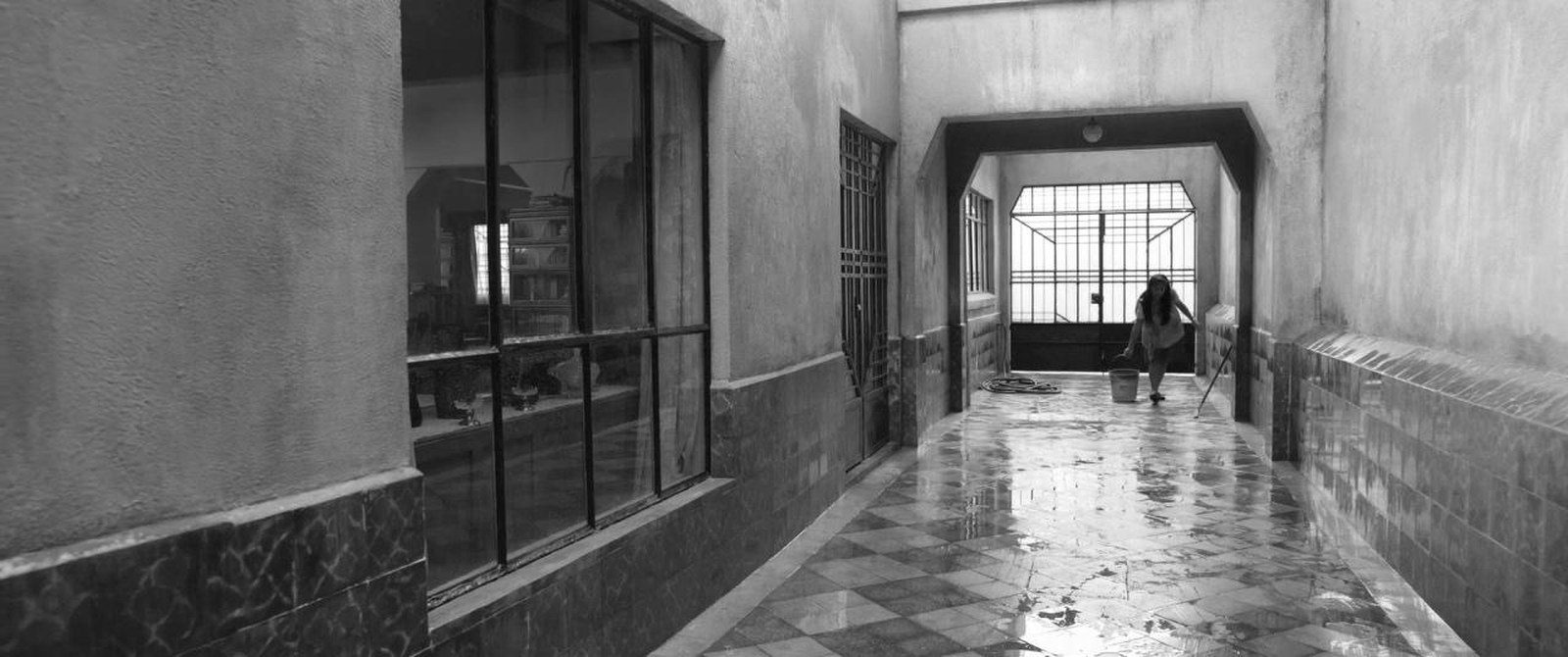
The passage runs straight away from the camera, the windows march down the left side, the wet floor throws back the light, and at the far end there’s a bright doorway with one small figure in it. Everything in the frame points at the one thing worth looking at.
Note how little that figure needs to be. In color you can make a subject hold a frame this deep by dressing them in red. We can’t, so the job falls to position and to light, and Cuarón solves it by putting the figure at the vanishing point and lighting them brighter than anything else in the shot.
Build it in layers
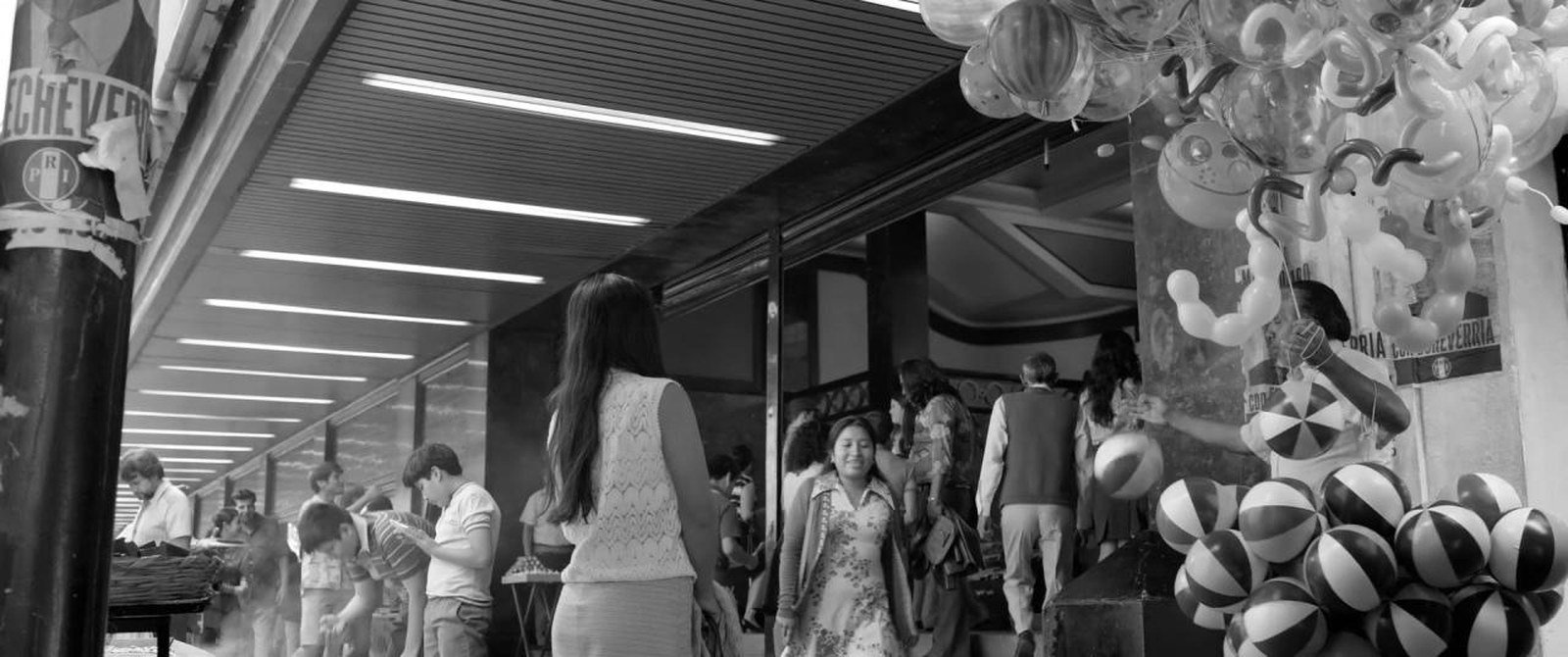
A pillar in the near foreground. A woman standing with her back to us in the middle. Shoppers, ceiling lights and a hanging net of beach balls behind. Three distinct planes, all sharp, all carrying information.
Cuarón shoots wide and stops down so that everything holds detail, which is the opposite of the shallow focus most of us lean on. Shallow focus is a way of saying look here, and it’s borrowed from color photography, where a blurred background still separates by hue. Tonal separation is the hardest problem we have, and layering solves it without any help from the lens, by putting a dark thing in front of a light thing in front of a dark thing.
It also gives the fine texture somewhere to live. With focus running deep and no color available, those small local transitions across stone and fabric and hair carry most of the sense of depth in the frame.
Put something in the way
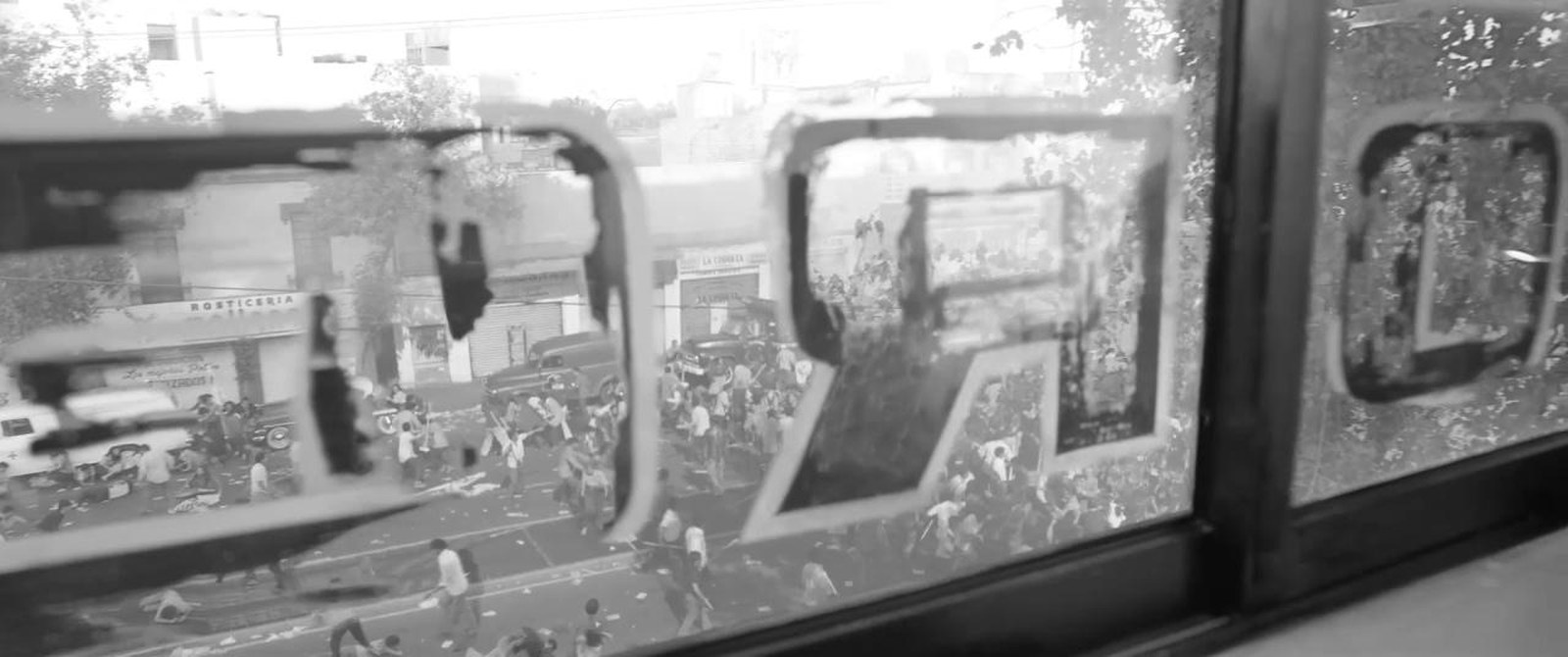
We’re inside a furniture store, looking out through glass with the shop’s own lettering painted across it backwards. The crowd outside sits beyond the letters, slightly soft, cut into pieces by the window frame.
Shooting through something adds a plane for free and it gives the frame a reason to exist where you’re standing. Glass, railings, doorways, leaves, a car window. It also carries meaning here, because this is the moment the violence of 10 June 1971 arrives, and it arrives through a shop window while Cleo is inside buying a crib. The camera doesn’t run out to look at it. It stays where it already was and lets the event come to the frame.
That restraint is the hardest habit on this list to build. Most of us see the thing, take the frame and move. Cuarón’s camera stays, and because it stays, the frame fills up.
Make the person small
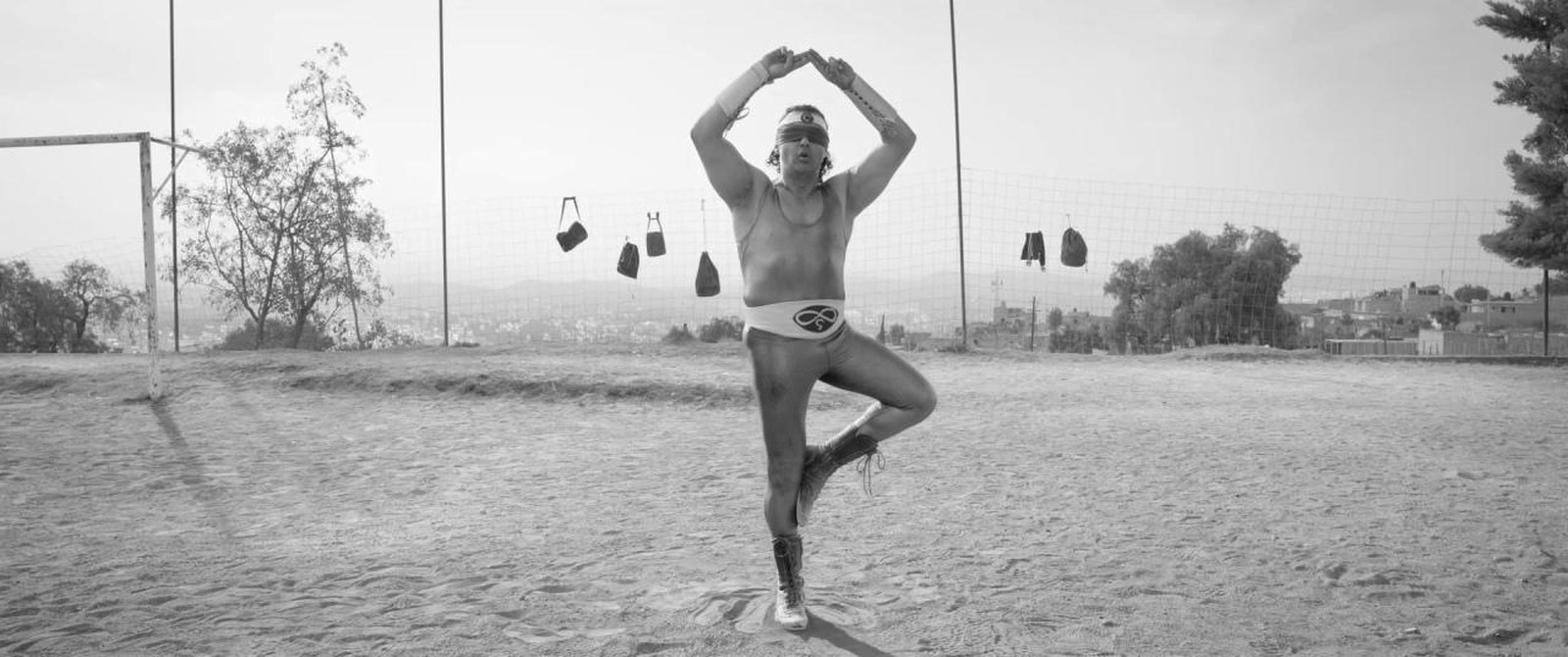
One man, balanced on one leg, arms over his head, in a wide dirt field under a sky with nothing in it. He occupies a tiny fraction of the frame and the picture is entirely about him.
Empty space is easier to use in monochrome than in color, because an empty gray sky stays empty instead of turning into a blue thing that competes for attention. A plain sky or a plain wall becomes a surface to place a figure on, and the smaller the figure, the more the placement has to be right.
The practical version is simply this. When you’ve framed a person, take six paces back and shoot it again.
The subject can be a wet floor
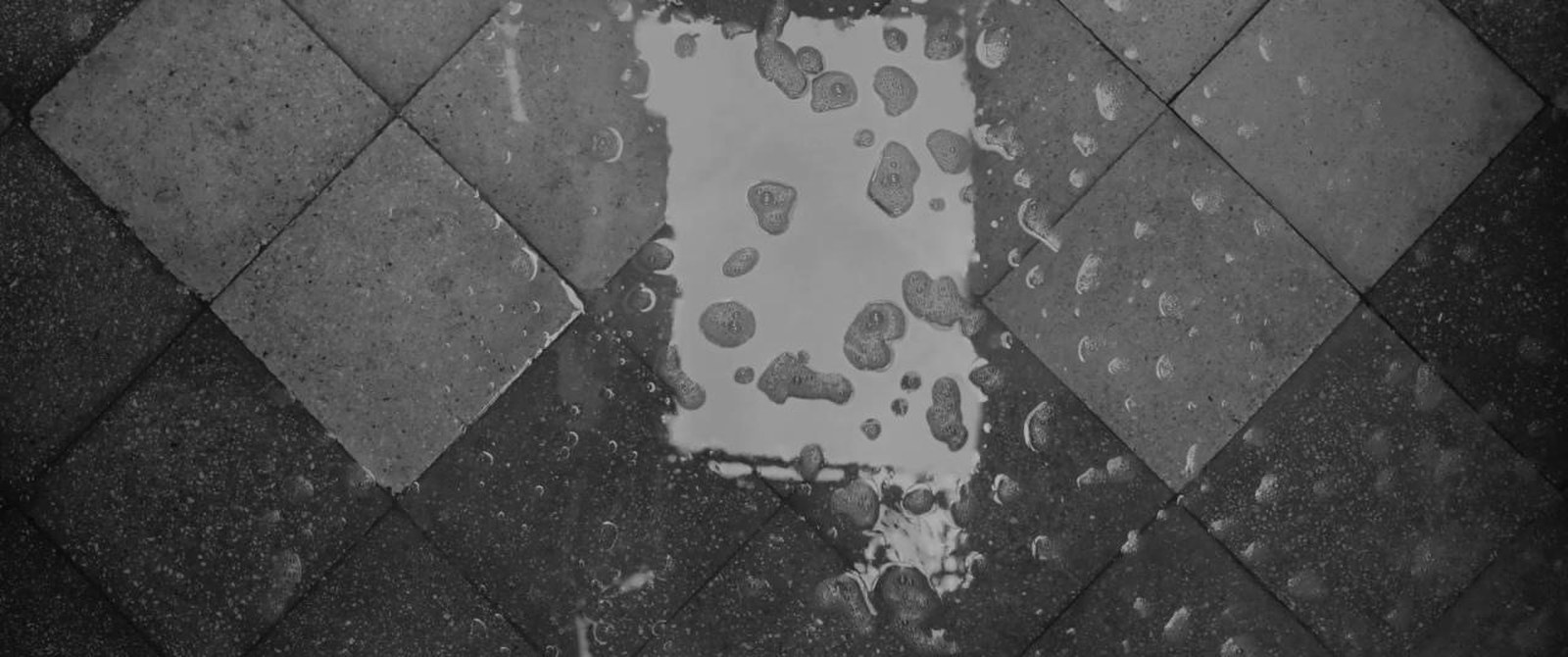
This is the first shot of the film. Tiles laid on the diagonal, soapy water running over them, foam breaking up. It holds for a long time before anything else is allowed to happen, and it’s a photograph that most of us would walk straight over on the way to look for a picture.
Almost nothing in Roma is dramatic by the standard we apply when deciding whether to raise a camera. A dog has made a mess in the driveway again. A car is parked badly in a narrow garage. Washing is pegged out on a roof. The film is built almost entirely from material we ignore, and it becomes worth looking at through light, patience and where the camera was standing. Those three things are available to all of us this afternoon at no cost.
How to watch it
It’s a Netflix film and there’s a Criterion edition of it. Watch it once the ordinary way, for Cleo. Then watch it again with the sound off and your finger on the pause button, and stop it every time the screen looks like a photograph you wish you’d made.
You’ll stop it more often than you expect, and the frames you stop on will have more in common with each other than you expect too. That’s the same exercise as putting your phone screen into grayscale for a month, run at a much higher standard, because every frame you’re looking at was built by someone who knew it would end up in black and white.
Frames from Roma, written and directed by Alfonso Cuarón, reproduced here for the purposes of criticism and review. Screenshots sourced from FilmGrab.