
Asked to leave the pier twice for the wrong shoes. Both times he went back in.
Armin Spreitzer was in Lima for work with a weekend to spare. He could have spent it almost anywhere. He spent it in Pucusana, a small fishing village about fifty kilometers down the coast, because the harbour and the work going on around it interested him more than anything else within reach.
He books the harbour, not the hotel
This is a method rather than a preference. He doesn’t stay in comfortable hotels when he travels to photograph. He looks for somewhere as close as possible to the people or the thing he came for, because he needs to feel the place before he can photograph it properly.
In Pucusana that meant an apartment directly on the harbour, with a window front looking out across the bay, close enough to the water that he says he could almost have jumped from the small terrace into the ocean. The point of it was the hours he wasn’t working. Even with the camera down he was inside the sound and the smell of the harbour, which is most of what a place is.
He walked into the industrial port two or three times a day and stayed an hour or two each time. There was always something to see.
The port runs on squid
Heavy wooden boats come back off the cold Pacific and unload giant squid onto wet stone piers. The turnaround starts almost immediately. Chutes roar as crushed ice goes into the holds for the next trip, provisions go aboard, and the boats push back out for days or weeks at a time. The fleet works around the clock, so the harbour never fully stops.
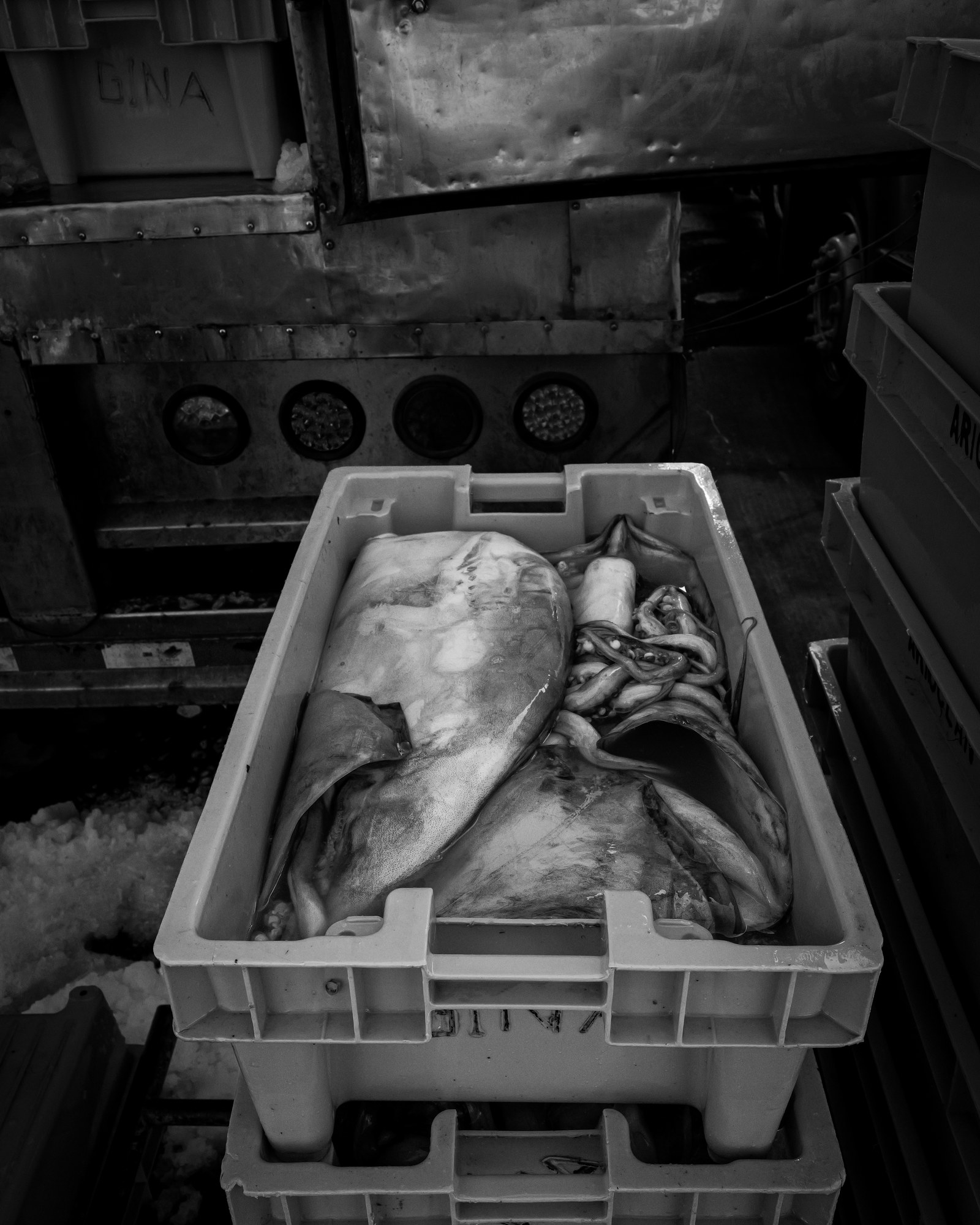
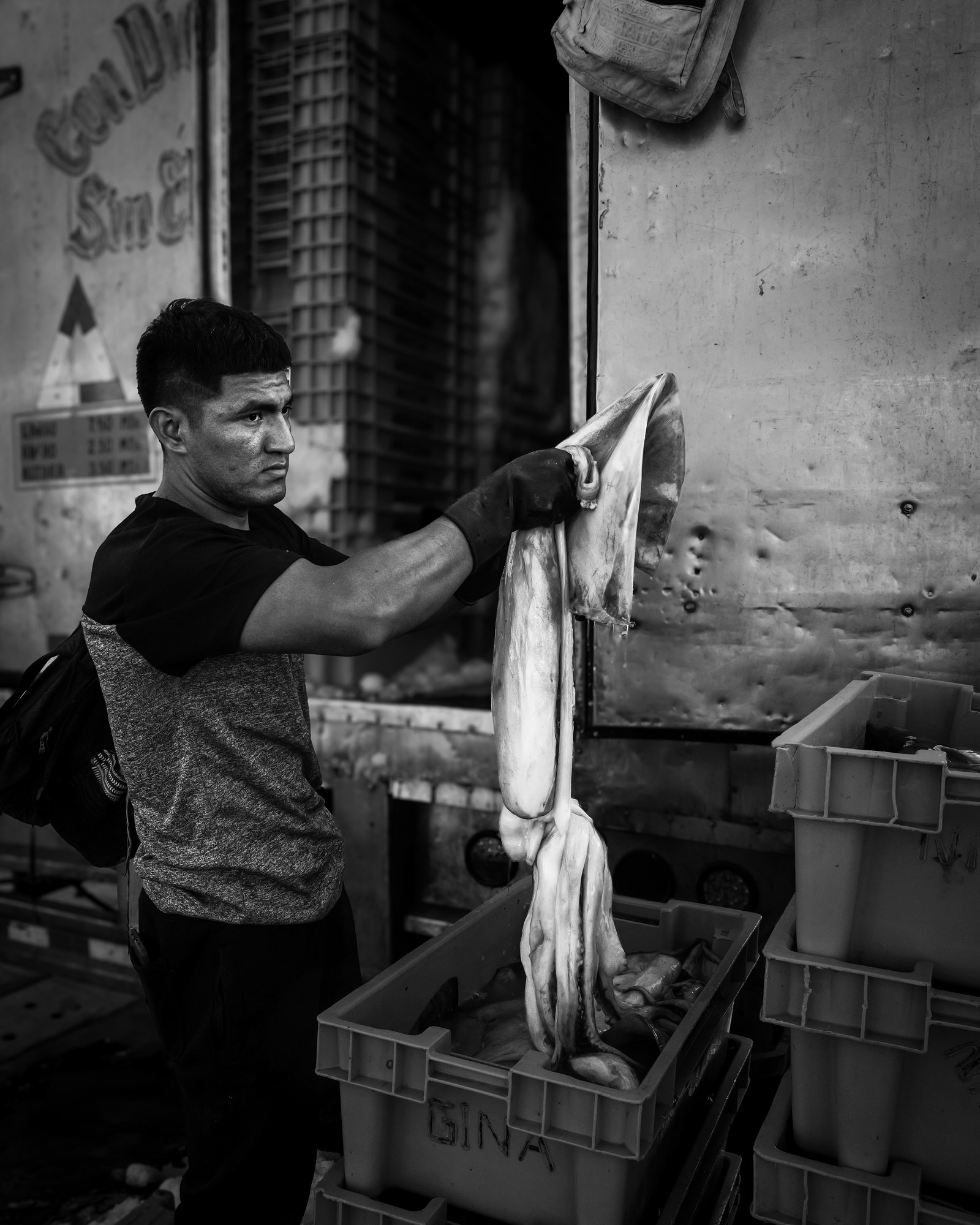
That is also what makes the ground treacherous. Squid comes out of the crates wet, and what lands on the stone stays there.
The first time, it was about his shoes
He had been warned before he went in that the industrial area might be a problem, because he wasn’t wearing rubber boots. Then a harbour boss walked over, said nothing much, and pointed at his feet.
Armin understood it immediately and left. He is careful to say the man was friendly about it.
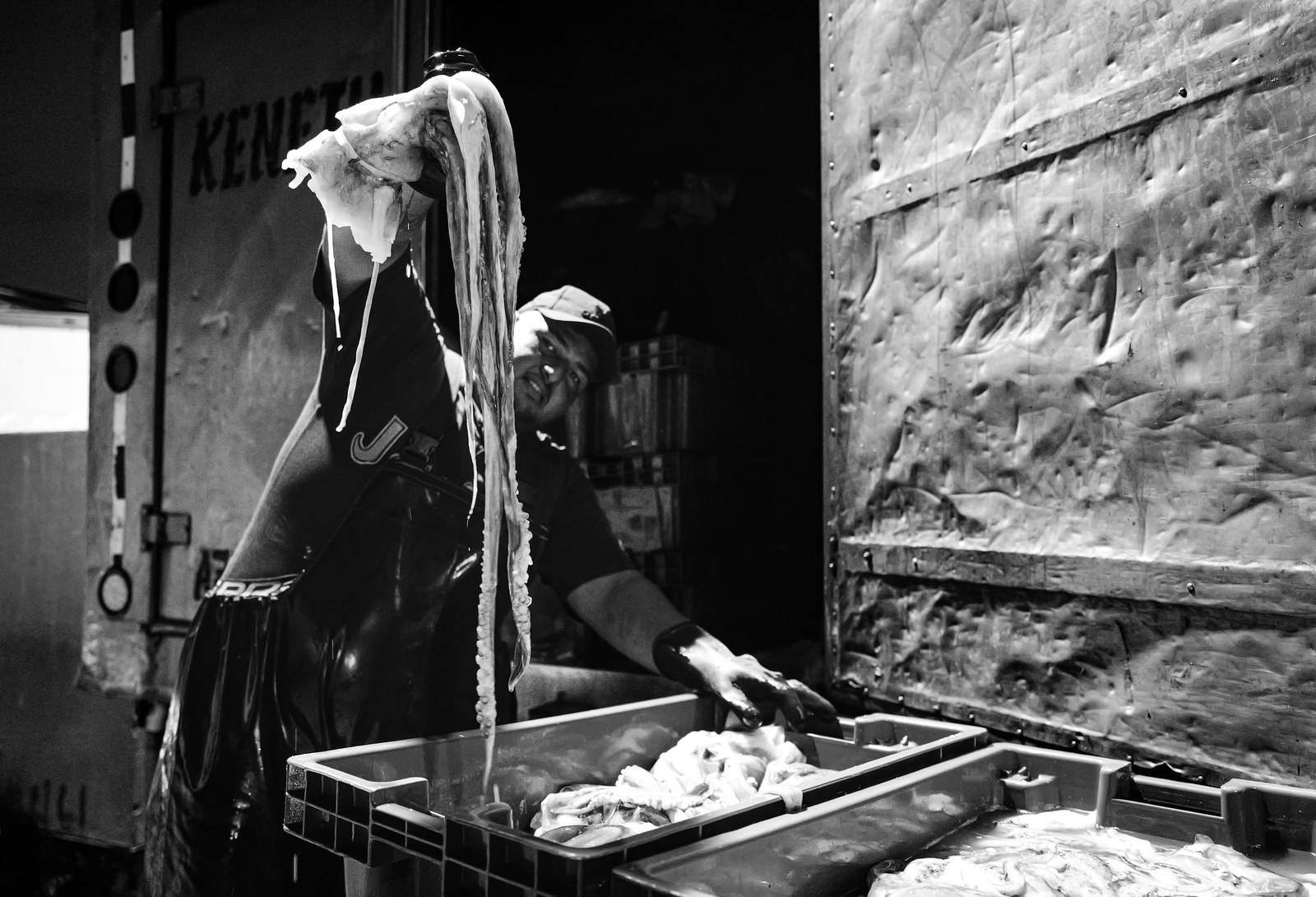
Then he sneaked back in
The port was full of movement and he was certain there was more to see, so he waited and went back. Nothing about the harbour had changed. The only thing that had changed was that the man who had asked him to leave wasn’t there any more.
It happened again the next day. He left again, and again he found his way back in. Nobody asked him twice in one day.
What he wants understood is that none of this was hostile. The fishermen were friendly throughout and nobody objected to being photographed. This was an industrial port with a job to do, not a harbour that exists to be looked at, and being asked to leave is simply what happens there.
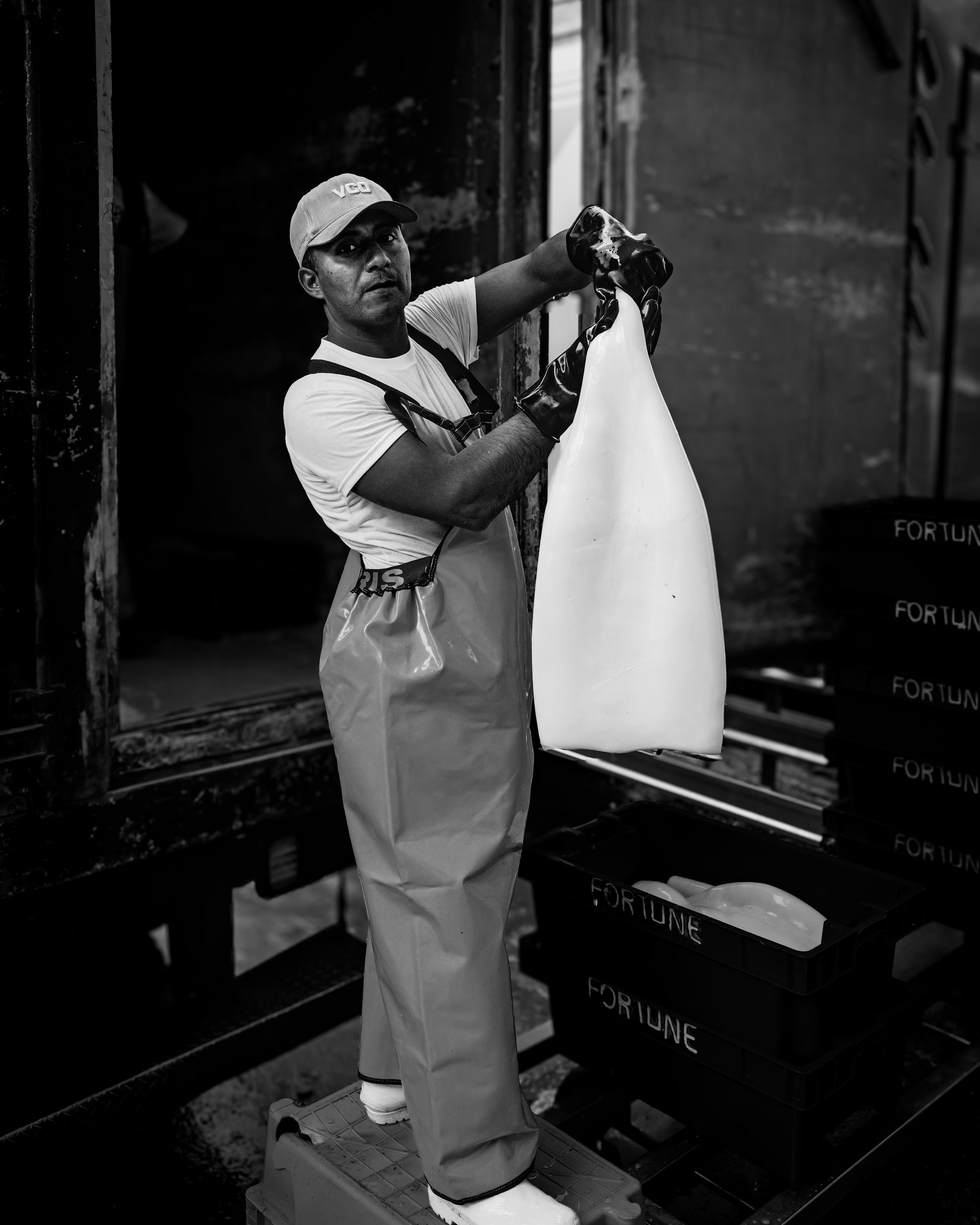
Asked what he thinks was really behind it, he doesn’t reach for anything more interesting than the obvious. Safety. The ground genuinely was slippery, he genuinely was in the wrong shoes, and there may have been an insurance question underneath it that nobody explained. His own summary is the one that settles it. This would happen to anyone who walks into a factory and starts taking pictures.
Nobody explained the work to him
He doesn’t speak enough Spanish to have followed a conversation about the fishing season, the boats or how any of it is organized, and nobody offered. He watched, and that was the whole of his access.
Not many photographers say that as plainly as he does. Armin is explicit that he didn’t come to explain the fishermen’s lives, and the series doesn’t pretend to. What it carries is what he could see from where he was standing.
The man who walked like a rock star
One person caught him straight away, and it wasn’t the work the man was doing. It was his bearing, his attitude, the way he walked. Armin describes him as seeming more like a rock star than a fisherman. The others around him listened when he spoke, and he had a presence that was difficult to ignore.
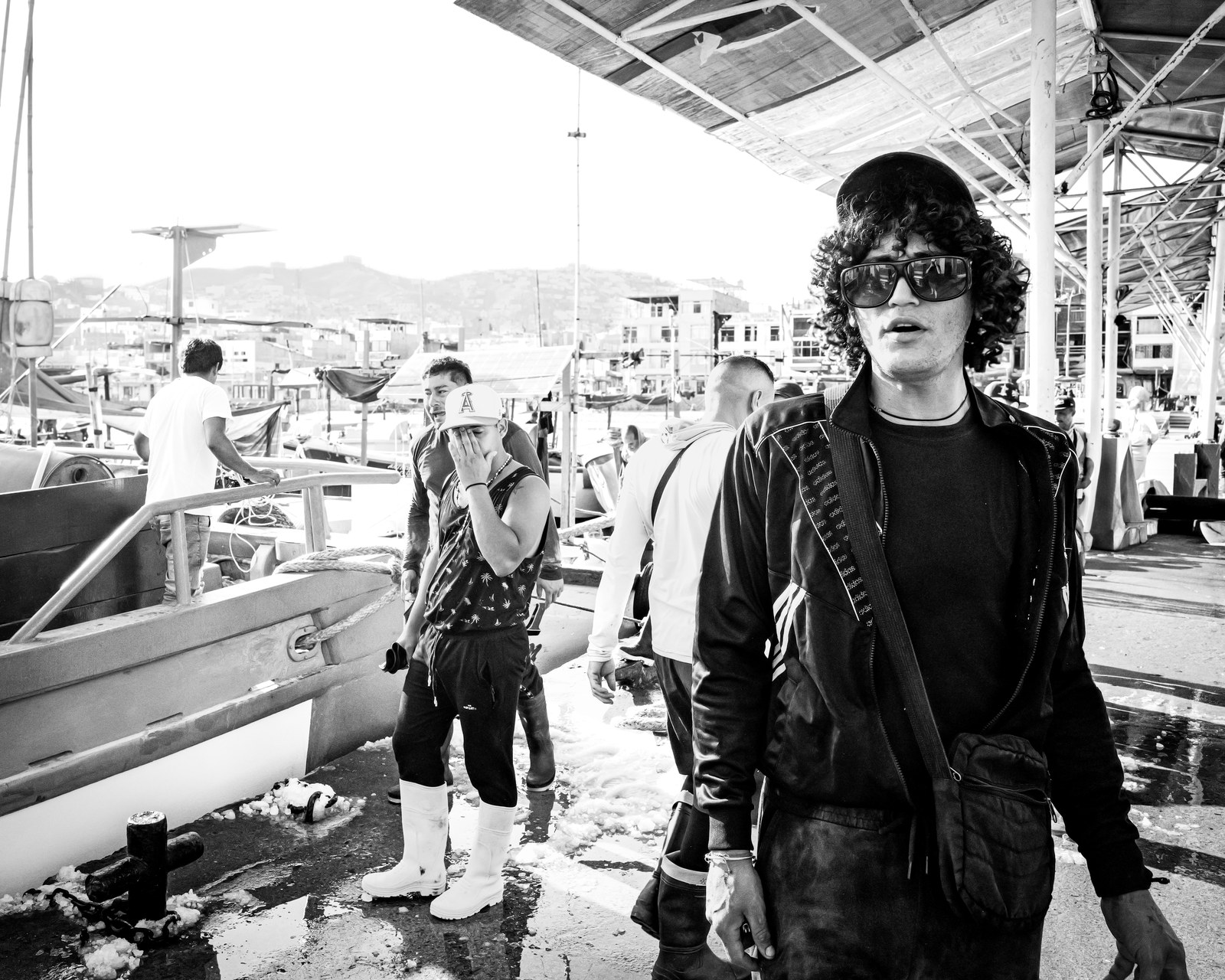
He got one frame of him. Only one, and he says so with some regret, but the man stayed in his head long after the weekend ended.
Look behind him and the whole business with the shoes explains itself. Every other man on that pier is standing in white rubber boots.
How the portraits happened
He didn’t always ask. Often he would lift the camera, point it toward somebody, and read the answer in how they reacted. Nobody objected. He was also the only photographer on the pier, so there was no question of working unnoticed. Everyone could see exactly what he was doing.
What the soul of the place turned out to be
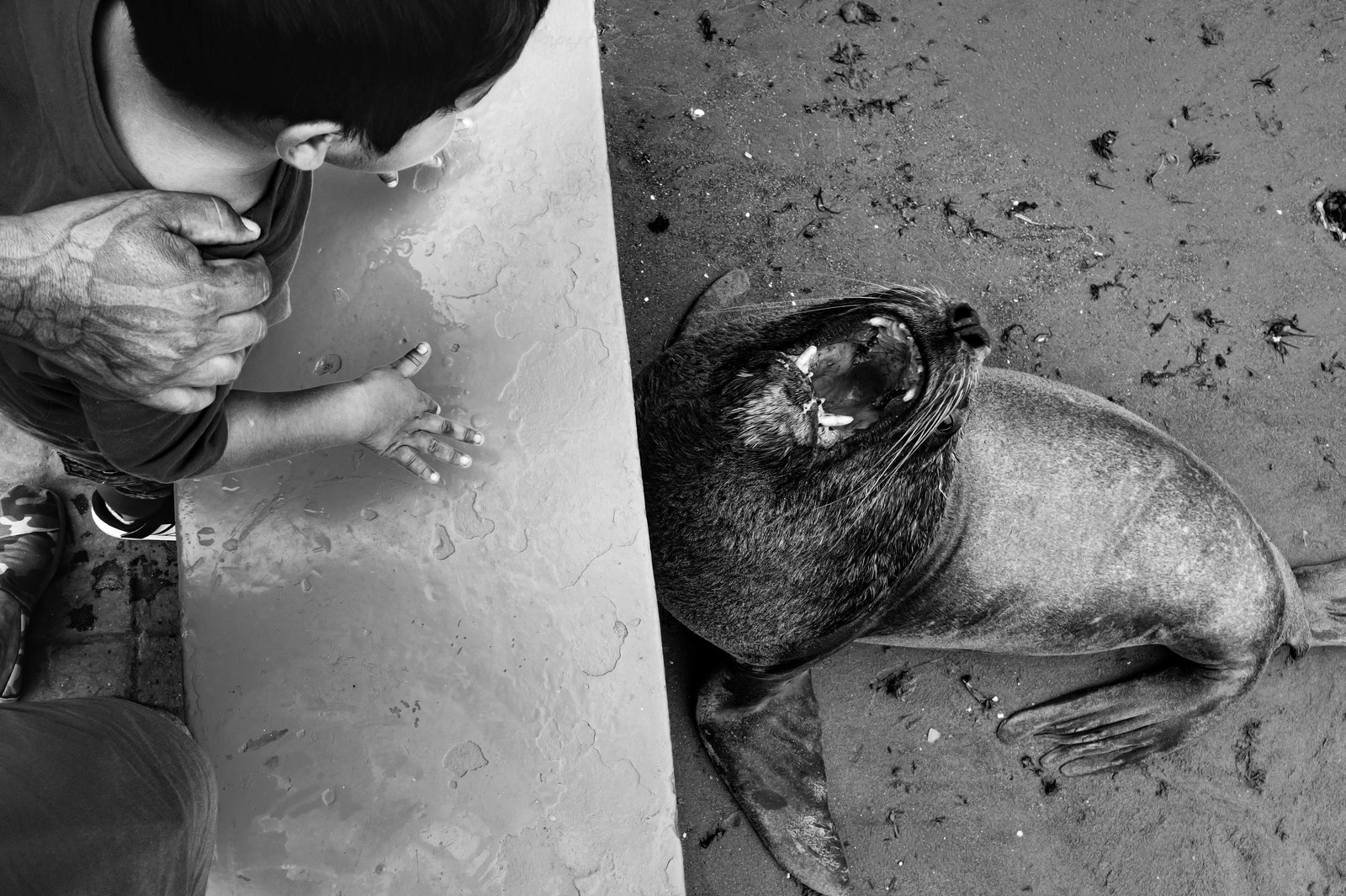
Ask him what The Soul of Pucusana actually means and he gives a list rather than an idea. The boats coming back loaded with squid. The crushed ice going down the chutes. The crews getting ready to go out again. The pelicans and the gulls and the sea lions sharing the same small bay and waiting on whatever gets thrown back. The arguments between fishermen. The sound of it and the smell of it. And at night, a port run entirely by where the lights fall and where they don’t.
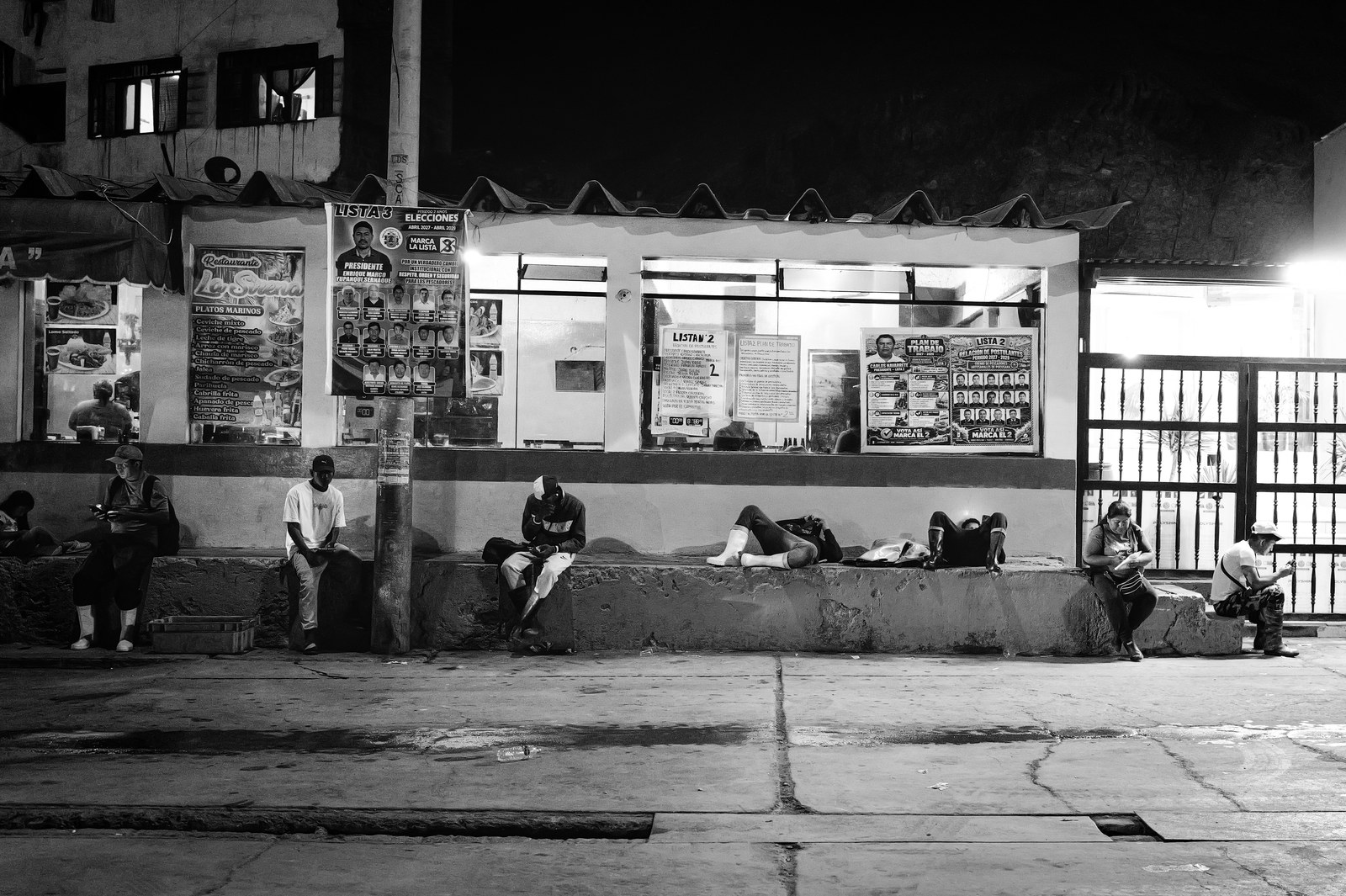
Staying on the harbour is what gave him that, and it is the part of the weekend the camera was not involved in. He could look out over the bay from the apartment and stay inside the rhythm of the place during all the hours he wasn’t photographing.
What he brought home, in his own words, is his impression of Pucusana. Raw, busy, and shaped by the people who work there. He came to observe and to feel and to photograph, and he is content to let the pictures be exactly that much and no more.
You can see more of Armin’s work on foto @me007 and on Instagram @sarmin007
Armin Spreitzer is a photographer based in Germany whose work is grounded in humanist photography. He chooses the raw over the polished and photographs the world to feel it rather than to explain it. He made these photographs over one weekend in the fishing port of Pucusana, Peru.