
Almost everyone composes subject first and then fights the background forever. Reverse the order.
Watch how a photograph normally gets made. Something catches the eye, the camera comes up, the thing goes somewhere sensible in the frame, and whatever happens to be behind it is simply what was behind it.
Then comes the long argument with the result. A pole growing out of a head. A bright window in the corner pulling the eye straight out of the picture. A wall so busy that the subject has nowhere to sit. We treat all of that as a background problem, and we try to solve it afterwards with a wider aperture or a cloning brush.
It isn’t a background problem. It’s an ordering problem.
The exercise
Choose the background first. Then decide what goes in the middle distance. Then, last of all, place the subject.
That’s the whole thing, and it feels wrong for about a day. We’re used to the subject being the reason the photograph exists, so putting it last seems like a demotion. It isn’t. It’s an admission that the subject can only be as good as the surface it’s placed against.
Why this matters more to us than to anybody else
In colour, a background can separate itself from the subject without any help. A red coat in front of green foliage stands out because red and green are different colours, and the photographer barely has to think about it.
Take the colour away and that separation vanishes. A mid red and a mid green are close to the same brightness, so the coat and the hedge merge into one grey mass and the picture quietly dies. In black and white there’s only one thing that separates a subject from what’s behind it, and that’s tone.
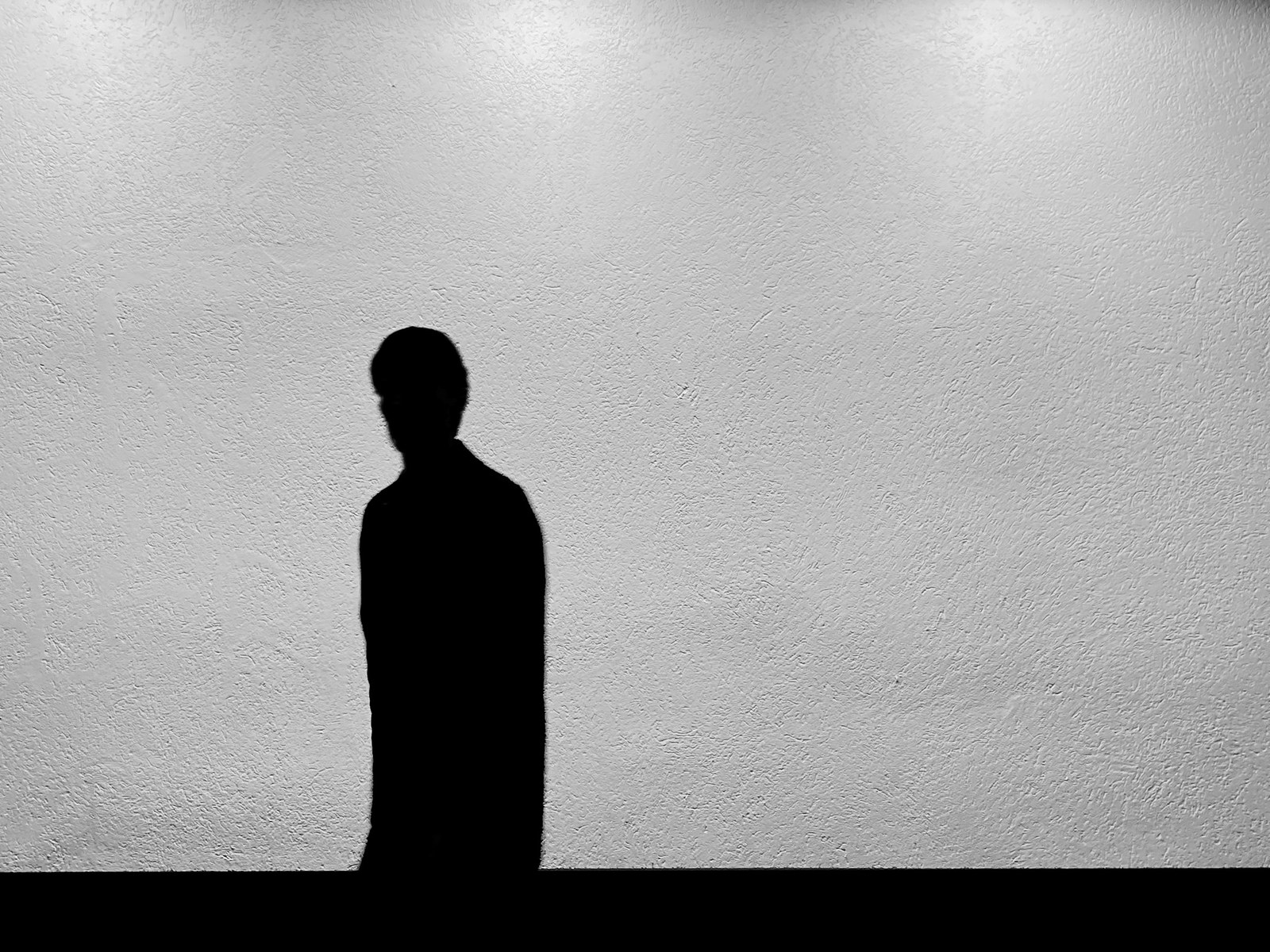
Which makes choosing the background first a technical necessity rather than a preference. A dark subject needs a light background. A light subject needs a dark one. Get that decision wrong and nothing you do afterwards fixes it, because the information was never recorded.
Doing it on a table
Start where you control everything, which is the quietest practice ground we have.
Clear a table near a window and photograph the empty background on its own. Just the surface, nothing on it. Look at that frame honestly. Is the tone even, or does it fall off in a way you can use? Is there texture worth having? If the empty frame is dull, no object is going to rescue it, and if the empty frame already looks like something, almost anything you put there will work.
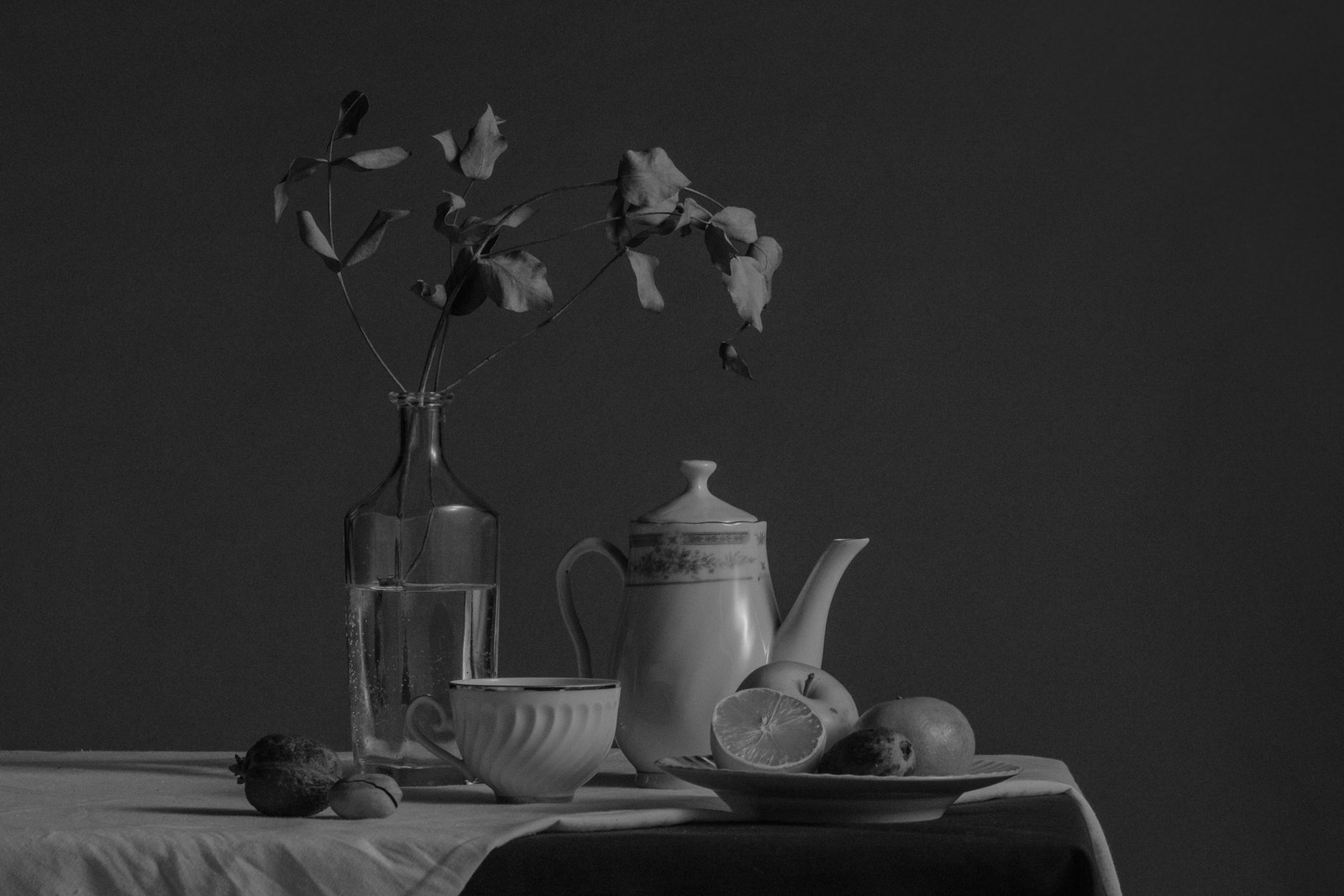
Only then bring in the object, and bring it in knowing what it has to do. A pale jug against that dark background will read instantly. A dark one will need a rim of light along its edge or it will disappear into the wall behind it, and now you know that before you have wasted an hour.
Middle distance is the step most people skip. Something at an intermediate depth, a fold of cloth, the edge of the table, a second object further back, is what stops a photograph reading as two flat layers stuck together.
Doing it outside, where you cannot move anything
This is where the exercise stops being a tabletop drill and starts changing how you work.
On the street you can’t move the wall, so the order reverses in a different way. You find the background first and then you wait for the subject to arrive. A good surface with good light on it, a doorway, a patch of shadow with a clean edge, and you stand there and let the world supply the figure.
This is how a great deal of street photography is actually made, and it looks nothing like the popular image of the photographer chasing moments. It’s much closer to fishing. You pick the spot because the spot is right, and then you are patient.
The advantage is enormous. Because you chose the background deliberately, you already know what tone a subject needs to be to read against it, you already have focus and exposure set, and when somebody finally walks into the frame all you have to do is wait for them to reach the right part of it.
The question to ask before every frame
Can you say why that background is there?
Not whether it’s acceptable, or whether you can live with it. Whether you chose it. If the honest answer is that it was simply behind the subject, then it wasn’t a decision, and roughly half the area of the photograph was left to chance.
Work from the back for a week and the habit sticks, mostly because the pictures get better fast enough to be convincing. You stop photographing things and start building frames to put things in, which is the same realisation as deciding where the picture is going to sit tonally before you raise the camera. Both are the move from reacting to a scene to designing one.