One of them worked so quietly that nobody noticed him. The other walked up, introduced herself and sometimes came back for years.
Henri Cartier-Bresson and Diane Arbus are two of the most influential photographers of the twentieth century, and both did their most important work in black and white. They also represent almost opposite answers to a question every street and documentary photographer eventually runs into. When you photograph a stranger, should they know you are there? Looking at how each of them worked is one of the best ways we know to think that question through.
The photographer nobody saw
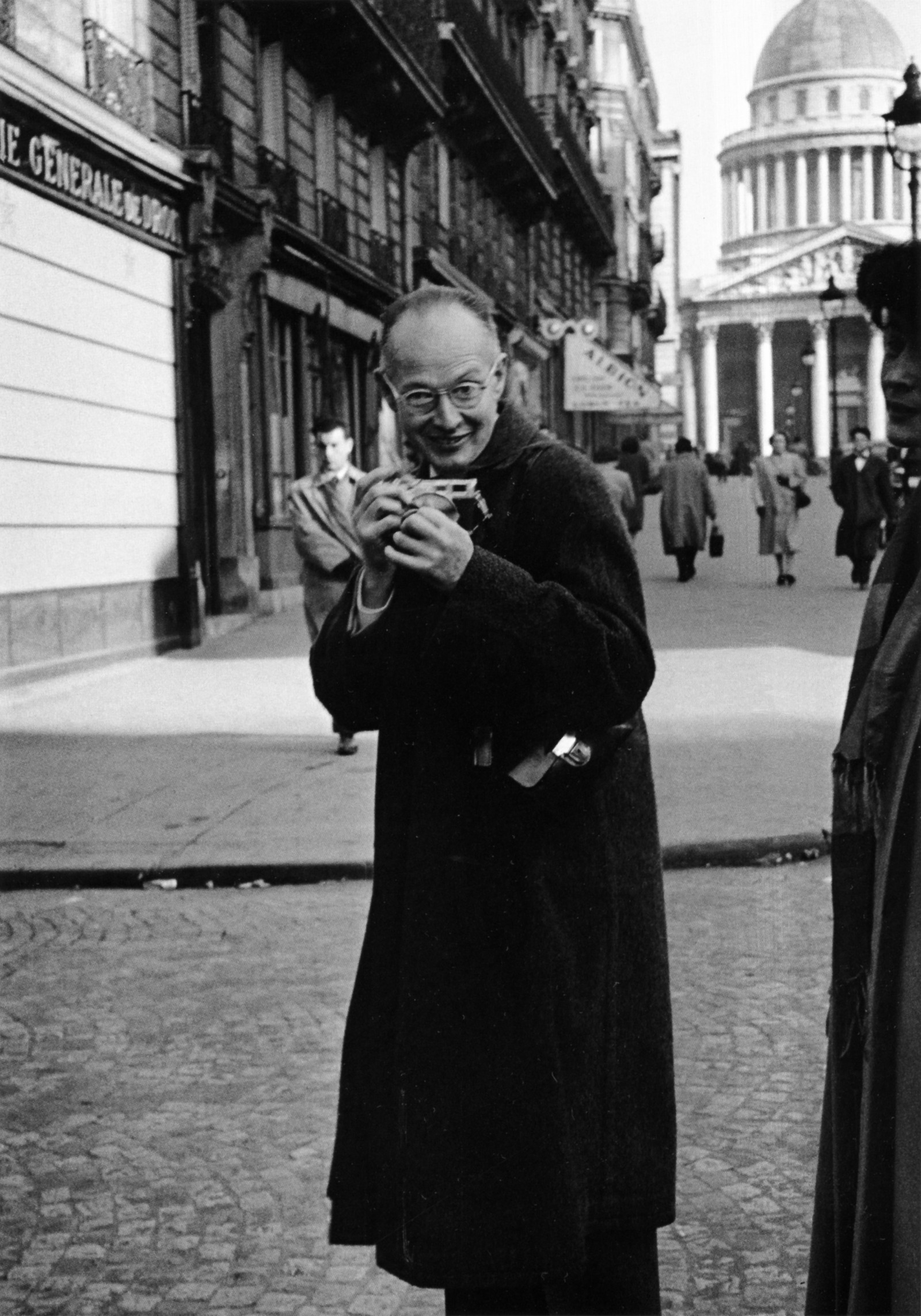
Cartier-Bresson built his whole approach around not being noticed. He used a small Leica with a 50mm lens, taped over its shiny parts, and almost never spoke to or posed the people in his pictures. He would find a place where the light and the lines were right and wait for someone to walk into it. The people in his most famous photographs are going about their lives, unaware of him, and that is exactly what he wanted. Once someone knows they are being photographed, they start to perform, and he was after the moment before that happens.
The photographer who knocked on the door
Diane Arbus was born in New York in 1923 and spent ten years making fashion pictures with her husband, Allan Arbus, before walking away from that work. In 1956 she began studying with the photographer Lisette Model, who pushed her toward her own subjects and told her that the more specific a picture is, the more general it becomes. From then on Arbus went looking for people, and when she found them, she got to know them. She visited them at home, spent time with them and returned again and again. She first photographed Eddie Carmel, the man in her picture A Jewish Giant at Home with His Parents in the Bronx, N.Y., in 1960, and did not make the photograph she had been looking for until 1970.
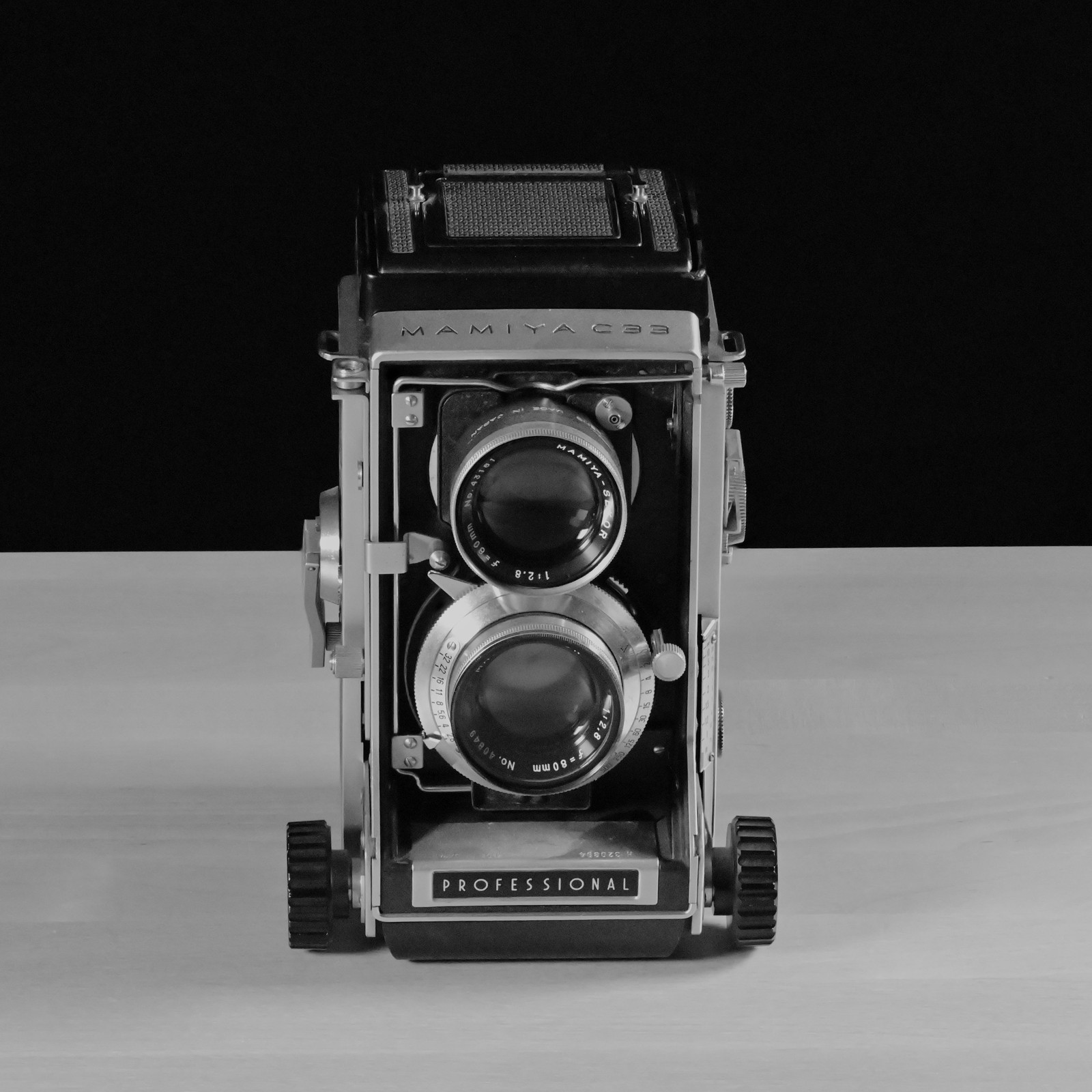
Even her cameras made her visible. Around 1962 she moved from a 35mm Nikon to a Rolleiflex, and later added a Mamiya twin lens reflex with a flash. Both are held at the waist while you look down into the viewfinder, so there is no hiding behind the camera. She stood in front of people, often close, and they looked straight back at her. Her famous 1962 picture of a boy with a toy hand grenade in Central Park came from circling him and shooting frame after frame while he reacted to her. Colin Wood, the boy in the picture, later said, “I was not directed, but there was a collusion of some kind.”
What each approach gives you
Distance gives you life as it happens. Cartier-Bresson’s pictures are full of gesture and movement, the relationship between people and the places they pass through, the geometry of a street at the instant everything lines up. Nobody is performing, so what we see feels honest in a particular way, as if we are standing where he stood.
Engagement gives you the person. Arbus’s subjects look at us, and that gaze is the whole picture. We learn who they are, or at least who they are willing to be in front of her camera, and there is a kind of presence in her work that a candid photograph rarely reaches. Her portrait of identical twins in Roselle, New Jersey, standing side by side and looking straight into the lens, would simply not exist if she had tried to go unnoticed.
What each one costs
Neither approach is free. Working unseen means giving up eye contact and any real connection with the people in the frame, and it raises its own questions about photographing people who never agreed to it. Working face to face means the scene changes the moment you arrive. You are photographing someone’s response to you rather than the world without you, and you carry more responsibility for how they are shown. Arbus felt that weight more than most. Critics, Susan Sontag among them, argued that her pictures took advantage of the people in them, and that debate has followed her work ever since.
Choosing before you raise the camera
So is it better to interact or to keep your distance? We do not think there is a right answer, and these two photographers are the proof. What matters is knowing which photograph you are actually after before you lift the camera, because that decides whether you should be seen. If it is the gesture, the moment and the way people move through a place, stay quiet and let the scene stay itself. If it is the person, walk up and say hello.
Black and white makes the difference easy to see. A candid picture leans on shape, gesture and light, while an engaged portrait leans on a face and a pair of eyes looking back. Both are things monochrome does beautifully, and most of us will find that our best work comes from knowing which one we are reaching for, and why.
Featured image: Cartier-Bresson’s first Leica, photographed by Les Hotels Paris Rive Gauche, CC BY-SA 2.0, and a Rolleiflex 2.8F, photographed by Sputniktilt, CC BY-SA 3.0.