
One gray Wednesday afternoon, two and a half hours, 250 frames. Twelve pictures came out of it, and nobody in them is looking at the view.
Flavia Silva wants one thing understood before anything else, because it changes how the work should be read. This series was not made over months of returning to the same streets. It was made on the afternoon of Wednesday, July 8, on a photo walk with her photography practice group, and she would rather say so than let anyone assume otherwise.
They met at two o’clock at a cultural center downtown. The first frame on her card is its rotunda, seen from below. From there the group walked past the Candelária, down to the water, and along the Orla Conde to Praça Mauá and the old warehouses. Two and a half hours, 250 frames, and twelve pictures that survived.
She had worked on those streets before
It was not really a first day. Flavia is from Rio, and between 1997 and 2000 she did her internship and then worked in the port district itself, when it was run down, lifeless and dangerous. In 2023 she moved to Helsinki for work, and it was there, as an expat, that she started taking photography seriously. So she came back to the port neither as an outsider nor quite as a local, but as someone who knew the place before and returned to find it changed.
Changed considerably. The revitalization that culminated in the 2016 Olympics took down the elevated highway that had cut the port off from the rest of the city and replaced it with a promenade, museums and a tram. Life came back. People returned to use the space for leisure and for rest. Today, in her words, it is enchanting, and it has become one of the city’s attractions.
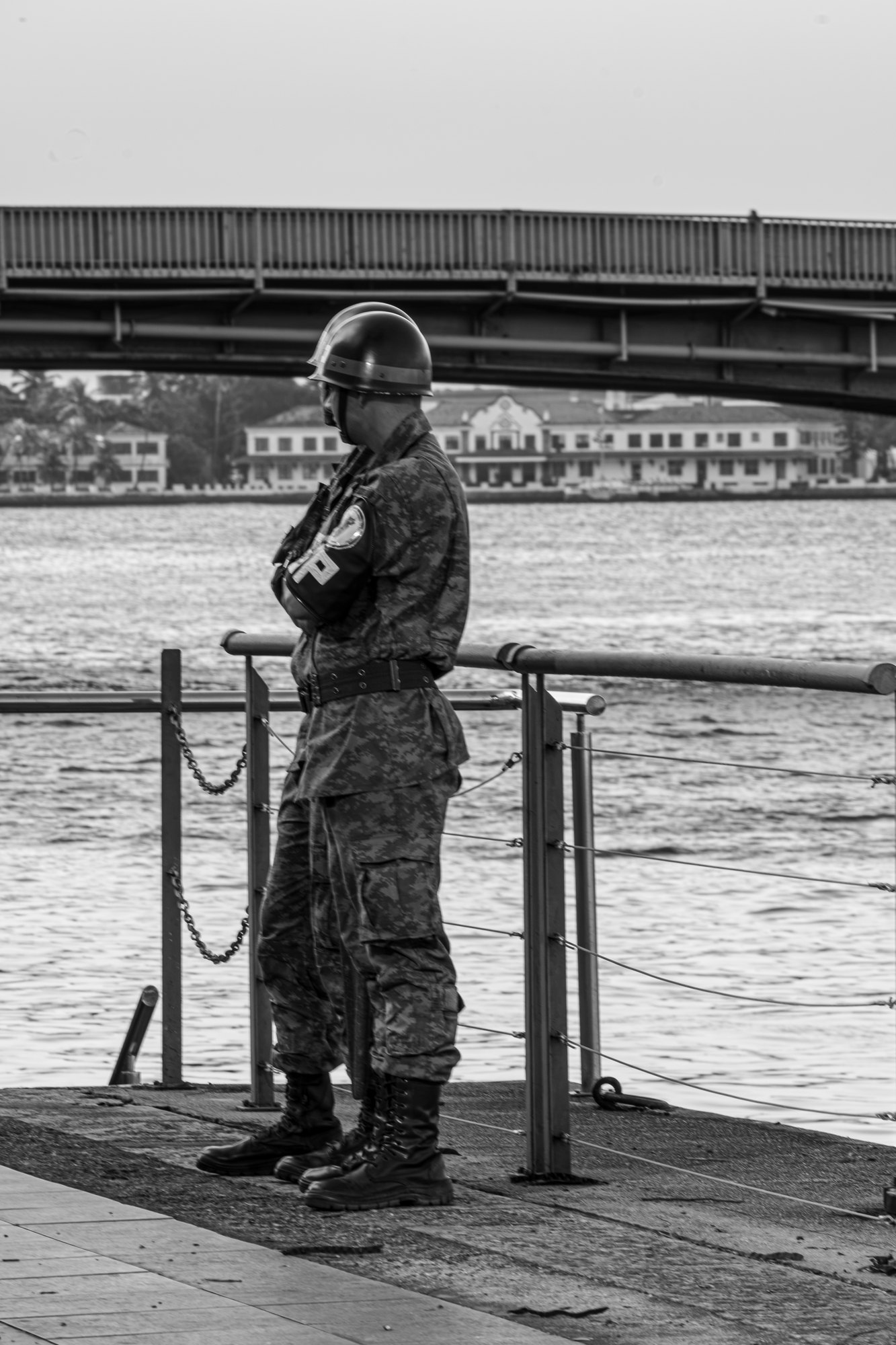
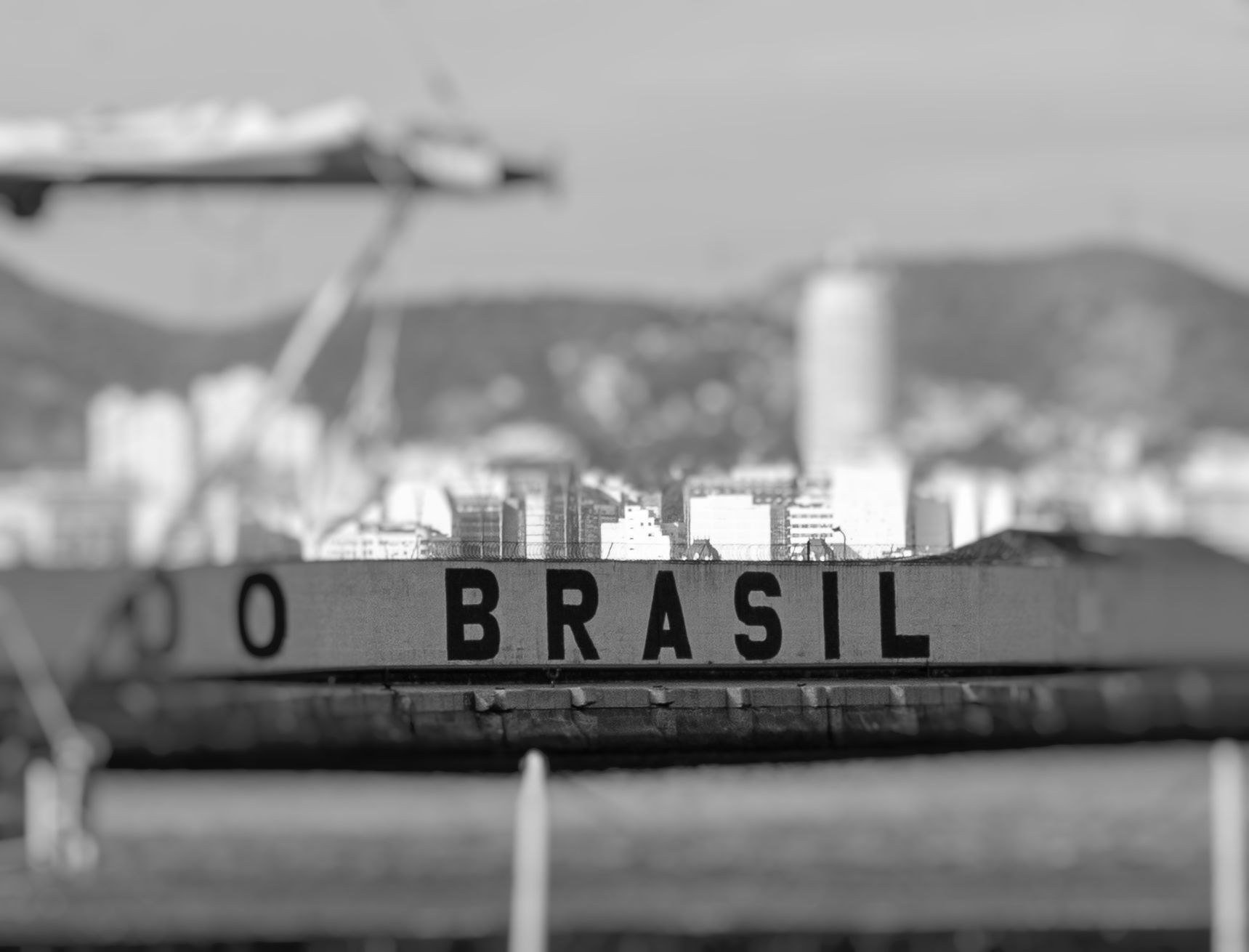
It is also still a working port, and her pictures keep saying so. A gray navy hull at the quay with the city soft behind it. A sentry at the rail in camouflage, standing with his back to the bay. Cranes along the far shore. The promenade was laid over the top of all this rather than in place of it.
What she could not do, walking through it, was close her eyes to the social distance running through the middle of it, or to the people who are close to invisible to most of those walking past.
The hour of breaks
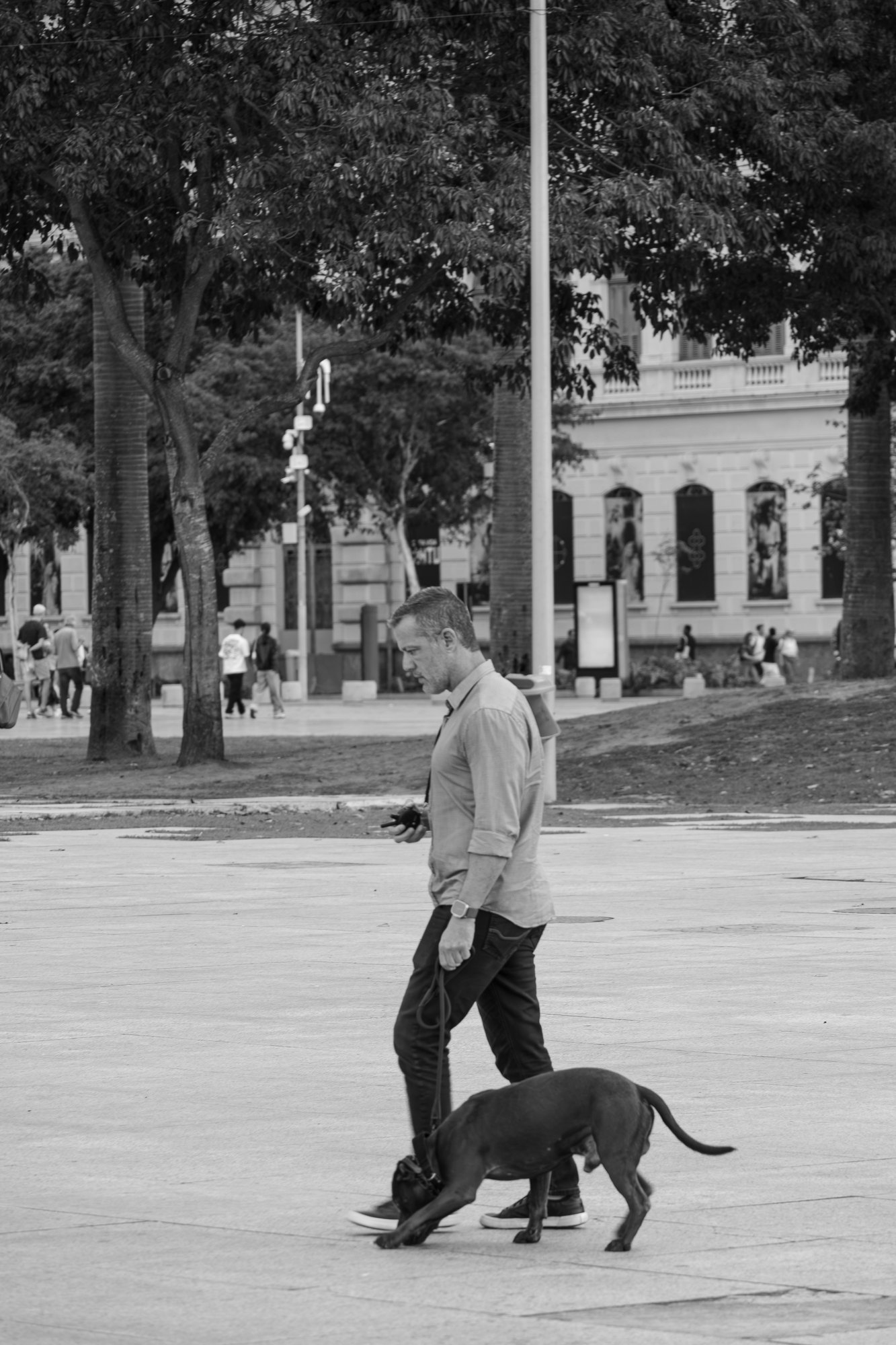
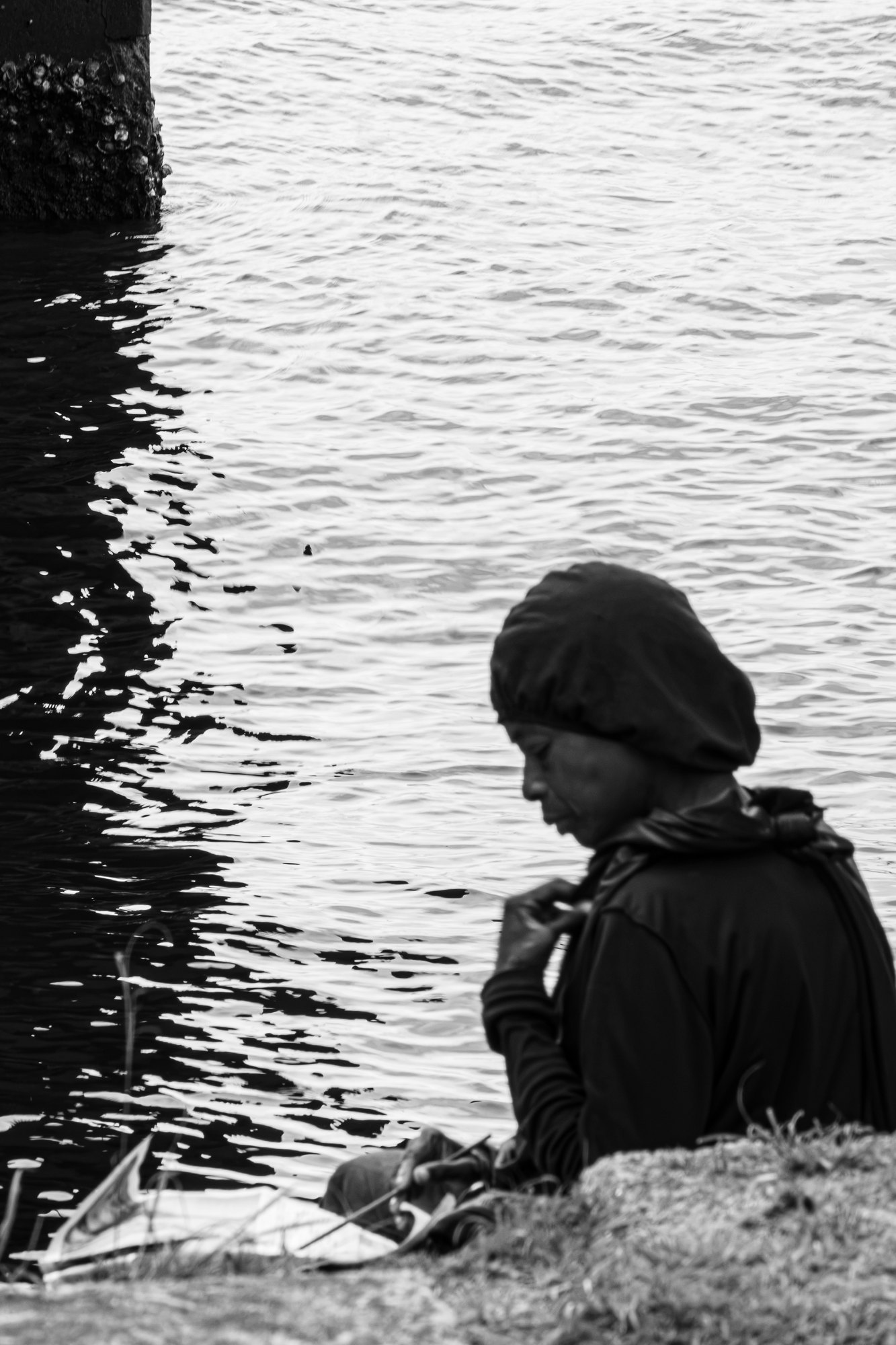
She did not choose the time of day, since the walk was scheduled for her, two in the afternoon until half past four on a weekday. It turned out to be exactly right. In the Centro that is the hour of breaks. A delivery rider eating from his lunch box on a low wall. People resting on the grass. A woman stopped on her break from work.
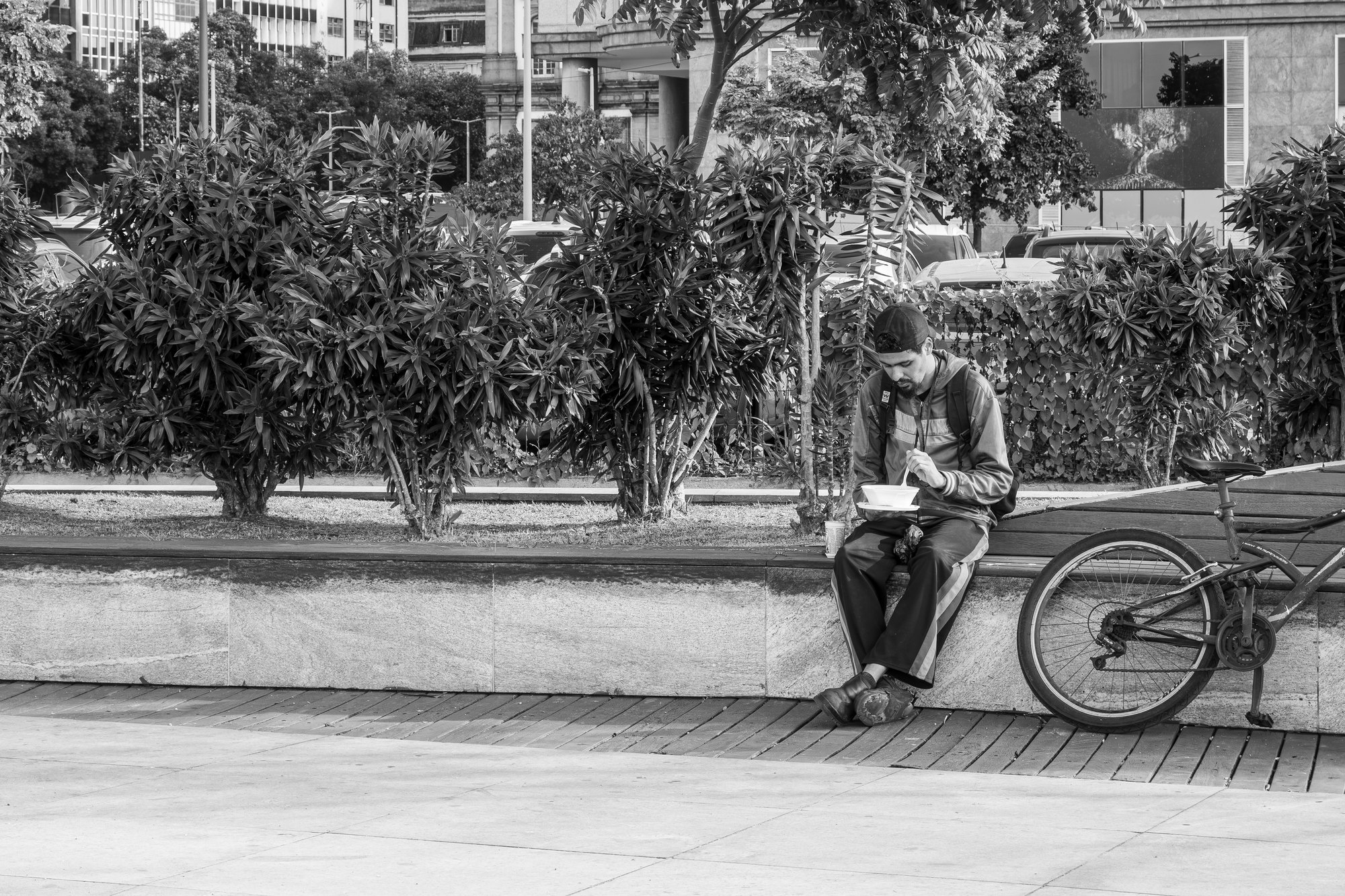
That woman is the one exception in the whole series. She was with a friend, saw Flavia photographing, and asked to have the two of them photographed, which Flavia did, both of them smiling straight into the lens. Then she stayed and kept talking, and somewhere in the middle of the conversation came the frame Flavia calls The Laugh, nothing posed and nothing arranged. Of the twelve pictures, it is the only one that came out of a conversation, and she says you can tell.
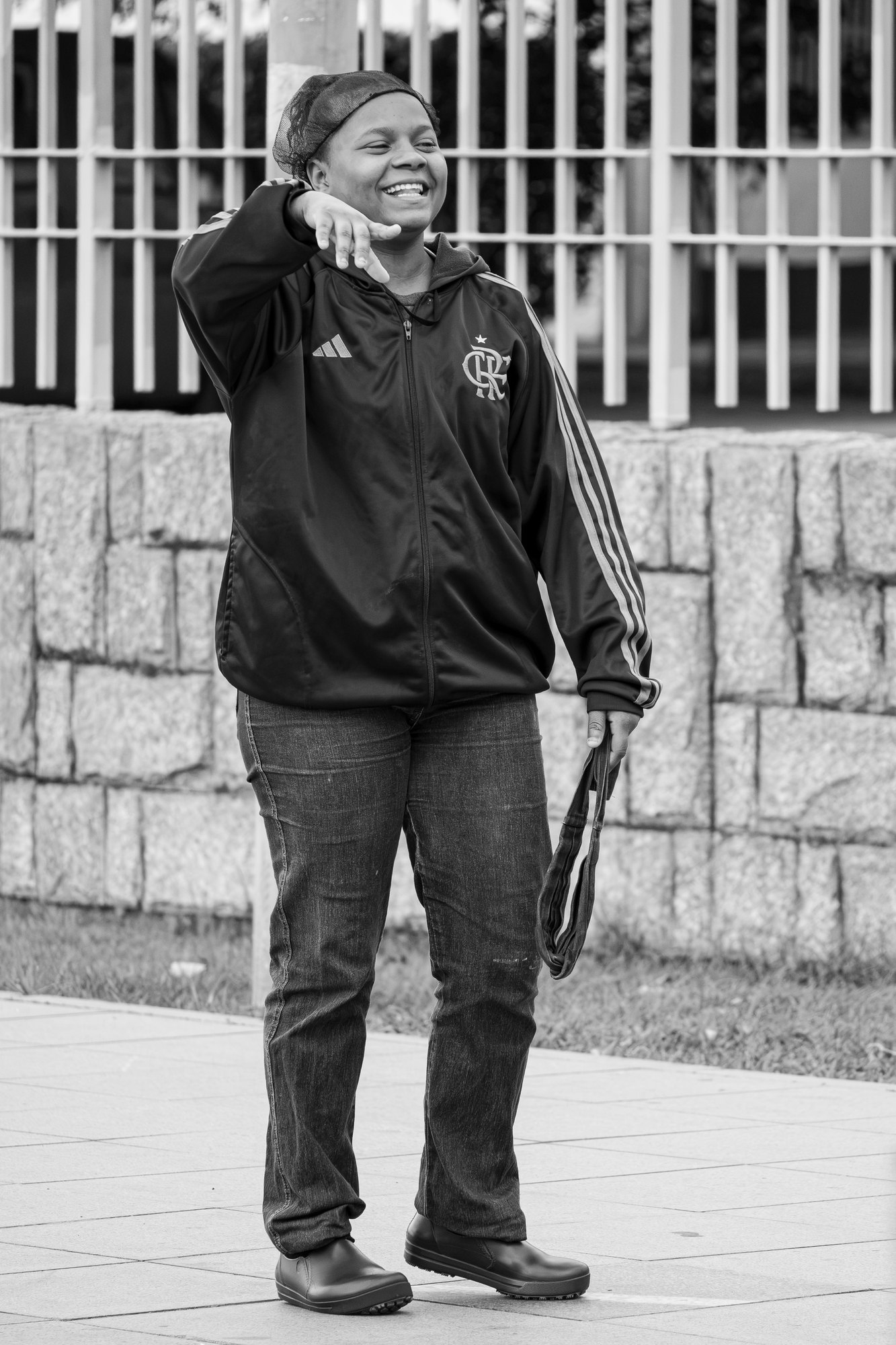
The light that day was flat and gray, which she counts as a gift. In black and white a flat sky stops competing, and attention stays on gesture.
The decision came at the editing table
She shot the afternoon in raw, in color, and the black and white was decided later. The reason is worth hearing in full, because it is an argument rather than a preference.
Rio sells itself in color, the blue of the bay, the green of the hills, the yellow of the flag. In color, she found, every frame kept sliding back toward the postcard. Palm trees, sea, sky. Take the color away and the view has nothing left to sell, and what remains is what she was actually looking at. A delivery rider eating from a lunch box. Five coconuts roped to the back of a bicycle. A man sitting at the edge of the quay watching the cranes. A folding chair and two buckets left standing in an empty square. Someone asleep at the foot of a wall. The streets belong to the people who use them rather than to the view, and monochrome is how she makes the picture agree with that.
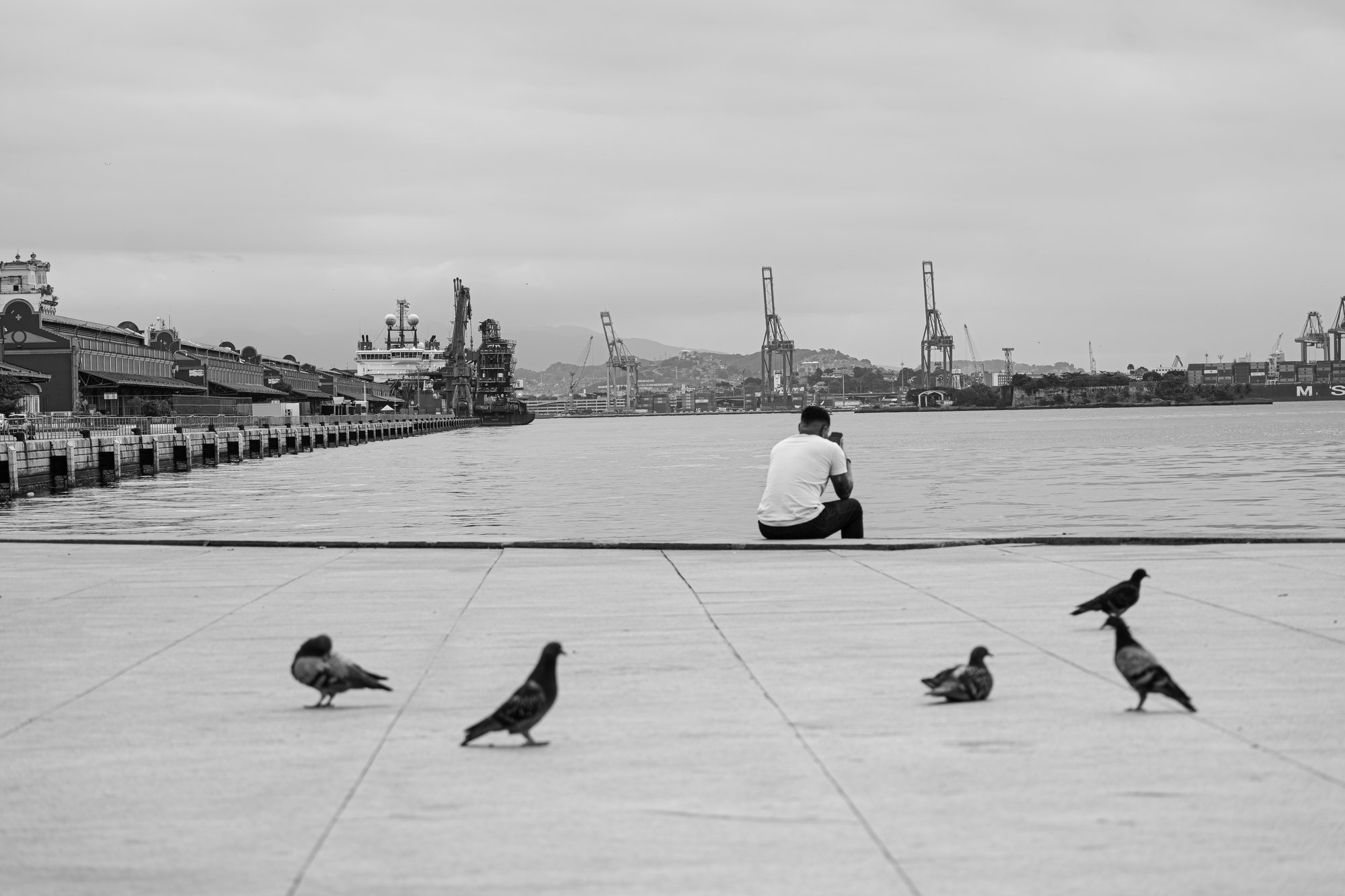
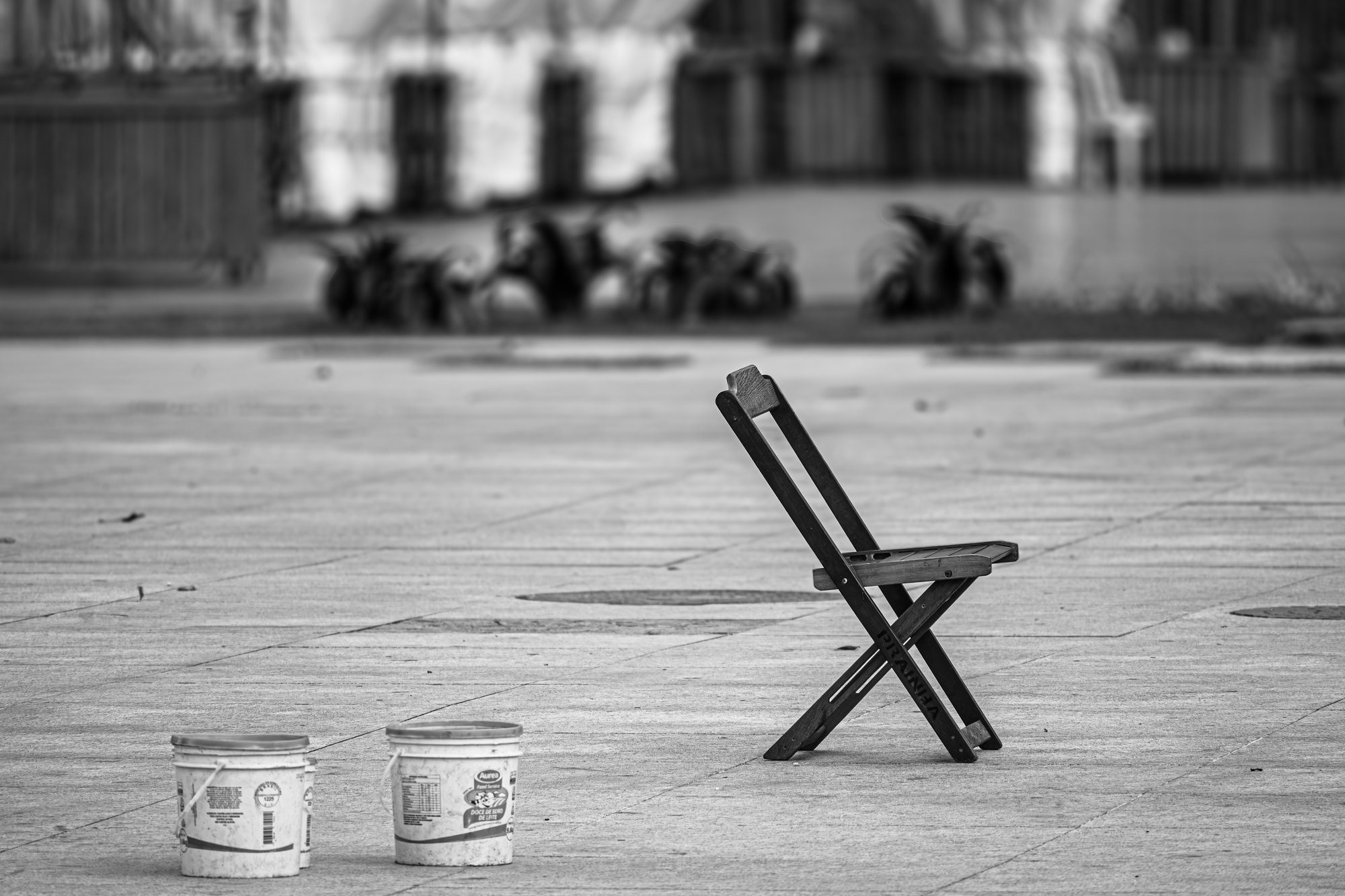
She is not arguing with the famous pictures. The statue with its arms open, the Sugarloaf at sunset, Copacabana seen from above, all of them are beautiful and all of them are true. They are simply taken from places most people in Rio rarely stand. Her series is less a reaction to them than a turn of the head. The bay appears in many of her frames. It is always behind somebody who is not looking at it.
The man asleep at the foot of the wall
One frame cost her more than the rest. A man asleep on the grass at the foot of a large old stone wall, small in the frame, part of the place rather than a portrait. She made it from a distance with a long lens and did not wake him.
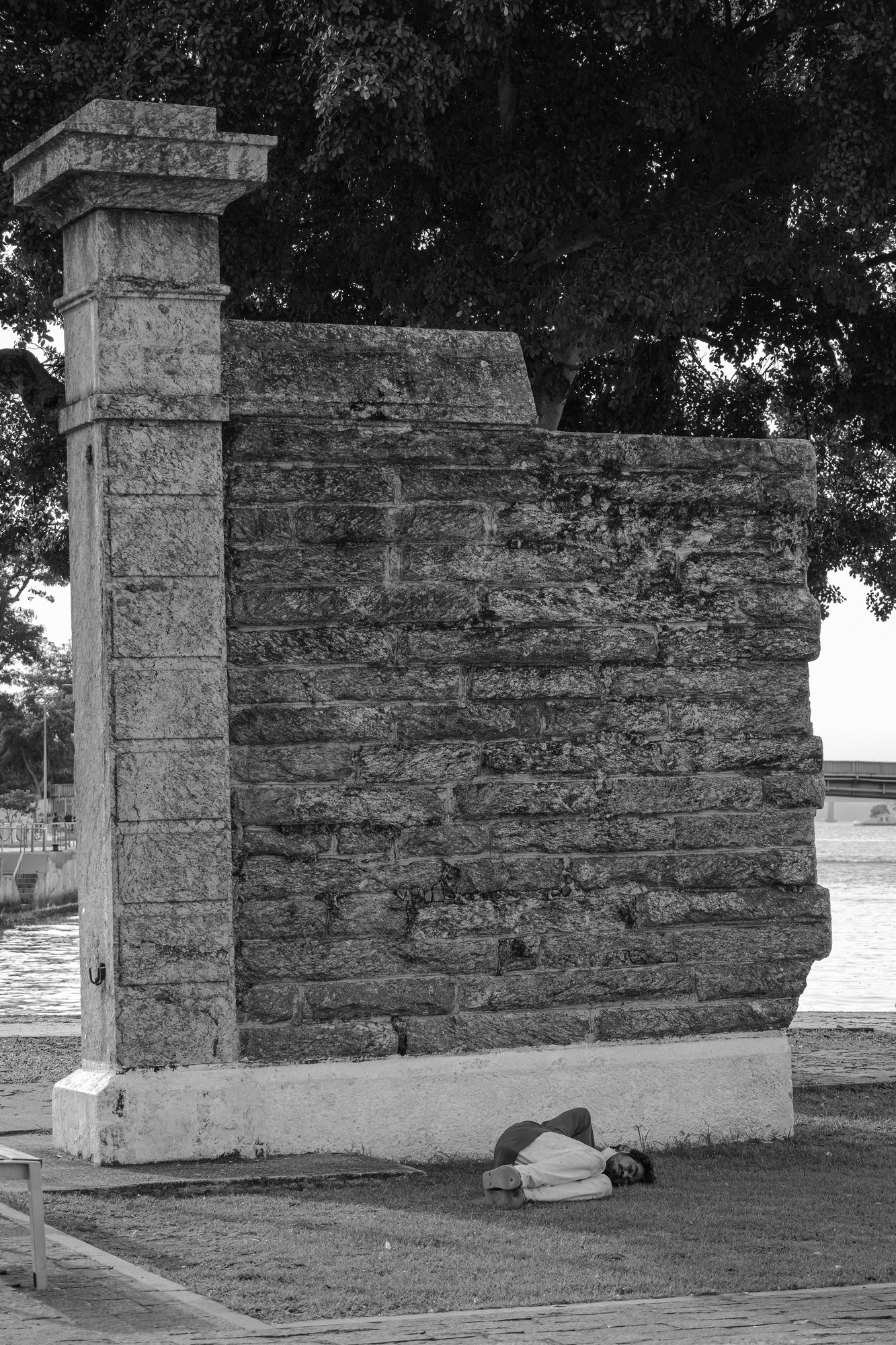
She thought about it more than twice. The question she asked herself was whether she would be taking something from his dignity. What decided it was the other half of the argument, that the Cidade Maravilhosa, the Marvelous City, is not marvelous for everyone, and that the same revitalization that brought people back to the waterfront for leisure also brought people with nowhere else to sleep.
She is clear that pressing the shutter did not settle the question. Almost every picture in the series was made at a distance, of people who did not know she was there, and with most of them the ethical weight is light, a rider with his lunch, a woman drawing by the water. With this one it was not light at all, and she does not pretend it has been resolved.
The worker just outside the frame
The coconuts came from a man selling coconut water in front of the Museu do Amanhã, from a setup that was visibly improvised and most likely unlicensed. She did not speak to him and cannot say who he was. She chose to photograph the load rather than the man, and afterwards stayed in Praça Mauá for a while, watching the square.
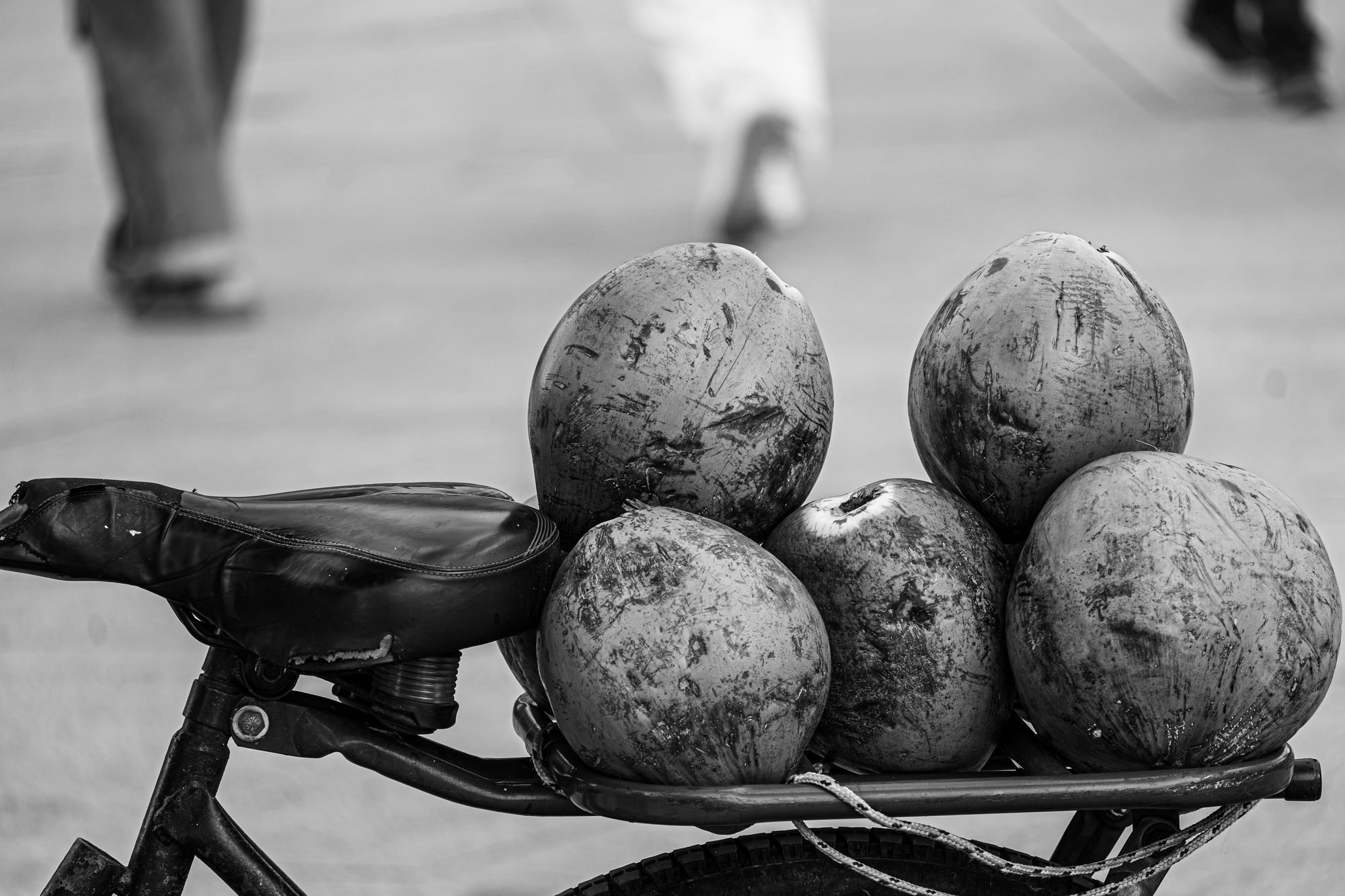
Looking at it now, she thinks his absence is part of the picture. The work is inside the frame and the worker is just outside it, which is a fair description of how the district treats a good many of the people who make it function.
There is another frame from that afternoon which did not make the twelve. The A Noite building on Praça Mauá, an art deco tower that was the first skyscraper in the city, empty for years now, its lower windows covered in graffiti and a banner strung across the top announcing that the new Edifício A Noite is coming. The area has been rebuilt. It has not been rebuilt in the same way for everyone.
How she works
All of her series are made this way. She sets aside a day, plans a route through a city and photographs as she walks, looking for a story about ordinary people on ordinary days. On this walk she carried a Nikon Z50 II and two zooms, a 16 to 50 and a 50 to 250. She started with the short one and switched once she was outside, and eleven of the twelve pictures were made with the long lens, between 65 and 250mm. On foot, no tripod, raw files, the conversion decided afterwards.
The long lens is what let her photograph people without changing what they were doing. It is also the reason she spoke to almost none of them, with the one exception that produced The Laugh.
What the pictures cannot carry, she says, is not a sound or a smell. It is nostalgia, and saudade, that particular Portuguese longing. She was standing in a place that had been part of her daily routine a quarter of a century earlier, changed enormously in some ways and not at all in others, home for an afternoon and leaving again.
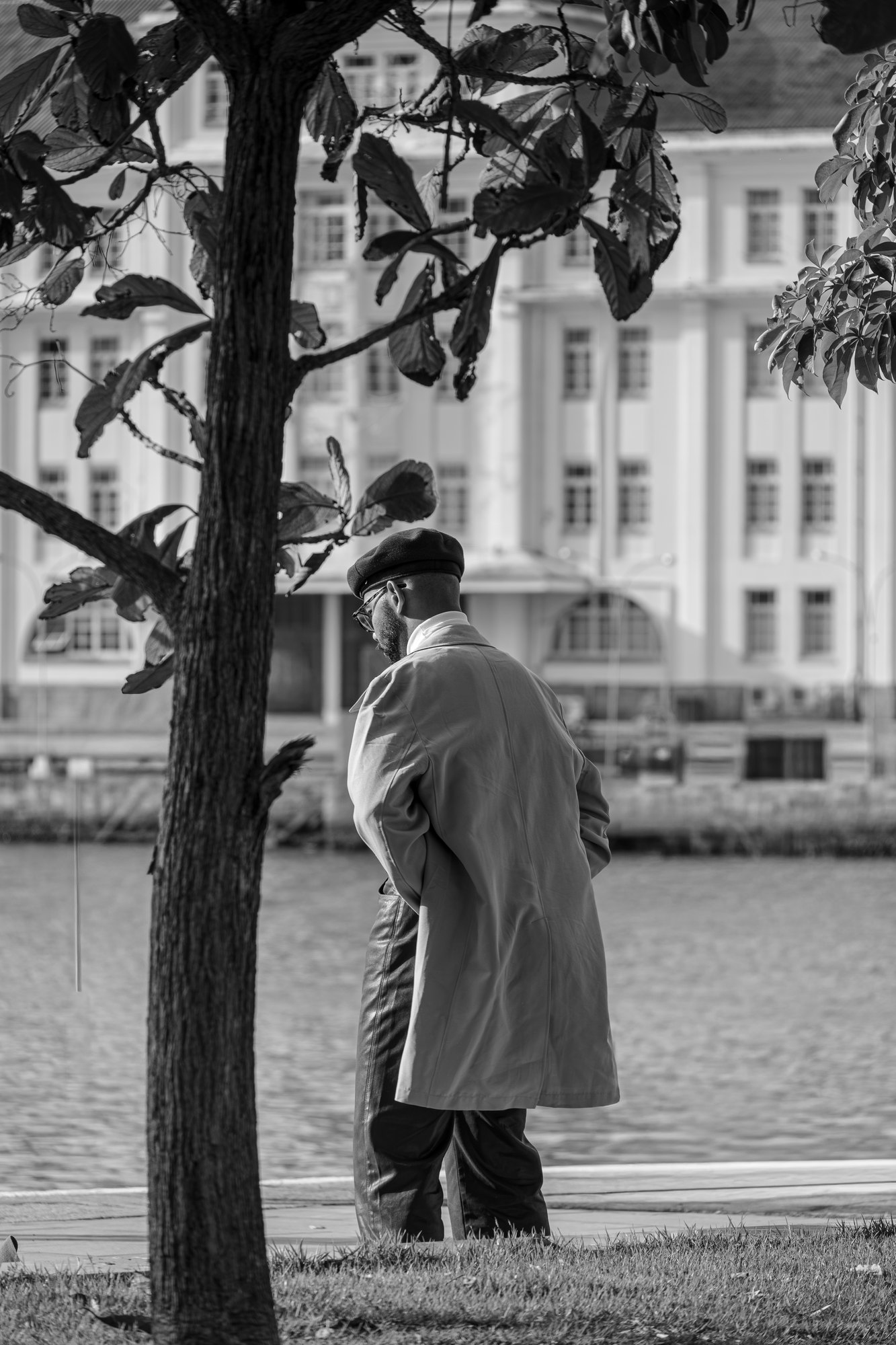
What she wants from someone who only knows the postcard is modest. The postcard is real, she says, but it is a frame, and a frame always leaves something out. Look at the man on the grass at the water’s edge, earphones in, head down over his phone, with the bridge and a navy ship and the hills of Niterói laid out behind him. Nobody in these photographs is looking at the view. They are eating, working, waiting, sleeping and laughing, living inside a landscape that the rest of the world travels a long way to look at. If one more picture of the city lodges in a stranger’s head, a woman laughing on her break or five coconuts roped to the back of a bicycle, that is enough.
You can see more of Flavia’s work on foto @fas1105
Flavia Silva is a Brazilian photographer from Rio de Janeiro who has lived in Helsinki since 2023. She works in series, setting aside a day and a route and photographing ordinary people on ordinary days.