
The usual advice for a busy scene is to simplify it. Most of the time we cannot move the crowd, so the real skill is giving the chaos a shape.
A market on a Saturday morning, a train station at rush hour, a festival crowd pressing toward a stage. Standing in the middle of it, the scene feels alive, and it is easy to raise the camera and expect some of that energy to land in the frame. Then we look at the picture later and find a gray jumble of heads, signs and elbows with nowhere for the eye to rest. Chaos is one of the hardest things to photograph well in black and white, and one of the most rewarding when it works.
Why chaos is harder without color
In color, a busy scene still has some built in order. A red jacket stands apart from a green awning, and a yellow taxi separates itself from the gray street around it. Take the color away and much of that separation goes with it. Things that looked completely different now share the same middle gray, and a scene that felt lively turns into visual noise. That is why simply converting a busy color photograph so often disappoints. The chaos is still there, but the clues that helped us sort it have gone.
Emptying the frame is not the answer either. A busy place is busy, and minimalism only works when it is a choice rather than a way of avoiding the scene in front of us. The goal is not to remove the chaos, but to give the eye a way in.
Find one thing to hold on to
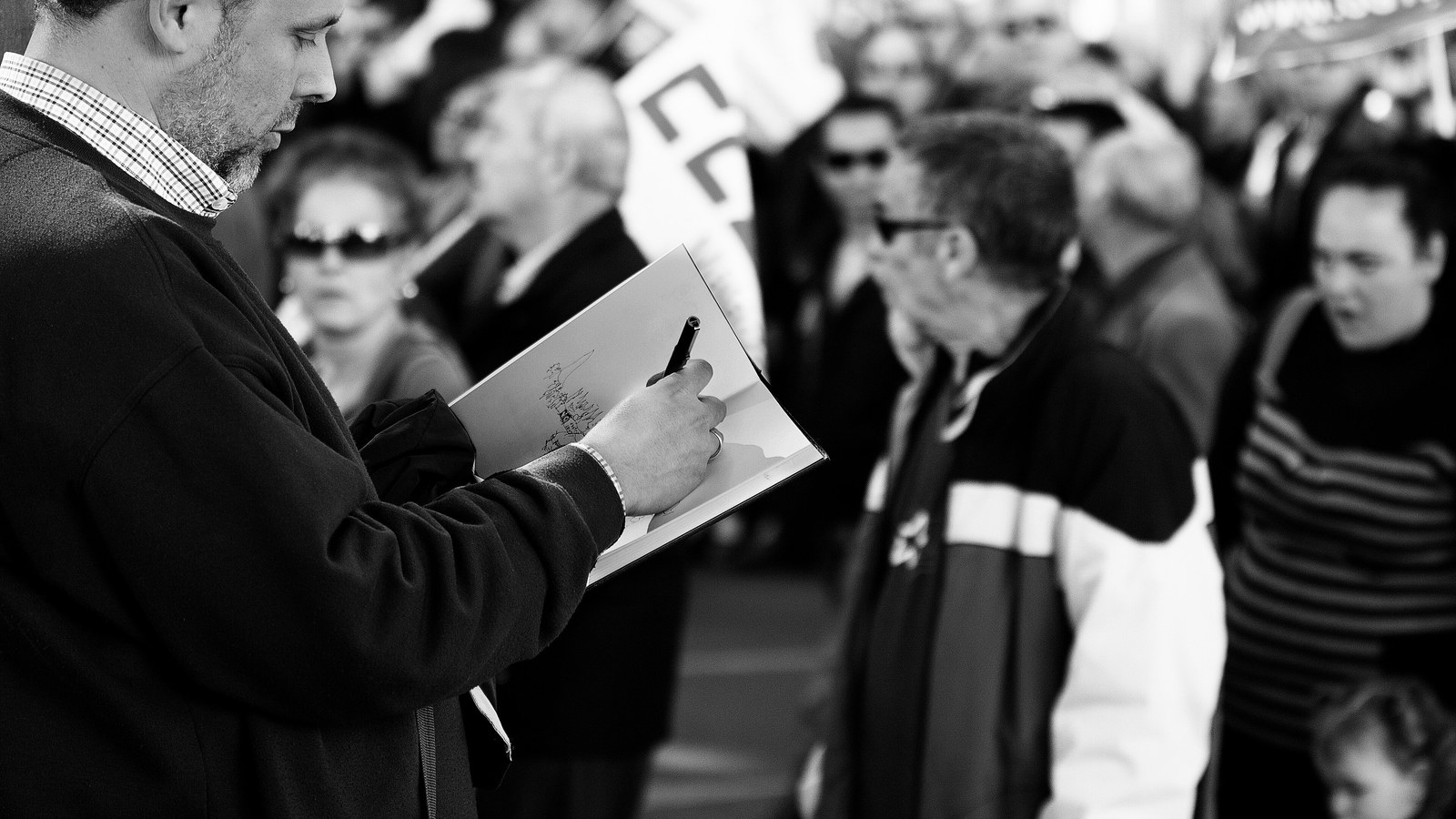
Every photograph of a crowded scene needs an anchor, one person, one shape or one gesture that the eye can find first and come back to. Before worrying about everything else in the frame, it helps to ask what that one thing is. It might be the only face looking toward the camera, the only person standing still, or the one figure dark against a light background. In black and white that last one matters most, because a subject only separates from the crowd when its tone is different from the tones around it, dark against light or light against dark.
Let light do the editing
Light is the most powerful tool we have for quieting a busy scene. When a single shaft of sun falls on one part of a crowd and we expose for that bright patch, the rest of the scene drops into shadow and a great deal of the clutter simply disappears. Shooting toward the light does something similar, turning people into clean silhouettes against a bright background. A cluttered street at noon can become a handful of strong dark shapes an hour before sunset.
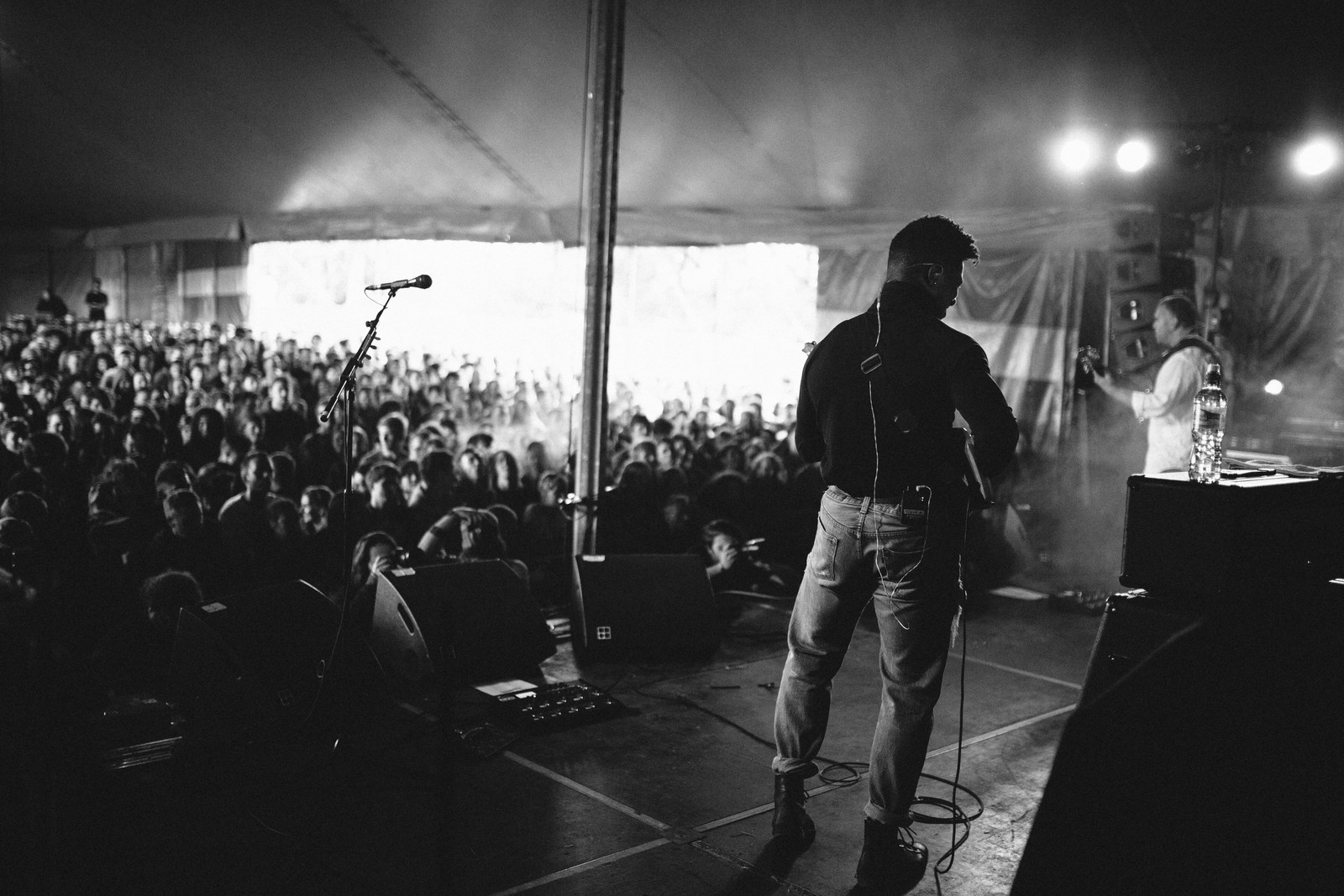
The same idea carries into editing. Darkening the busiest areas of the frame a little, and gently lifting the subject, guides the eye without anyone noticing it has been guided. The aim is not to hide the chaos but to turn its volume down, so the one thing that matters can be heard over it.
Let time smooth it out
A slower shutter speed is another way to calm a crowd without leaving it. Moving people and traffic blur into soft streaks, while anyone standing still stays sharp, and suddenly the one calm person in the rush becomes the obvious subject. A quarter of a second or so is often enough on a busy street, and it is a technique that works just as well on the street as on the landscape.
Change the distance and the angle
Chaos often looks worst from where we first happen to be standing. Stepping closer fills the frame with one or two people and pushes the crowd into the background. Moving higher, onto a step or a balcony, can turn a jumble of bodies into a pattern, while getting lower can set a figure against the plain sky instead of a busy wall. A shallow depth of field helps too, softening everything behind the subject into tones rather than details, and a foreground shape, a doorway or a shoulder, can block out part of the scene altogether.
Look for order inside the mess
Even the busiest scene has structure hiding in it. A line of people moving the same way, a row of market stalls, a gap that opens for a second between two groups, or a clear foreground, middle and background separated by tone. Patience does a lot of the work here. Crowds are always shifting, and if we wait, the moment usually comes when the chaos lines up briefly around one person, and that moment is actually the photograph.
Sometimes the chaos is the picture
None of this means every busy scene needs taming. Photographers like Garry Winogrand built whole bodies of work on frames that feel crowded right to the edges, where the energy of the street is the entire point. Tidy that kind of scene too much and what made it worth photographing disappears with the clutter. Even then, the strongest of those pictures still give the eye somewhere to start, a gesture, a face or a shape that the rest of the chaos swirls around.
So dealing with chaos is less about cleaning it up than about deciding what it should revolve around, the one still point that lets everything else keep moving without the picture falling apart. The crowd can stay. It just needs a center.