It is the question every photographer hears. It is also the one that tells us almost nothing about the photograph.
Someone walks into the gallery here in Boston, stops in front of a print, looks at it for a long moment and then asks the same thing people have been asking for as long as there have been cameras. What camera was this taken with? The same question turns up under photographs shared on social media almost every day. It is nearly always asked kindly, and it usually comes from someone who genuinely liked what they saw. But it is the wrong question, and it is worth taking a moment to understand why.
Why people ask it
The camera is the one part of photography everyone can see. The decisions that actually made the picture are invisible, where the photographer stood, how long they waited, what they chose to leave out, how many frames they threw away before this one. When people are moved by an image and want to understand it, they reach for the only piece of the process they know how to name. There is also a quieter hope behind the question. If the picture came from a particular camera, then maybe the picture can be bought. Years of camera advertising have trained all of us to think that way, and it is a hard habit to break.
What the camera actually did
A camera records light at the instant someone presses the shutter. That is its whole job. It did not decide to walk down that street, notice the way the light was falling across a wall, wait for a figure to step into the right spot or leave the distracting sign out of the frame. It did not choose black and white, and it did not spend an evening deciding how dark the shadows should be in the print. Put two photographers on the same corner with the same camera and they will come home with completely different pictures, because the camera was never the part doing the seeing.
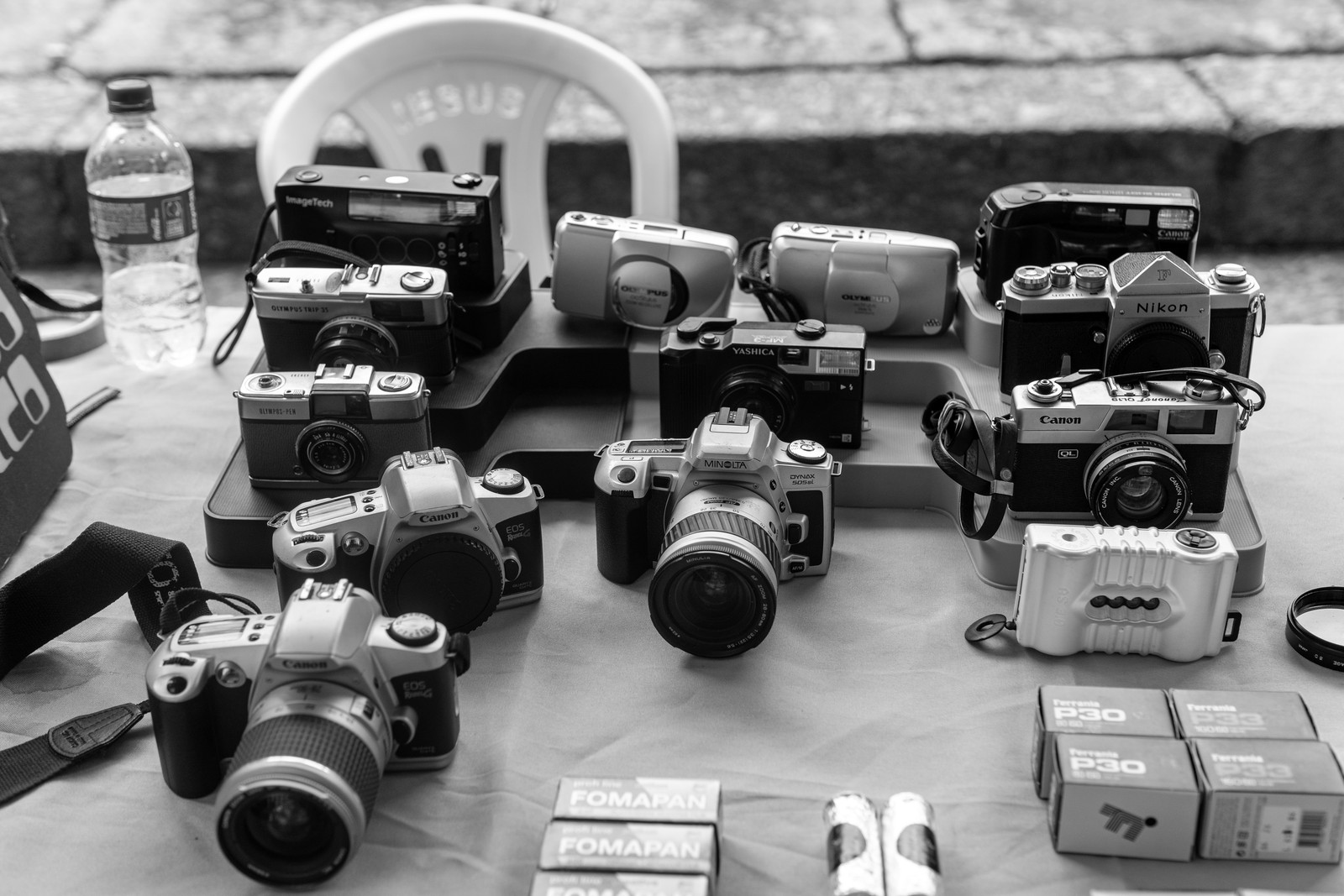
Nobody asks a novelist which keyboard they typed on, and nobody leaves a good restaurant asking which brand of pan the chef used. Some of the most celebrated photographers of the last fifty years have worked with very modest equipment. Daido Moriyama made much of his work with small compact cameras that fit in a jacket pocket, and nobody looking at his pictures thinks the camera is the story. We have written before about why brand comparisons tell us almost nothing useful, and the question in the gallery is really the same idea seen from the other side.
Black and white makes it even clearer
Much of what camera makers compete over is color, how a sensor renders skin, how saturated the greens are, how a certain brand makes a sunset look. Take color away and most of that disappears. What is left in a black and white photograph is light, tone, shape, gesture and timing, and every one of those is a decision the photographer made. At normal viewing sizes, most people would struggle to tell a strong monochrome print made on a phone from one made on an expensive medium format camera. They would have no trouble at all telling a photograph made by someone who was really paying attention from one made by someone who was not.
When the camera does matter
To be fair to the question, equipment is not completely irrelevant. A camera sets limits on what is physically possible. Very low light, fast action, distant wildlife and very large prints all ask more of the gear, and some pictures simply cannot be made without the right tool. But those limits decide what can be photographed, not what is worth photographing. Almost any camera made in the last decade, including the one in your pocket, clears the bar for the kind of work that ends up on a gallery wall.
Better questions to ask
The next time a photograph stops us, there are far more interesting things to ask the person who made it. Where were you standing? What made you stop here, of all the places you walked past that day? Did you wait for that moment, or did it just happen? What did you leave out of the frame? Why black and white? Did it actually look like this when you were there? Every one of those questions opens a real conversation, and every one of them leads somewhere the camera question never can.
For those of us on the other side of the question, there is no need to be annoyed by it. It is usually a compliment wearing the wrong clothes. We can answer it honestly and briefly, then tell the part that matters, the forty minutes of waiting, the reason we went back three times, the thing we noticed that made us stop. More often than not, that is the answer the person was really looking for.
The camera is the least interesting thing about a photograph. The most interesting thing is the person who was standing behind it, and what they noticed that everyone else walked past.
Featured photograph of visitors at The GLBT History Museum in San Francisco by GKoskovich, CC BY-SA 3.0.